Dealers list chrysocolla slabs and polished pieces 5 to 10 cm (2 to 4 in) at $25 to $55; tumbled stones run about $330 to $445 per pound.
Prices checked . Page updated .
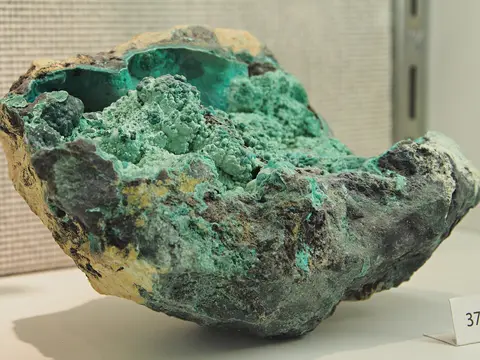
Chrysocolla and Malachite Specimen 37. Photo: Photo by and (c)2015 Derek Ramsey ( Ram-Man ), CC BY-SA 4.0, via Wikimedia Commons.
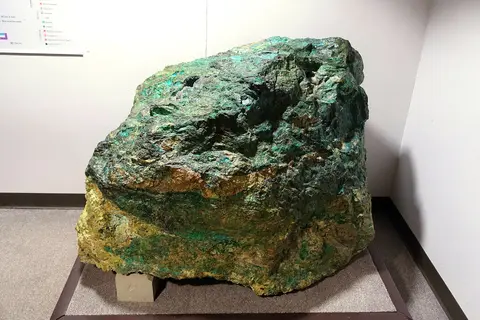
Chrysocolla from Inspiration, Arizona - University of Arizona Mineral Museum - University of Arizona - Tucson, AZ - DSC08447. Photo: Daderot, CC0, via Wikimedia Commons.
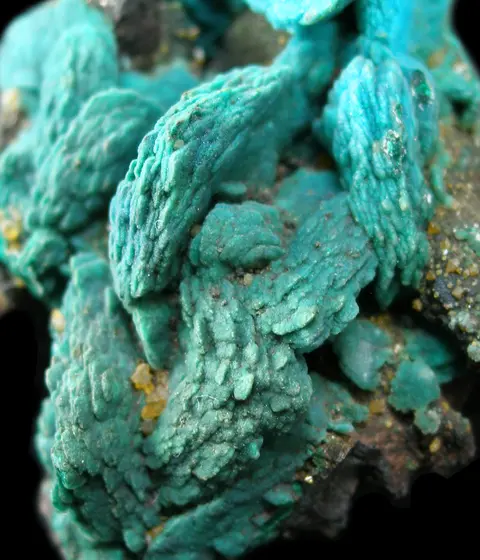
Azurite-Chrysocolla-Malachite-tuc1032c. Photo: Robert M. Lavinsky, CC BY-SA 3.0, via Wikimedia Commons.
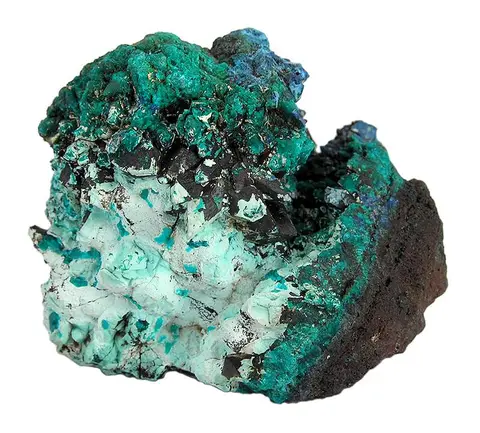
Calcite-Chrysocolla-Dioptase-d06-34a. Photo: Robert M. Lavinsky, CC BY-SA 3.0, via Wikimedia Commons.
What chrysocolla is worth
Dealer asking prices for chrysocolla, middle half of current listings, checked 2026-11-20. Bar shows the 25th to 75th percentile; the dark tick is the median.
Form and size
Typical asking price
Range chart
Median
Listings
Slabs and polished pieces (per piece)
$35 to $370
$55
18 from 1 dealer
5 to 10 cm (2 to 4 in)
$25 to $55
$35
11 from 1 dealer
10 to 20 cm (4 to 8 in)
$345 to $723
$445
7 from 1 dealer
Tumbled stones (per pound)
$332 to $444
$357
6 from 1 dealer
Carvings and shapes (per piece)
Not enough data (4 listings, need 5)
Specimens (per piece)
Not enough data (3 listings, need 5)
By origin
Mexico: $23 to $370, median $155 (10 listings)
United States: $43 to $279, median $55 (8 listings)
These are dealer asking prices: what shops list chrysocolla for, not what it sells for and not an appraisal. Selling to a dealer usually brings well below retail, because the dealer has to resell it at a margin.
How to identify chrysocolla
Chrysocolla is a hydrated copper silicate that forms blue to green crusts, veins and masses in the oxidized zones of copper deposits. Pure chrysocolla is soft and porous; the hard gem material is usually chalcedony or quartz colored by it.
Sky blue to blue-green or turquoise green color, often mixed with brown, black or malachite green.
Very light in the hand: SG about 1.9 to 2.4.
Pure material is soft (2 to 4) and scratches with a knife or even a copper coin; silicified material is much harder.
Vitreous to earthy or waxy luster, often with a cracked, porous surface.
Pure chrysocolla tends to stick slightly to a damp finger because it is porous.
Found with malachite, azurite, cuprite and quartz in copper mine material.
Chrysocolla varieties
Chrysocolla in quartz
Chrysocolla in quartz is quartz or chalcedony colored blue by included chrysocolla, giving a hard, polishable stone. It is far harder (about 7) and more durable than pure chrysocolla because quartz carries the color; the translucent chalcedony form is sold as gem silica.
Where chrysocolla comes from
Arizona, USA
Copper mines at Globe-Miami, Ray and Bisbee; the Inspiration mine is famous for gem silica.
Peru
Major source of chrysocolla for beads and cabochons, often mixed with malachite and quartz.
Democratic Republic of Congo
Chrysocolla with malachite from the Katanga copper belt.
Chile
Large copper deposits with chrysocolla.
Timna, Israel
Source of 'Eilat stone', a mix of chrysocolla, turquoise and malachite.
Taiwan
Translucent chrysocolla chalcedony sold as 'Taiwan blue jade'.
Pure chrysocolla scratches easily; silicified material resists.
Fake or lookalike
Dyed quartz and chalcedony resist; dyed howlite scratches with a white groove.
Can leave a small mark.
Specific gravity
Weigh dry and suspended in water on a kitchen scale, then divide dry weight by the weight gain.
Real
About 1.9 to 2.4 for pure chrysocolla.
Fake or lookalike
Turquoise 2.6 to 2.9; malachite about 3.8.
Acetone swab
Rub acetone on a hidden spot.
Real
No color on the swab (but acetone can dull porous material, so keep it brief).
Fake or lookalike
Dyed howlite or chalcedony may leave color.
Loupe
Examine at 10x.
Real
Irregular natural color zones blending with matrix.
Fake or lookalike
Dye webbing or fragments in resin.
A stone that passes these tests is consistent with natural chrysocolla, not proven. For valuable pieces, a gem lab report settles treatment and origin.
Treatments
Stabilization with resin (common)
Hardens soft, porous chrysocolla for jewelry; lowers value against natural hard material. Waxy plastic luster; lab FTIR.
Dyeing (occasional)
Brightens pale material; lowers value. Loupe, acetone.
What moves the price of chrysocolla
Hardness and translucency. Silicified, translucent material (gem silica) is worth far more than soft, opaque chrysocolla.
Color. Bright, even sky blue ranks highest.
Treatment. Natural unstabilized material over resin-stabilized or reconstituted.
Locality. Inspiration mine and other Arizona sources carry a premium.
Specimen quality. Crusts over or inside quartz, and combinations with malachite or cuprite.
Care and safety
Soft, porous chrysocolla can crack if it dries out and absorbs oils and chemicals. Keep away from heat, solvents and ultrasonic cleaners.
Questions collectors ask about chrysocolla
What is the difference between malachite and chrysocolla?
Malachite is a copper carbonate, green with concentric bands and heavy (SG about 3.8). Chrysocolla is a copper silicate, blue to blue-green and much lighter (SG about 2).
Sources
Prices: 66 current listings from FossilEra, iRocks (The Arkenstone), Throwin Stones, seen 2026-11-20 to 2026-11-20. How we collect prices.