RockValues

Smithsonite value and identification

Dealers list smithsonite specimens 5 to 10 cm (2 to 4 in) at $40 to $1,700.

Prices checked . Page updated .
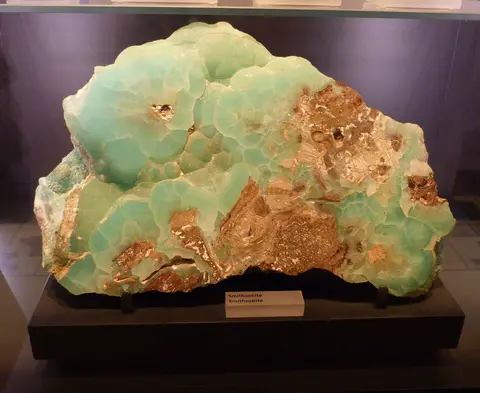
Smithsonite: Mineral exhibit - Smithsonite (31328253844)
Mineral exhibit - Smithsonite (31328253844). Photo: S. Rae from Scotland, UK, CC BY 2.0, via Wikimedia Commons.
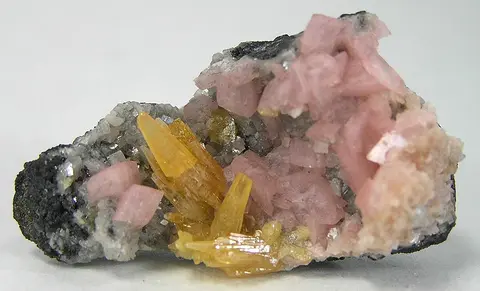
Smithsonite: Cuprosmithsonite
Cuprosmithsonite. Photo: Didier Descouens, CC BY-SA 3.0, via Wikimedia Commons.
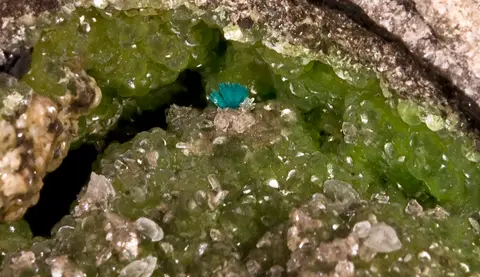
Smithsonite: Mimetite-Smithsonite-jmix07-160a
Mimetite-Smithsonite-jmix07-160a. Photo: Robert M. Lavinsky, CC BY-SA 3.0, via Wikimedia Commons.

What smithsonite is worth

Dealer asking prices for smithsonite, middle half of current listings, checked 2026-11-20. Bar shows the 25th to 75th percentile; the dark tick is the median.
Form and sizeTypical asking priceRange chartMedianListings
Specimens (per piece)$40 to $1,680$7005 from 3 dealers
5 to 10 cm (2 to 4 in)$40 to $1,680$7005 from 3 dealers
Show 5 of the listings behind these numbers
Sample dealer listings for Smithsonite
ListingSizeLocalityAskingSeen
2.4" Sparkling Botryoidal Smithsonite on Matrix - Congo
FossilEra
6.1 cmCongo$19
Smithsonite #49556
Dakota Matrix Minerals
7 cmMonte Cristo mine, Rush Creek dist., Marion Co., Arkansas, United States$40
Cadmium-bearing Smithsonite ps. Calcite
iRocks (The Arkenstone)
8 cmWenshan, Yunnan, China$700
Smithsonite
iRocks (The Arkenstone)
9.5 cmKelly Mine, Magdalena Dist., Socorro Co., New Mexico, USA$1,680
Smithsonite var. Cuprian
iRocks (The Arkenstone)
8.4 cmTsumeb Mine, Tsumeb, Oshikoto Region, Namibia$2,800

These are dealer asking prices: what shops list smithsonite for, not what it sells for and not an appraisal. Selling to a dealer usually brings well below retail, because the dealer has to resell it at a margin.

How to identify smithsonite

Smithsonite is zinc carbonate (ZnCO3), a secondary mineral formed where zinc ore deposits weather. It usually grows as botryoidal (grape-like) crusts with a pearly, almost silky luster in blue-green, pink, yellow, purple or white.

  • Botryoidal, bubbly or stalactitic crusts with a pearly to glassy luster
  • Surprisingly heavy for its size (SG about 4.4)
  • Soft pastel colors: blue-green, aqua, pink, lavender, yellow, white
  • Translucent with a waxy glow when backlit
  • Found with other zinc and lead minerals on oxidized ore
  • Rarely as rounded rhombohedral crystals

Smithsonite varieties

Pink smithsonite

Pink smithsonite is smithsonite colored pink to lavender by traces of cobalt. Same mineral; the pink color comes from cobalt rather than the copper that gives blue-green smithsonite its color.

Kelly mine smithsonite

Kelly mine smithsonite is blue-green to aqua botryoidal smithsonite from the Kelly mine near Magdalena, New Mexico. Same mineral; a locality name for the copper-colored aqua to blue-green crusts that made the Kelly mine famous among collectors.

Where smithsonite comes from

Kelly mine, Magdalena, New Mexico, USA
Famous blue-green to aqua botryoidal crusts, colored by copper.
Tsumeb, Namibia
Pink, blue, green and yellow crystals and crusts, including some of the best crystallized smithsonite.
Lavrion (Laurium), Greece
Abundant blue and green crusts from ancient mines.
Iglesias, Sardinia, Italy
Banded and colorful botryoidal material.
Kabwe (Broken Hill), Zambia
Large crystals.
Mexico
Several zinc districts, including Santa Eulalia in Chihuahua, produce smithsonite in many colors.

Smithsonite lookalikes

Hemimorphite

Hemimorphite is noticeably lighter (SG about 3.45) and slightly harder (4.5 to 5).

  • Hemimorphite is a zinc silicate
  • Both form blue botryoidal crusts from the same mines
  • Both were once lumped together as calamine

Chrysocolla

Chrysocolla is much lighter (SG 1.9 to 2.4), softer and often earthy.

  • Usually more intense blue-green
  • Often porous and dull unless silicified

Prehnite

Prehnite is harder (6 to 6.5) and lighter (SG about 2.9).

  • Pale green, often with epidote needles

Blue chalcedony

Chalcedony scratches glass and is much lighter (SG about 2.6).

  • Hardness 6.5 to 7
  • Waxy luster without the pearly sheen

Calcite and aragonite

Calcite and aragonite are far lighter (SG 2.7 to 2.9) and fizz in vinegar.

  • Softer
  • Calcite has obvious cleavage

Also mistaken for smithsonite: cobalt calcite, adamite, erythrite.

Fake, dyed and treated smithsonite

  • Dyed calcite, magnesite or chalcedony sold as smithsonite

    Occasional

    • Too light for the size
    • Color concentrated in cracks
    • Acetone swab picks up color
  • Hemimorphite sold as smithsonite

    Occasional

    • Lower specific gravity
    • Often from the same mines, honest mixups happen

Is my smithsonite real? Tests you can do at home

  1. Weight in hand and specific gravity

    Compare the weight with a similar-sized quartz piece, or measure SG with a kitchen scale and a cup of water.

    Real
    Feels heavy; SG about 4.3 to 4.5.
    Fake or lookalike
    Hemimorphite about 3.45, calcite 2.7, chalcedony 2.6.
  2. Scratch with copper and steel

    Try a copper coin, then a steel knife, on a hidden spot.

    Real
    Copper does not scratch it; steel does.
    Fake or lookalike
    Chalcedony resists steel; calcite marks with copper.

    Can leave a small mark.

  3. Acetone swab

    Rub a hidden spot with a cotton swab dipped in acetone.

    Real
    Swab stays clean.
    Fake or lookalike
    Dyed imitations leave color on the swab.

A stone that passes these tests is consistent with natural smithsonite, not proven. For valuable pieces, a gem lab report settles treatment and origin.

Treatments

Dyeing (rare)
Used on imitations rather than on smithsonite itself; dyed pieces have little value. Acetone swab and loupe on cracks.
Stabilization or waxing of cabochon material (occasional)
Soft, porous material may be impregnated to take a polish; lowers value slightly. Plastic-like surface, lab testing for polymer.

What moves the price of smithsonite

  1. Color. Intense, even color such as Kelly mine aqua or bright pink is most sought after.
  2. Locality. Kelly mine and Tsumeb pieces carry strong collector premiums.
  3. Luster and form. Thick, glossy botryoidal crusts and well-formed crystals rank above dull or chalky material.
  4. Size. Large, undamaged crusts and cabochon-grade material are scarce.
  5. Damage. Chips, scratches and dull spots reduce value.

Sources

Prices: 5 current listings from Dakota Matrix Minerals, FossilEra, iRocks (The Arkenstone), seen 2026-11-20 to 2026-11-20. How we collect prices.