RockValues

Shattuckite value and identification

Shattuckite is a blue copper silicate hydroxide that forms in the oxidized zones of copper deposits, usually as fibrous or granular masses with other copper minerals. It is named after the Shattuck mine at Bisbee, Arizona.

Prices checked . Page updated .
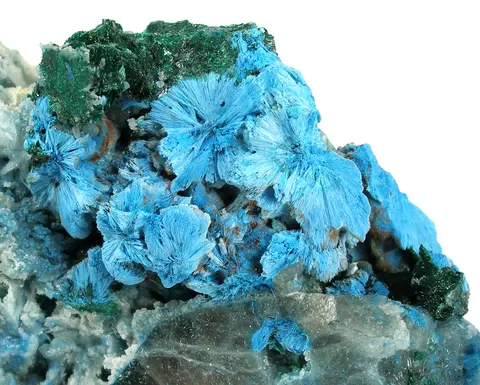
Shattuckite: Shattuckite-tuc1071a
Shattuckite-tuc1071a. Photo: Robert M. Lavinsky, CC BY-SA 3.0, via Wikimedia Commons.
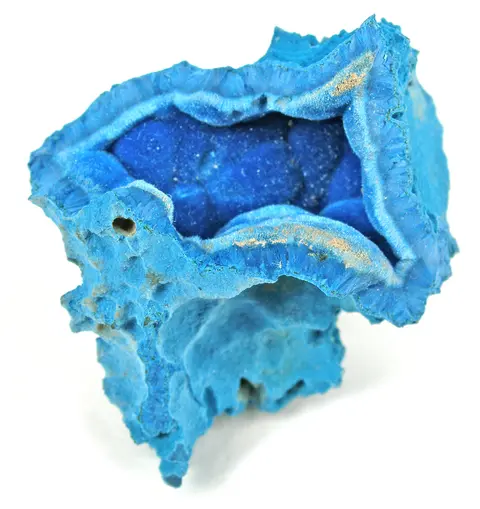
Shattuckite: Shattuckite-tuc1072c
Shattuckite-tuc1072c. Photo: Robert M. Lavinsky, CC BY-SA 3.0, via Wikimedia Commons.
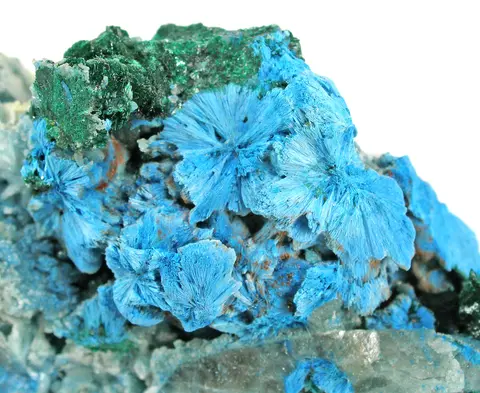
Shattuckite: Shattuckite-tuc1071c
Shattuckite-tuc1071c. Photo: Robert M. Lavinsky, CC BY-SA 3.0, via Wikimedia Commons.
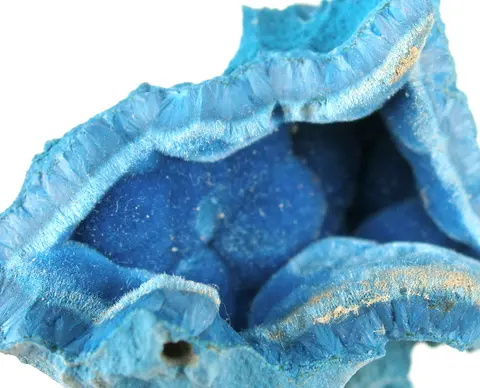
Shattuckite: Shattuckite-tuc1072b
Shattuckite-tuc1072b. Photo: Robert M. Lavinsky, CC BY-SA 3.0, via Wikimedia Commons.

What shattuckite is worth

Not enough data. We have not yet seen 5 or more current dealer listings for shattuckite in any one form, so we show no range rather than guess.

Show 2 of the listings behind these numbers
Sample dealer listings for Shattuckite
ListingSizeLocalityAskingSeen
1.3" Blue Botryoidal Shattuckite Formation - Namibia
FossilEra
3.3 cmNamibia$75
2.05" Vibrant Blue Shattuckite Pendant - 925 Sterling Silver
FossilEra
5.2 cm$99

These are dealer asking prices: what shops list shattuckite for, not what it sells for and not an appraisal. Selling to a dealer usually brings well below retail, because the dealer has to resell it at a margin.

How to identify shattuckite

  • Deep to medium blue, often in fibrous, radiating or granular masses
  • Usually mixed with cyan chrysocolla, green malachite, blue azurite or white quartz
  • Silky to vitreous luster on fibrous areas
  • Light blue streak
  • Hardness about 3.5: a steel knife scratches it, a fingernail does not
  • Heavier than chrysocolla or dyed howlite (SG about 3.8)

Where shattuckite comes from

Kunene Region, Namibia
Main source of massive shattuckite for cabochons and specimens, often with chrysocolla and quartz.
Katanga, Democratic Republic of the Congo
Copper belt deposits produce shattuckite and the closely related plancheite.
Bisbee, Arizona, USA
Type locality at the Shattuck mine.
Ajo, Arizona, USA
Found with ajoite and papagoite, including as inclusions in quartz.

Shattuckite lookalikes

Chrysocolla

Chrysocolla is cyan to blue green, waxy and much lighter in hand (SG about 2.0 to 2.4).

  • Chrysocolla hardness 2 to 4
  • Often sticks slightly to the tongue; we do not recommend that test

Azurite

Azurite is a richer royal blue, often in distinct crystals or nodules, and forms with green malachite.

  • Similar SG (3.7 to 3.9) and hardness
  • Azurite is a carbonate; shattuckite is a silicate

Plancheite

Plancheite is a very similar fibrous blue copper silicate; telling them apart reliably needs lab analysis.

  • Often sold under either name
  • Both occur in Namibia and Katanga

Lapis lazuli

Lapis has brassy pyrite flecks and white calcite, and is harder (5 to 5.5).

  • Lapis SG 2.7 to 2.9

Ajoite

Ajoite is a paler blue green and usually seen as inclusions in quartz.

  • Found with shattuckite at Ajo, Arizona

Also mistaken for shattuckite: papagoite.

Fake, dyed and treated shattuckite

  • Dyed howlite or magnesite

    Occasional

    • Blue on an acetone swab
    • White streak
    • Grey web of veins under the color
    • Lower SG
  • Chrysocolla, plancheite or mixed copper rock sold as shattuckite

    Common

    • Cyan rather than deep blue
    • Light in hand
    • Waxy rather than silky fibrous texture
  • Resin stabilized shattuckite

    Common

    • Glassy, even polish on soft material
    • Resin in pores under a loupe

Is my shattuckite real? Tests you can do at home

  1. Acetone swab

    Rub a hidden spot with a cotton swab dampened with acetone nail polish remover.

    Real
    Swab stays clean.
    Fake or lookalike
    Dyed howlite and magnesite leave blue on the swab.
  2. Specific gravity

    Weigh the piece in air, then suspended in water on a kitchen scale, and divide weight in air by the weight lost in water.

    Real
    About 3.8 for pure shattuckite; mixed pieces with quartz will read lower.
    Fake or lookalike
    Chrysocolla about 2.0 to 2.4, dyed howlite about 2.5.
  3. Streak test

    Rub a hidden edge on an unglazed porcelain tile.

    Real
    Light blue streak.
    Fake or lookalike
    Dyed white stones leave a white streak.

    Can leave a small mark.

  4. Loupe texture check

    Examine the blue areas at 10x.

    Real
    Fine fibrous or granular blue with natural associations of malachite, chrysocolla or quartz.
    Fake or lookalike
    Dye in cracks and veins, or a uniform resin look.

A stone that passes these tests is consistent with natural shattuckite, not proven. For valuable pieces, a gem lab report settles treatment and origin.

Treatments

Resin stabilization (common)
Hardens porous lapidary material so it can be cut and polished; stabilized material is worth less than solid natural shattuckite. Resin sheen and lower SG; lab confirmation.
Dyeing (rare)
Occasionally used to deepen blue in mixed copper rock. Acetone swab and dye in cracks.

What moves the price of shattuckite

  1. Color. Deep, even blue with little matrix is the most valued.
  2. Purity. High shattuckite content versus mixed chrysocolla, quartz or host rock.
  3. Treatment. Natural, unstabilized cabochon material sells above stabilized material.
  4. Specimen quality. Well defined radiating sprays and attractive associations for collectors.
  5. Locality. Classic Arizona and well documented African localities.

Care and safety

Shattuckite is soft and has cleavage. Avoid acids, ultrasonic cleaners and hard knocks; clean with a damp cloth.

Sources

Prices: 2 current listings from FossilEra, seen 2026-11-20 to 2026-11-20. How we collect prices.