RockValues

Onyx value and identification

Onyx is chalcedony with straight, parallel bands, classically black and white. In jewelry, solid black onyx is almost always gray chalcedony dyed black.

A variety of chalcedony. Prices checked .
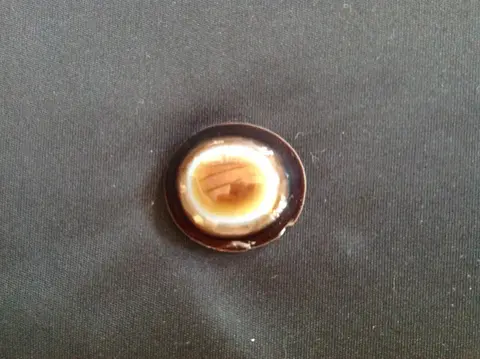
Onyx: Sardonyx Top View
Sardonyx Top View. Photo: Warclachaja, CC BY-SA 4.0, via Wikimedia Commons.

What onyx is worth

Not enough data. We have not yet seen 5 or more current dealer listings for onyx in any one form, so we show no range rather than guess.

These are dealer asking prices: what shops list onyx for, not what it sells for and not an appraisal. Selling to a dealer usually brings well below retail, because the dealer has to resell it at a margin.

How to identify onyx

Onyx is defined by straight parallel banding (agate has curved bands); the solid black trade product is dyed chalcedony. See chalcedony value for the species as a whole.

  • Straight, parallel bands of black and white or black alone
  • Waxy to glassy polish, cool to the touch
  • Scratches glass
  • Solid jet-black stones with perfect evenness are dyed

Other chalcedony varieties

Where onyx comes from

Brazil and Uruguay
Source of the chalcedony that is dyed into black onyx.
India
Banded natural onyx and large bead production.

Onyx lookalikes

Jet

Jet is much lighter and feels warm.

  • SG about 1.3
  • Brown streak
  • Hardness 2.5 to 4

jet vs onyx

Also mistaken for onyx: black jade, obsidian, apache tears, zebra jasper, agate, tourmaline, black spinel, stromatolite.

Fake, dyed and treated onyx

  • Dyed black onyx

    Very common

    • Perfectly even black
    • This is the market standard and is usually sold as onyx
  • Black glass sold as onyx

    Common

    • Bubbles
    • Mold seams
    • Softer than chalcedony
  • Banded calcite or aragonite sold as onyx

    Very common

    • Soft
    • Fizzes in acid
    • Translucent honey or green bands
  • Black plastic or resin

    Occasional

    • Light and warm
    • A hot pin would mark it, but do not use heat tests at home on jewelry

Is my onyx real? Tests you can do at home

  1. Knife and glass test

    Try a steel knife on the back, then the stone against glass.

    Real
    Knife does not scratch; stone scratches glass.
    Fake or lookalike
    Calcite onyx and plastic scratch; glass may fail to scratch glass.

    Can leave a small mark.

  2. Weight and temperature

    Hold it in your palm for a few seconds.

    Real
    Cool and quartz-heavy.
    Fake or lookalike
    Jet and plastic feel light and warm.
  3. Loupe for bubbles

    Look at the surface and drill holes at 10x.

    Real
    No bubbles; fine fibrous texture at chips.
    Fake or lookalike
    Glass shows round bubbles and smooth glassy chips.

A stone that passes these tests is consistent with natural onyx, not proven. For valuable pieces, a gem lab report settles treatment and origin.

Treatments

Sugar and acid dyeing (almost always)
Creates solid black onyx; standard practice and stable. Lab; assumed for any solid black onyx.

What moves the price of onyx

  1. Banding. Natural crisp black and white banding for cameos sells above plain dyed black.
  2. Cut quality. Precise cuts, cameos and carving work drive most of the value of plain black onyx.
  3. Size and evenness. Large flawless slabs without cracks.

Questions collectors ask about onyx

Which is better, onyx or black diamond?
They serve different budgets: black diamond is hardness 10 with a bright adamantine shine and costs far more, while onyx is dyed chalcedony, softer, and inexpensive. For hard daily wear diamond lasts better; for larger statement pieces onyx is practical.
How much is black onyx worth?
Black onyx is common dyed chalcedony, so value comes mostly from the setting, carving or cut and the size of clean pieces rather than the stone itself; see the price table above for current sales.

Sources

Prices: no current dealer listings yet. How we collect prices.