What black diamond is worth
Not enough data. We have not yet seen 5 or more current dealer listings for black diamond in any one form, so we show no range rather than guess.
These are dealer asking prices: what shops list black diamond for, not what it sells for and not an appraisal. Selling to a dealer usually brings well below retail, because the dealer has to resell it at a margin.
How to identify black diamond
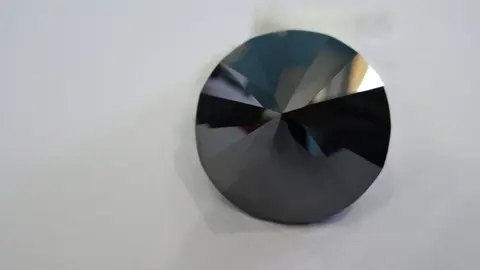
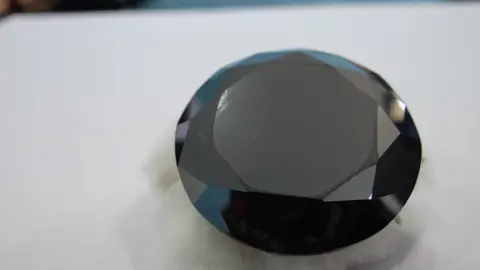
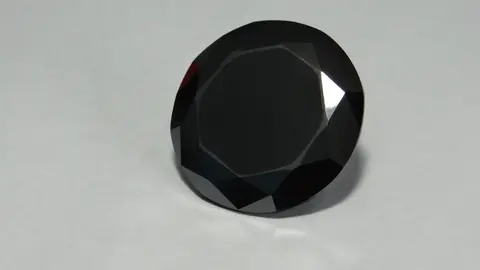
Opaque and metallic-looking instead of transparent. Most black diamonds in jewelry are low-grade diamonds turned black by heating or irradiation, and they sell for much less than fine white diamonds. See diamond value for the species as a whole.
- Opaque black body with a bright, almost metallic surface luster
- Under a loupe, surface pits and cracks are common because of the many inclusions
- Very hard facet edges that stay sharp
- Carbonado looks like a dull black, porous, granular lump rather than a crystal
Where black diamond comes from
- Bahia, Brazil
- Historic carbonado source.
- Central African Republic
- Carbonado in alluvial deposits.
- Many diamond mines worldwide
- Low-grade heavily included diamonds that become treated black diamonds.
Black diamond lookalikes
Black spinel fails a thermal diamond tester and has a glassier luster.
- Hardness 8
- SG about 3.6
- RI about 1.72
black diamond vs black spinel
Hematite leaves a red-brown streak on unglazed porcelain and is much heavier.
- Hardness 5 to 6.5
- SG about 5.3
Onyx has a waxy luster and is usually cut as smooth beads or cabochons rather than faceted stones.
black diamond vs onyx
Black moissanite
Moissanite is flagged by a moissanite tester.
- Passes a basic thermal tester
- SG about 3.22
Fake, dyed and treated black diamond
Heat-treated or irradiated black diamonds sold without disclosure
Very common
- Very even black color
- Natural black diamonds show patchy gray areas when backlit; irradiated ones may show very dark green on thin edges under strong light
- Lab confirmation needed
Black cubic zirconia and black moissanite
Common
- CZ fails a thermal tester
- Moissanite flags on a multi tester
- CZ feels heavy
Coated diamonds
Occasional
- Worn coating at facet junctions
Is my black diamond real? Tests you can do at home
-
Multi tester
Touch a combined diamond and moissanite tester to a clean facet.
- Real
- Reads diamond.
- Fake or lookalike
- Spinel, onyx and CZ fail; moissanite is flagged.
-
Streak check on rough
For rough or loose material only, rub an edge on unglazed porcelain.
- Real
- No streak; diamond may scratch the plate.
- Fake or lookalike
- Hematite leaves a red-brown streak.
Can leave a small mark.
-
Loupe on surface
Look at the facets at 10x under strong light.
- Real
- Sharp facet edges with surface pits from inclusions.
- Fake or lookalike
- Glass and CZ show worn edges; onyx is smooth and waxy.
A stone that passes these tests is consistent with natural black diamond, not proven. For valuable pieces, a gem lab report settles treatment and origin.
Treatments
- Heat treatment (almost always)
- Turns graphite in fractures black in low-grade stones; this is how most jewelry black diamonds are made. Gem lab.
- Irradiation (common)
- Produces very dark green that looks black. Gem lab; dark green on thin edges under strong light.
What moves the price of black diamond
- Natural vs treated color. Natural-color black diamonds with a lab report bring more than treated ones.
- Size. Larger stones are more valued, though less steeply than white diamonds.
- Surface quality. Fewer pits and cracks on the surface improve polish and value.
- Cut. Well-polished stones with even luster sell better.
Questions collectors ask about black diamond
- Are black diamonds worth a lot of money?
- Usually not compared with white diamonds. Most black diamonds are treated low-grade stones; natural-color black diamonds with a lab report are worth more. See the price table above.