RockValues

Marble value and identification

Dealers list marble carvings 5 to 10 cm (2 to 4 in) at $8.50 to $34.

Prices checked . Page updated .
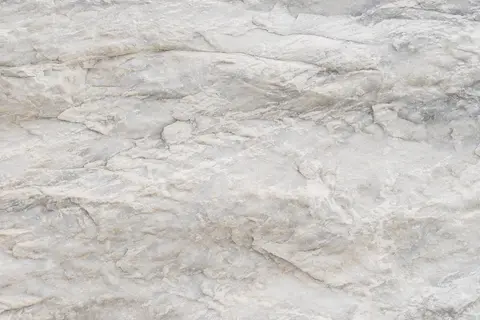
Marble: Marble Kymi Euboea Greece
Marble Kymi Euboea Greece. Photo: Jebulon, CC0, via Wikimedia Commons.
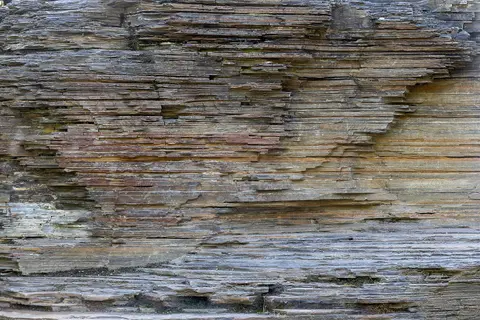
Marble: Shale formation, Marble Canyon, Kootenay National Park, British Columbia, 2025-07-11
Shale formation, Marble Canyon, Kootenay National Park, British Columbia, 2025-07-11. Photo: Chris Woodrich, CC BY-SA 4.0, via Wikimedia Commons.

What marble is worth

Dealer asking prices for marble, middle half of current listings, checked 2026-11-20. Bar shows the 25th to 75th percentile; the dark tick is the median.
Form and sizeTypical asking priceRange chartMedianListings
Carvings and shapes (per piece)$12 to $62$1919 from 1 dealer
5 to 10 cm (2 to 4 in)$8.50 to $34$1912 from 1 dealer
Spheres (per piece)$29 to $215$14513 from 1 dealer
5 to 10 cm (2 to 4 in)$29 to $215$13712 from 1 dealer
Tumbled stones (per pound)Not enough data (0 listings, need 5)

By origin

  • United States: $12 to $79, median $12 (9 listings)
  • India: $10 to $19, median $19 (7 listings)
Show 12 of the listings behind these numbers
Sample dealer listings for Marble
ListingSizeLocalityAskingSeen
Bargain, 2.4" Polished Fruit Jasper Palm Stone - India
FossilEra
6.1 cmIndia$5
Bargain, 2.4" Polished Fruit Jasper Palm Stone - India
FossilEra
6.1 cmIndia$5
2.05" Carved Zebra Marble Turtle - Utah
FossilEra
5.2 cmUtah$7
1.7" Polished Picasso Marble Pocket Stones
FossilEra
4.3 cm$9
2.25" Carved Picasso Marble Turtle - Utah
FossilEra
5.7 cmUtah$9
1.5" Painted Desert Marble Turtle - Colorado
FossilEra
3.8 cmColorado$9
1.6" Painted Desert Marble Turtle - Colorado
FossilEra
4.1 cmColorado$9
1.5" Painted Desert Marble Turtle - Colorado
FossilEra
3.8 cmColorado$9
1.5" Carved Picasso Marble Turtle - Utah
FossilEra
3.8 cmUtah$12
1.5" Carved Picasso Marble Turtle - Utah
FossilEra
3.8 cmUtah$12
1.95" Carved Zebra Marble Turtle - Utah
FossilEra
5 cmUtah$12
1.9" Carved Zebra Marble Turtle - Utah
FossilEra
4.8 cmUtah$12

These are dealer asking prices: what shops list marble for, not what it sells for and not an appraisal. Selling to a dealer usually brings well below retail, because the dealer has to resell it at a margin.

How to identify marble

Marble is a metamorphic rock made of recrystallized calcite or dolomite, formed when limestone or dolostone is heated and squeezed. In the stone trade the word also covers any carbonate rock that takes a polish, including some limestones and serpentine rocks.

  • Interlocking sugary to coarse crystalline grains that sparkle on a broken surface.
  • Soft: a steel knife scratches it easily (hardness about 3 to 4), and it will not scratch glass.
  • Calcite marble fizzes in vinegar; dolomitic marble fizzes only weakly or when scratched to powder.
  • Colors from pure white to gray, pink, green and black, with veins or clouds of other minerals.
  • Slightly translucent at thin edges in white marble, giving it a soft glow.
  • Feels cold to the touch and heavier than resin or cultured stone.

Marble varieties

Picasso marble

Picasso marble, also sold as Picasso jasper, is a trade name for a cream, gray and black patterned metamorphosed limestone from Utah. It is a marble, not a jasper. Distinguished by its brushstroke-like black and brown dendritic lines on a cream to gray ground; like other marble it is soft enough to scratch with steel.

Where marble comes from

Carrara, Apuan Alps, Italy
White and gray statuary and building marble, quarried since Roman times; used for Michelangelo's David.
Mount Pentelicus, Greece
Fine white Pentelic marble used for the Parthenon.
Thassos, Greece
Very white dolomitic marble.
Makrana, Rajasthan, India
White marble used for the Taj Mahal.
Connemara, County Galway, Ireland
Green serpentine-rich marble sold as Connemara marble, popular in jewelry and souvenirs.
Marble, Colorado, USA
Yule marble, used for the Lincoln Memorial and the Tomb of the Unknown Soldier.
Vermont and Georgia, USA
Major American building and monument marble districts.

Marble lookalikes

Onyx and onyx marble

Banded 'onyx marble' is travertine calcite and fizzes; true onyx chalcedony is hard and does not.

  • Banded travertine has layered, often translucent bands

marble vs onyx

Dolomite

Dolomite rock fizzes only weakly in vinegar unless powdered.

  • Slightly harder and heavier than calcite

dolomite vs marble

Calcite

Single calcite crystals cleave into rhombs; marble is a granular mass of many grains.

  • Same mineral, different texture

calcite vs marble

Verd antique

Verd antique is a serpentine breccia with white carbonate veins and feels slightly waxy.

  • Sold in the trade as green marble

Also mistaken for marble: white jade, hetian jade, picasso jasper, howlite.

Fake, dyed and treated marble

  • Cultured marble (crushed stone in resin)

    Very common

    • Feels warmer and lighter than stone
    • Glossy gel coat surface
    • Pattern sits in a clear top layer
  • Laminate, vinyl or printed porcelain with a marble pattern

    Very common

    • Pattern does not continue around edges or through chips
    • Repeating veins across pieces
    • Porcelain is too hard to scratch with steel
  • Polished limestone sold as marble

    Very common

    • Fossils or dull, fine grained texture instead of sparkling crystals
    • Accepted trade usage, but not marble in the geological sense
  • Engineered quartz or granite called marble

    Common

    • Does not scratch with steel
    • No fizz in vinegar
  • Dyed marble beads and carvings

    Common

    • Bright colors concentrated along grain boundaries
    • Acetone swab picks up color

Is my marble real? Tests you can do at home

  1. Vinegar drop

    On a hidden spot, place a drop of white vinegar and watch closely.

    Real
    Calcite marble fizzes with fine bubbles; dolomitic marble barely reacts.
    Fake or lookalike
    Resin, quartz, porcelain and granite do nothing.

    Can leave a small mark.

  2. Steel scratch test

    Press a knife point on an unseen underside.

    Real
    Leaves a scratch easily.
    Fake or lookalike
    Quartz composite, granite and porcelain resist.

    Can leave a small mark.

  3. Edge and chip check

    Look at the unpolished edges and any chips.

    Real
    Same crystalline pattern runs through the whole thickness.
    Fake or lookalike
    Laminate and printed tile show a different core.
  4. Cold touch

    Rest your palm on it in a room temperature space.

    Real
    Feels cold and stays cool.
    Fake or lookalike
    Resin and cultured marble feel closer to room temperature. Not decisive against porcelain.

A stone that passes these tests is consistent with natural marble, not proven. For valuable pieces, a gem lab report settles treatment and origin.

Treatments

Resin filling of slabs (common)
Pits and cracks in commercial slabs are filled and backed with mesh; accepted in the building trade. Glossy filled spots and mesh on the back.
Dyeing (occasional)
Used for beads and small carvings; lowers value. Color along grain boundaries, acetone swab.
Waxing or sealing (common)
Improves stain resistance; does not change value. Water beads on the surface.

What moves the price of marble

  1. Quarry and name. Named stones such as Statuario and Calacatta from Carrara outrank common gray marble.
  2. Whiteness and veining. Clean white grounds and bold, even veining command the most for slabs.
  3. Block or slab size. Large defect free blocks and full slabs are worth more than offcuts.
  4. Soundness. Cracks, fill and vugs reduce value.
  5. Workmanship. For carvings and antiques, the sculptor, age and condition outweigh the stone itself.
  6. Treatment. Natural color ranks above dyed.

Care and safety

Acids such as lemon juice, vinegar and many cleaners etch the polish. Clean with water and a neutral cleaner and keep sealed in kitchens.

Questions collectors ask about marble

How much is real marble worth?
It depends on the quarry, whiteness, veining, soundness and size; named Carrara whites are at the top and common gray stone at the bottom. Carvings are valued on workmanship and age. See the price table above for current observations.
How much is Connemara marble worth?
Connemara marble is a green serpentine-rich marble from western Ireland, valued on depth of green, pattern and the craftsmanship of the jewelry or carving it is set in. See the price table above.

Sources

Prices: 41 current listings from FossilEra, seen 2026-11-20 to 2026-11-20. How we collect prices.