What carnelian is worth
Show 12 of the listings behind these numbers
These are dealer asking prices: what shops list carnelian for, not what it sells for and not an appraisal. Selling to a dealer usually brings well below retail, because the dealer has to resell it at a margin.
How to identify carnelian
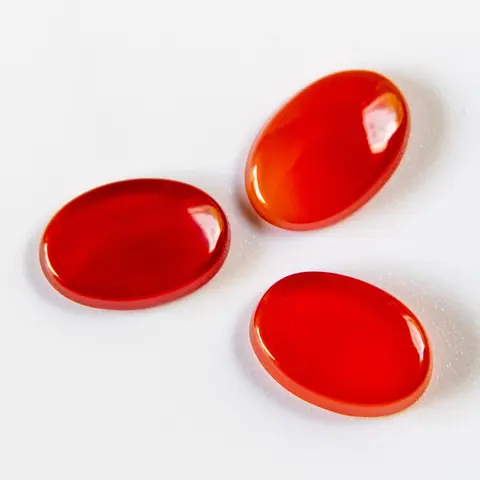
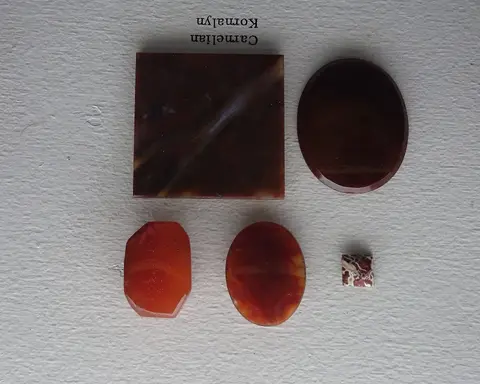
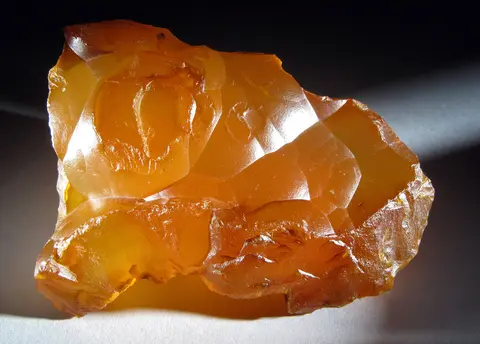
Carnelian is translucent orange to red chalcedony colored by iron oxide. Much of today's carnelian is heated or dyed agate from Brazil and Uruguay.
Chalcedony with orange to red iron oxide color; darker brownish-red material grades into sard. See chalcedony value for the species as a whole.
- Translucent orange to red, glowing when backlit
- Natural stones often show cloudy color patches rather than sharp bands
- Waxy luster, scratches glass
- Feels cool and quartz-heavy
Other chalcedony varieties
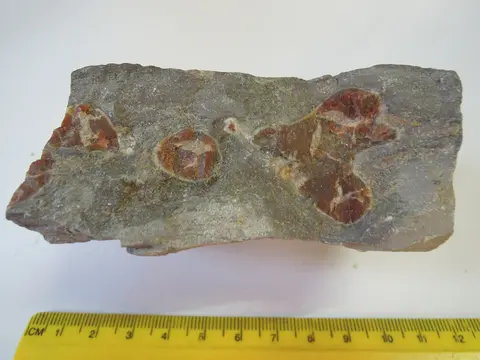
Where carnelian comes from
- Gujarat, India
- Historic source and bead-making center.
- Brazil and Uruguay
- Source of most commercial carnelian, typically heated agate.
- Indonesia and Madagascar
- Also supply natural carnelian rough.
Carnelian lookalikes
Agate shows distinct curved bands; carnelian is mostly even or cloudy.
- Same material; pattern decides the name
carnelian vs agate
Red jasper is opaque even at thin edges.
- Same hardness
- Brick red, not glowing
red jasper vs carnelian
A knife scratches calcite and it shows cleavage flashes.
Orange glass
Glass shows bubbles and swirl marks.
- Often perfectly even color
- Softer than chalcedony
Also mistaken for carnelian: fire opal, amber, cherry amber, garnet, jasper, red tiger's eye, sard.
Fake, dyed and treated carnelian
Heated agate sold as carnelian
Very common
- Sharp red bands alternating with paler bands
- Brownish-red tone
Dyed agate sold as carnelian
Common
- Color concentrated in bands and around drill holes
- Stripes seen when backlit
Orange glass beads
Common
- Bubbles
- Too even and too transparent
Is my carnelian real? Tests you can do at home
-
Backlight stripe check
Hold a strong flashlight behind the stone.
- Real
- Natural carnelian shows cloudy, diffuse color.
- Fake or lookalike
- Dyed or heated agate shows striped bands of different strength.
-
Glass scratch test
Try the stone against a glass plate.
- Real
- Scratches glass.
- Fake or lookalike
- Calcite and many glass beads do not.
Can leave a small mark.
-
Loupe for bubbles
Inspect at 10x near the surface and drill holes.
- Real
- No bubbles.
- Fake or lookalike
- Glass shows round gas bubbles.
A stone that passes these tests is consistent with natural carnelian, not proven. For valuable pieces, a gem lab report settles treatment and origin.
Treatments
- Heating (common)
- Deepens or creates red-orange color; stable and widely accepted. Banded red pattern; lab for certainty.
- Dyeing (common)
- Colors gray agate; lowers value compared with natural color. Color pooled in porous bands and drill holes.
What moves the price of carnelian
- Color. Saturated, even red-orange is preferred over brownish or pale.
- Translucency. Glowing stones beat cloudy ones.
- Natural color. Untreated material brings more when documented.
- Cut and age. Antique carved seals and intaglios are valued as artifacts.
Questions collectors ask about carnelian
- What is a carnelian stone made of?
- Carnelian is chalcedony, microcrystalline quartz (silicon dioxide), with small amounts of iron oxide that give the orange to red color.
- What is carnelian agate?
- It is a trade name for banded agate in carnelian colors. Strictly, carnelian is unbanded or cloudy red chalcedony and banded material is red agate, but sellers use the names loosely.
- How durable is carnelian?
- Carnelian is hardness 6.5 to 7 with no cleavage, so it handles daily wear well in rings and bracelets. Hard knocks can still chip it, and harder stones like sapphire and diamond will scratch it.
- What does high quality carnelian look like?
- Top carnelian has an even, saturated red-orange color, glows when held to light, and has no cracks, brown patches or strong banding.
- Are carnelian stones worth anything?
- Most carnelian is affordable because it is plentiful; value rises with saturated even color, translucency, natural color, size and fine carving or antique origin. See the price table above for real sales.
- Where can I find carnelian?
- Commercial carnelian comes mostly from India, Brazil, Uruguay, Indonesia and Madagascar. Collectors also find natural red chalcedony pebbles in river and beach gravels wherever agate occurs.
Sources
Prices: 33 current listings from FossilEra, Kingsley North, The Gem Shop, Throwin Stones, seen 2026-11-20 to 2026-11-20. How we collect prices.