RockValues

Fire opal value and identification

Fire opal is transparent to translucent opal with a yellow, orange or red body color, with or without play of color. Mexico is the classic source.

A variety of opal. Prices checked .
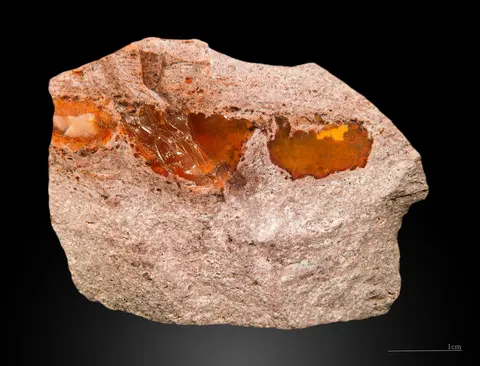
Fire opal: Precious Mexican Fire Opal with attached matrix
Precious Mexican Fire Opal with attached matrix. Photo: Dpulitzer, CC BY-SA 4.0, via Wikimedia Commons.
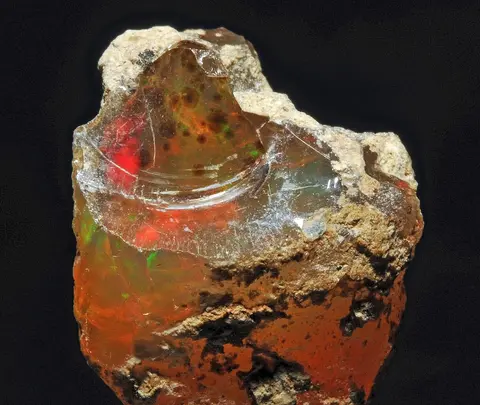
Fire opal: Opledefeu2
Opledefeu2. Photo: Didier Descouens, CC BY-SA 3.0, via Wikimedia Commons.
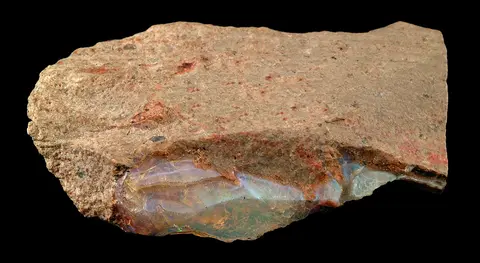
Fire opal: Opale (Ethiopie) 1
Opale (Ethiopie) 1. Photo: Parent Géry, CC BY-SA 3.0, via Wikimedia Commons.
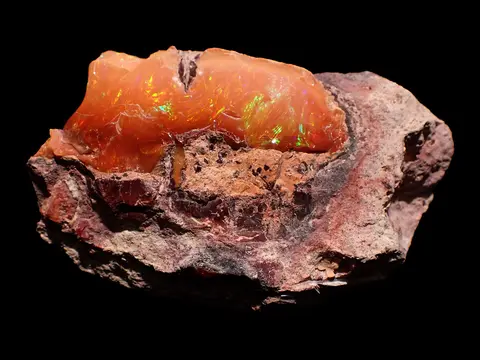
Fire opal: Fire opal (GeoDIL number - 780)
Fire opal (GeoDIL number - 780). Photo: Shannon Heinle, CC0, via Wikimedia Commons.

What fire opal is worth

Not enough data. We have not yet seen 5 or more current dealer listings for fire opal in any one form, so we show no range rather than guess.

Show 5 of the listings behind these numbers
Sample dealer listings for Fire opal
ListingSizeLocalityAskingSeen
3" Polished Colorful Wild Fire Opal Sphere - Utah
FossilEra
7.6 cmUtah$189
3.9" Polished Colorful Wild Fire Opal Sphere - Utah
FossilEra
9.9 cmUtah$375
Fire Opal (28.8 ct)
iRocks (The Arkenstone)
28.8 ctJuniper Ridge Opal Mine, Lake Co., Oregon, USA$7,500
Opal (rare locality) (24.0 ct)
iRocks (The Arkenstone)
24 ctHidden Fire Opal Mine, Vernon Parish, Louisiana, USA$7,500
Fire Opal (31.90 ct)
iRocks (The Arkenstone)
31.9 ctJuniper Ridge Opal Mine, Lake Co., Oregon, USA$8,000

These are dealer asking prices: what shops list fire opal for, not what it sells for and not an appraisal. Selling to a dealer usually brings well below retail, because the dealer has to resell it at a margin.

How to identify fire opal

The name refers to the warm body color, not to the flashes; many fire opals show no play of color and are cut faceted like other transparent gems. See opal value for the species as a whole.

  • Transparent to translucent yellow, orange, red or brownish body
  • Often faceted when clear; cabochon when it shows play of color
  • Very light in the hand (SG about 2.0)
  • Low refractive index gives a soft, slightly glassy look with little sparkle
  • May contain rhyolite host rock (cantera)

Other opal varieties

Where fire opal comes from

Queretaro, Mexico
Historic mining area for fire opal and contra luz opal.
Jalisco and Nayarit, Mexico
Major modern production around Magdalena, Jalisco.
Ethiopia
Orange and red opal from Ethiopian deposits, some hydrophane.

Fire opal lookalikes

Carnelian

Carnelian is heavier (about 2.6), harder (6.5 to 7) and shows cloudy banding rather than glassy transparency.

  • Waxy luster
  • Never shows play of color

Citrine

Citrine is heavier (2.65), harder (7) and has more sparkle when faceted.

  • Higher RI (1.54 to 1.55)

Spessartine garnet

Spessartine is far heavier (about 4.1) with much higher brilliance.

  • RI about 1.79 to 1.81

Orange glass

Glass is heavier (about 2.4 to 2.6) and often shows gas bubbles and swirl lines.

  • Molded facet edges may be rounded

Also mistaken for fire opal: amber, fire agate.

Fake, dyed and treated fire opal

  • Orange or red glass

    Common

    • Round gas bubbles
    • Swirl marks
    • Heavier than opal
  • Lab-created fire opal

    Occasional

    • Uniform color
    • Columnar pattern if play of color is present
  • Resin imitations

    Occasional

    • Very light
    • Soft, scratches with a pin
    • Warm to the touch

Is my fire opal real? Tests you can do at home

  1. Specific gravity with a kitchen scale

    Weigh dry, then suspended in water; divide dry weight by the loss in water.

    Real
    About 1.98 to 2.1.
    Fake or lookalike
    Glass 2.4 to 2.6, citrine 2.65, garnet over 4.
  2. Loupe for bubbles and inclusions

    Examine the stone at 10x with a penlight.

    Real
    Natural flow lines, host rock bits or no visible inclusions.
    Fake or lookalike
    Round bubbles and swirls in glass.
  3. Weight in hand

    Compare with a similar glass or quartz stone.

    Real
    Feels unusually light.
    Fake or lookalike
    Glass and quartz feel heavier.

A stone that passes these tests is consistent with natural fire opal, not proven. For valuable pieces, a gem lab report settles treatment and origin.

Treatments

Oiling or resin (occasional)
Can hide crazing in Mexican material; reduces value when found. Cracks reappear after cleaning; lab testing.

What moves the price of fire opal

  1. Color. Saturated, even red to red-orange ranks highest, then orange; pale yellow and brownish stones rank lowest.
  2. Play of color. Fire opal that also shows play of color is worth more.
  3. Clarity and transparency. Clean, transparent faceted stones beat cloudy ones.
  4. Stability. Stones prone to crazing are discounted; stable material from proven sources is preferred.
  5. Size and cut. Larger, well-cut stones are scarcer.

Questions collectors ask about fire opal

Are fire opals valuable?
Fine red to orange transparent fire opal, especially with play of color, is valuable, while pale or cloudy material is modest. Color saturation, clarity, play of color and size set the value; see the price table above.
How do I tell if my fire opal is real?
Real fire opal is unusually light (SG about 2.0), with a soft glassy look and natural flow lines or host rock inside. Glass imitations are heavier and show round bubbles under a loupe.

Sources

Prices: 5 current listings from FossilEra, iRocks (The Arkenstone), seen 2026-11-20 to 2026-11-20. How we collect prices.