RockValues

Citrine value and identification

Dealers list citrine specimens 5 to 10 cm (2 to 4 in) at $19 to $28; tumbled stones run about $735 to $1,100 per pound.

A variety of quartz. Prices checked .
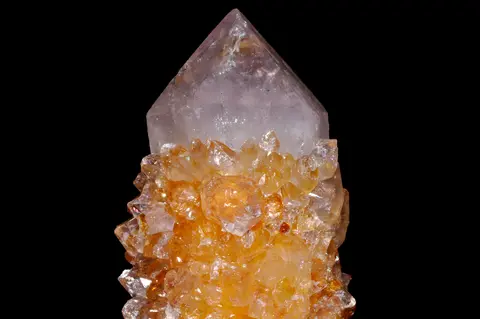
Citrine: Citrine sur améthyste (République d'Afrique du Sud)
Citrine sur améthyste (République d'Afrique du Sud). Photo: Parent Géry, CC BY-SA 3.0, via Wikimedia Commons.
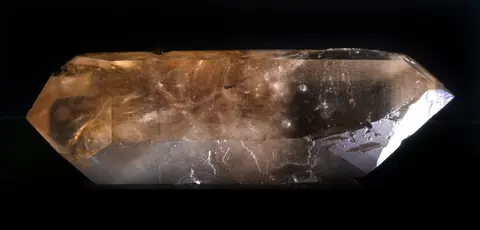
Citrine: Citrine bresil
Citrine bresil. Photo: Didier Descouens, CC BY-SA 4.0, via Wikimedia Commons.
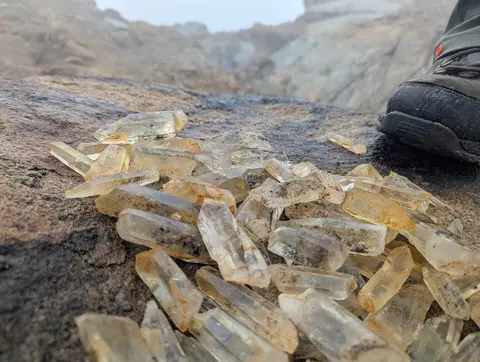
Citrine: Pile of pale yellow quartz crystal points, King Citrine Mine
Pile of pale yellow quartz crystal points, King Citrine Mine. Photo: AdamKelliher, CC BY-SA 4.0, via Wikimedia Commons.

What citrine is worth

Dealer asking prices for citrine, middle half of current listings, checked 2026-11-20. Bar shows the 25th to 75th percentile; the dark tick is the median.
Form and sizeTypical asking priceRange chartMedianListings
Specimens (per piece)$19 to $31$268 from 1 dealer
5 to 10 cm (2 to 4 in)$19 to $28$216 from 1 dealer
Tumbled stones (per pound)$735 to $1,082$8577 from 1 dealer
Rough (per pound)Not enough data (4 listings, need 5)
Show 12 of the listings behind these numbers
Sample dealer listings for Citrine
ListingSizeLocalityAskingSeen
CITRINE Tumbled Stones - Tumbled Crystals, Birthstone, Self Care, Healing Crystals and Stones, E1409 (Small (2 stones))
Throwin Stones
2.5 cm$7.20
CITRINE Tumbled Stones - Tumbled Crystals, Birthstone, Self Care, Healing Crystals and Stones, E1409 (Medium (1 stone))
Throwin Stones
2.5 cm$7.20
CITRINE Tumbled Stones - Tumbled Crystals, Birthstone, Self Care, Healing Crystals and Stones, E0302 (Small)
Throwin Stones, heated
2.3 cm$8.10
CITRINE Tumbled Stones - Tumbled Crystals, Birthstone, Self Care, Healing Crystals and Stones, E1409 (Large (1 stone))
Throwin Stones
2.5 cm$9
CITRINE Tumbled Stones - Tumbled Crystals, Birthstone, Self Care, Healing Crystals and Stones, E1409 (Extra Small)
Throwin Stones
2.5 cm$9.45
CITRINE Tumbled Stones - Tumbled Crystals, Birthstone, Self Care, Healing Crystals and Stones, E1409 (XL (1 stone))
Throwin Stones
2.5 cm$10
CITRINE Tumbled Stones - Tumbled Crystals, Birthstone, Self Care, Healing Crystals and Stones, E0302 (Medium)
Throwin Stones, heated
2.3 cm$11
CITRINE Crystal Pendant - Tumbled Yellow Birthstone Gift, Polished Stone Jewelry, E0305 (Small)
Throwin Stones
3.6 cm$14
CITRINE Crystal Pendant - Tumbled Yellow Birthstone Gift, Polished Stone Jewelry, E0305 (Medium)
Throwin Stones
3.6 cm$18
2.1" Moroccan Orange “Citrine” Quartz Crystal Cluster
FossilEra
5.3 cm$19
2.3" Moroccan Orange “Citrine” Quartz Crystal Cluster
FossilEra
5.8 cm$19
2.1" Moroccan Orange “Citrine” Quartz Crystal Cluster
FossilEra
5.3 cm$19

These are dealer asking prices: what shops list citrine for, not what it sells for and not an appraisal. Selling to a dealer usually brings well below retail, because the dealer has to resell it at a margin.

How to identify citrine

Citrine is yellow to orange quartz. Natural citrine is uncommon and usually pale; most citrine on the market is amethyst that has been heated.

It is quartz whose yellow to orange color comes from iron, either naturally or through heat treatment of amethyst. See quartz value for the species as a whole.

  • Pale lemon to golden yellow (natural) or deep orange to reddish brown (often heated).
  • Heated geode points show deep orange tips fading to white at the base.
  • Natural citrine color is usually even, sometimes with a smoky tone.
  • Hardness 7; scratches glass.

Other quartz varieties

Where citrine comes from

Rio Grande do Sul and Minas Gerais, Brazil
Source of most commercial citrine, largely heat-treated amethyst.
Katanga region, Democratic Republic of the Congo
Natural smoky citrine crystals.
Anahi mine, Bolivia
Natural citrine alongside ametrine.
Madagascar
Natural citrine rough and crystals.

Citrine lookalikes

Heliodor

Beryl forms flat-ended hexagonal prisms and is slightly harder.

  • RI about 1.57 to 1.58
  • SG about 2.7

Golden calcite

Calcite is soft (3) and splits along cleavage.

  • Fizzes in acid

Also mistaken for citrine: yellow diamond, fire opal, amber, tangerine quartz, grossular garnet, hessonite garnet, mandarin garnet, topaz, honey calcite, orthoclase, libyan desert glass, scapolite, amblygonite.

Fake, dyed and treated citrine

  • Heated amethyst sold as natural citrine

    Very common

    • Burnt orange color
    • White bases on geode points
    • Clusters shaped like amethyst geodes
  • Yellow glass

    Common

    • Bubbles and swirls
    • Mold marks
  • Synthetic citrine

    Occasional

    • Flawless even color
    • Lab needed

Is my citrine real? Tests you can do at home

  1. Look at cluster bases

    Check where the crystal points meet the geode wall.

    Real
    Natural citrine color runs through the crystal.
    Fake or lookalike
    Heated amethyst points are often milky white at the base and dark orange at the tip.
  2. Loupe for bubbles

    Inspect with a 10x loupe.

    Real
    Natural inclusions or zoning.
    Fake or lookalike
    Round bubbles mean glass.
  3. Specific gravity

    Measure by water displacement with a kitchen scale.

    Real
    About 2.65.
    Fake or lookalike
    Topaz about 3.5; yellow sapphire about 4.0.

A stone that passes these tests is consistent with natural citrine, not proven. For valuable pieces, a gem lab report settles treatment and origin.

Treatments

Heating of amethyst (almost always)
Produces most citrine sold; heated stones cost less than natural citrine. Color and white bases are clues; a lab confirms.

What moves the price of citrine

  1. Natural color. Proven natural citrine is worth more than heated.
  2. Color. Saturated golden to orange without brown is preferred for faceted stones.
  3. Clarity. Eye-clean stones are standard; inclusions lower value.
  4. Size. Large clean stones are available, so size adds value more slowly than for rarer gems.

Sources

Prices: 22 current listings from FossilEra, Kingsley North, The Gem Shop, Throwin Stones, seen 2026-11-20 to 2026-11-20. How we collect prices.