RockValues

Rose quartz value and identification

Dealers list rose quartz carvings under 5 cm (2 in) at $14 to $35; rough runs about $9 to $44 per pound.

A variety of quartz. Prices checked .
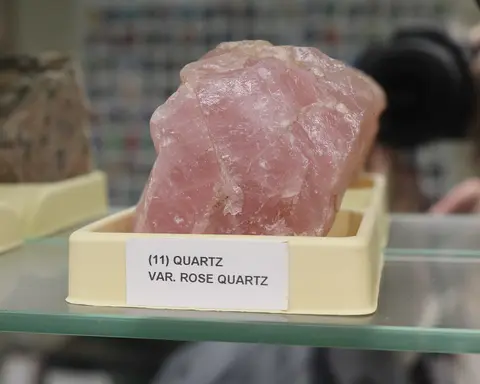
Rose quartz: Rose Quartz, Harman Mineral Collection, Capen Hill 2026-06-01
Rose Quartz, Harman Mineral Collection, Capen Hill 2026-06-01. Photo: Peter Cooper Jr., CC0, via Wikimedia Commons.
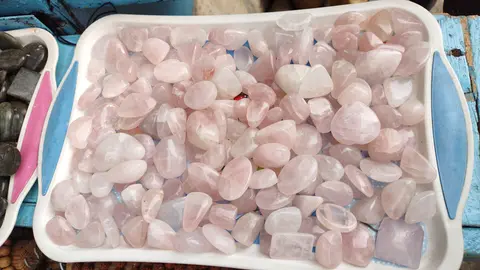
Rose quartz: Tumbled rose quartz stones
Tumbled rose quartz stones. Photo: Microrao, CC BY-SA 4.0, via Wikimedia Commons.
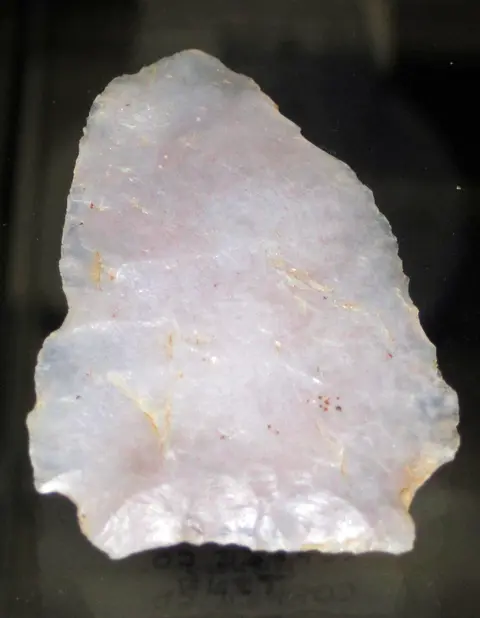
Rose quartz: Rose quartz artifact (Coffee County, Tennessee, USA)
Rose quartz artifact (Coffee County, Tennessee, USA). Photo: James St. John, CC BY 2.0, via Wikimedia Commons.
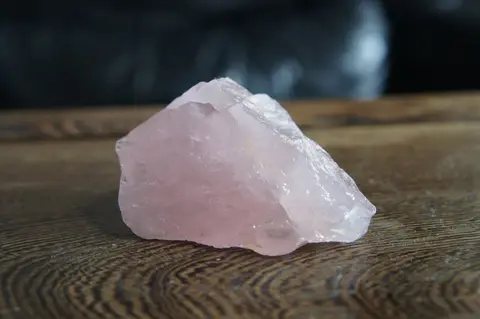
Rose quartz: Gemstone Collection - Rose Quartz Chunk (16069621437)
Gemstone Collection - Rose Quartz Chunk (16069621437). Photo: Marco Hazard from Hong Kong, Hong Kong, CC BY-SA 2.0, via Wikimedia Commons.

What rose quartz is worth

Dealer asking prices for rose quartz, middle half of current listings, checked 2026-11-20. Bar shows the 25th to 75th percentile; the dark tick is the median.
Form and sizeTypical asking priceRange chartMedianListings
Carvings and shapes (per piece)$18 to $99$3537 from 2 dealers
under 5 cm (2 in)$14 to $35$1923 from 2 dealers
5 to 10 cm (2 to 4 in)$40 to $99$447 from 1 dealer
10 to 20 cm (4 to 8 in)$82 to $183$1767 from 2 dealers
Specimens (per piece)$24 to $72$3428 from 3 dealers
under 5 cm (2 in)$18 to $51$2919 from 2 dealers
5 to 10 cm (2 to 4 in)$25 to $29$255 from 2 dealers
Rough (per pound)$9.14 to $44$139 from 3 dealers
Spheres (per piece)$18 to $30$247 from 2 dealers
Tumbled stones (per pound)Not enough data (3 listings, need 5)
Cut stones (per carat)Not enough data (1 listing, need 5)

By origin

  • Brazil: $30 to $119, median $44 (11 listings)
  • United States: $35 to $99, median $99 (5 listings)
Show 12 of the listings behind these numbers

These are dealer asking prices: what shops list rose quartz for, not what it sells for and not an appraisal. Selling to a dealer usually brings well below retail, because the dealer has to resell it at a margin.

How to identify rose quartz

Rose quartz is pale to medium pink quartz, usually massive rather than crystalline. Its color comes from microscopic fibrous inclusions of a pink borosilicate mineral related to dumortierite.

It is translucent, cloudy pink quartz that almost never forms large crystals; its color is from tiny inclusions rather than trace elements in the quartz itself. See quartz value for the species as a whole.

  • Soft pink, hazy to milky translucent body.
  • Usually massive chunks, spheres and carvings; crystals are rare and small.
  • Often has fine cracks inside.
  • Hardness 7; scratches glass.

Other quartz varieties

Where rose quartz comes from

Madagascar
Major source of deep pink massive rose quartz and star rose quartz.
Minas Gerais, Brazil
Massive rose quartz and the rare crystallized rose quartz.
Black Hills, South Dakota, USA
Historic pegmatite source; rose quartz is the state mineral.
Mozambique and Namibia
Commercial massive material.

Rose quartz lookalikes

Mangano calcite

Calcite is soft (3) and often glows pink under UV.

  • SG about 2.71
  • Rhombic cleavage

Rhodochrosite

Rhodochrosite is soft (3.5 to 4) and heavier (SG about 3.6) with banding.

  • Fizzes in acid

Also mistaken for rose quartz: peruvian opal, tourmaline, pink tourmaline, pink calcite, rhodonite, spodumene, kunzite, thulite, poudretteite.

Fake, dyed and treated rose quartz

  • Pink glass

    Common

    • Too transparent and even
    • Bubbles
    • No internal cracks
  • Dyed quartz or quartzite

    Occasional

    • Color concentrated in cracks
    • Acetone swab picks up dye

Is my rose quartz real? Tests you can do at home

  1. Scratch test against glass

    Draw an edge of rough across glass.

    Real
    Scratches glass.
    Fake or lookalike
    Mangano calcite and rhodochrosite do not.

    Can leave a small mark.

  2. Acetone swab

    Rub cracks with an acetone-dampened swab.

    Real
    Swab stays clean.
    Fake or lookalike
    Pink dye transfers.
  3. Loupe for bubbles

    Inspect with a 10x loupe.

    Real
    Hazy, cloudy body with cracks.
    Fake or lookalike
    Round bubbles in clear glass.

A stone that passes these tests is consistent with natural rose quartz, not proven. For valuable pieces, a gem lab report settles treatment and origin.

Treatments

Dyeing (occasional)
Pale material may be dyed for deeper pink; dyed pieces have little value. Color in cracks, acetone swab.

What moves the price of rose quartz

  1. Color. Deeper, even pink is worth more than pale.
  2. Translucency. Clearer material with fewer cracks is preferred.
  3. Crystals. Crystallized rose quartz is rare and valued far above massive.
  4. Asterism. Star rose quartz commands more.
  5. Size and carving. Large spheres and well carved pieces sell as decor.

Care and safety

Some rose quartz can fade with long exposure to strong sunlight.

Questions collectors ask about rose quartz

Can rose quartz go in water?
Yes. Quartz does not dissolve or soften in water, though cracked pieces should be dried well and kept out of long, strong sunlight, which can fade the color.
How much does rose quartz cost per carat?
Rose quartz is usually sold by piece or weight rather than by carat. Color depth, translucency and size drive value; see the price table above.

Sources

Prices: 141 current listings from FossilEra, iRocks (The Arkenstone), Kingsley North, The Gem Shop, Throwin Stones, seen 2026-11-20 to 2026-11-20. How we collect prices.