RockValues

Spodumene value and identification

Dealers list spodumene specimens at $45 to $3,000; cut spodumene runs about $13 to $20 per carat.

Prices checked . Page updated .
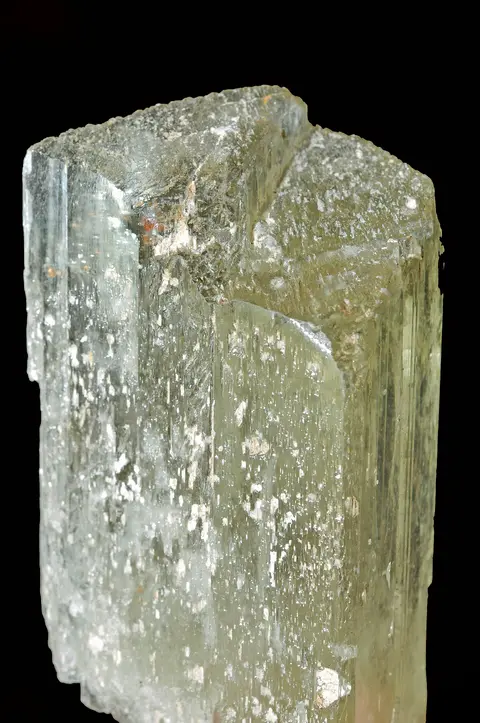
Spodumene: Spodumene var. jaune, garnet var. spessartine
Spodumene var. jaune, garnet var. spessartine. Photo: Parent Géry, CC BY-SA 3.0, via Wikimedia Commons.
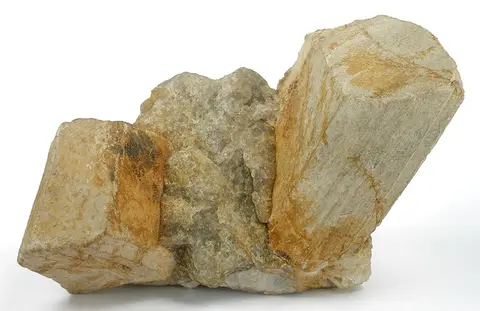
Spodumene: Albite-Muscovite-Spodumene-rw07a
Albite-Muscovite-Spodumene-rw07a. Photo: Robert M. Lavinsky, CC BY-SA 3.0, via Wikimedia Commons.
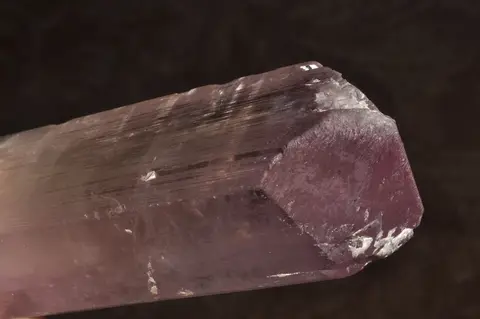
Spodumene: Spodumene 5
Spodumene 5. Photo: Géry PARENT, Public domain, via Wikimedia Commons.
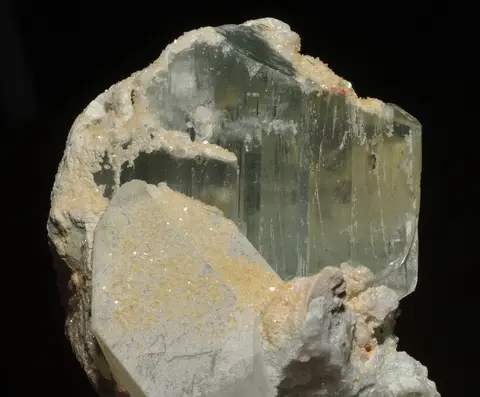
Spodumene: Spodumene var. triphane, quartz 1
Spodumene var. triphane, quartz 1. Photo: Géry PARENT, CC BY-SA 3.0, via Wikimedia Commons.

What spodumene is worth

Dealer asking prices for spodumene, middle half of current listings, checked 2026-11-20. Bar shows the 25th to 75th percentile; the dark tick is the median.
Form and sizeTypical asking priceRange chartMedianListings
Specimens (per piece)$45 to $2,975$755 from 2 dealers
Cut stones (per carat)$13 to $20$145 from 1 dealer
Slabs and polished pieces (per piece)Not enough data (4 listings, need 5)

By variety

Median dealer asking price by variety (specimen).
VarietyMedianListings
KunziteNot enough data4
TriphaneNot enough data1
Show 12 of the listings behind these numbers
Sample dealer listings for Spodumene
ListingSizeLocalityAskingSeen
Pink KUNZITE Crystal Chips - Small Crystals, Gemstones, Jewelry Making, Tumbled Crystals, E1880
Throwin Stones
2.5 cm$16
2" Colorless Kunzite Crystal (24.92 g) - Afghanistan
FossilEra
5.1 cmAfghanistan$39
2.65" Colorless Kunzite Crystal (45.09 g) - Afghanistan
FossilEra
6.7 cmAfghanistan$45
1.45" Lavender Kunzite Crystal (44.40 g) - Afghanistan
FossilEra
3.7 cmAfghanistan$75
6.3" Polished Pink Kunzite Section - Western Australia
FossilEra
16 cmWestern Australia$99
4.3" Polished Pink Kunzite Section - Western Australia
FossilEra
10.9 cmWestern Australia$99
7.3" Polished Pink Kunzite Section - Western Australia
FossilEra
18.5 cmWestern Australia$115
9" Polished Pink Kunzite Slab - Western Australia
FossilEra
22.9 cmWestern Australia$195
Kunzite
iRocks (The Arkenstone)
10.7 cmMawi pegmatite, Nuristan, Afghanistan$2,975
Spodumene var. Kunzite (153.60 ct)
iRocks (The Arkenstone)
153.6 ctDara-e-Pech pegmatite field, Kunar, Afghanistan$3,000
Spodumene var. Kunzite (224.30 ct)
iRocks (The Arkenstone)
224.3 ctDara-e-Pech pegmatite field, Kunar, Afghanistan$3,200
Spodumene var. Triphane (315.15 ct)
iRocks (The Arkenstone)
315.15 ctDara-e-Pech pegmatite field, Kunar, Afghanistan$4,000

These are dealer asking prices: what shops list spodumene for, not what it sells for and not an appraisal. Selling to a dealer usually brings well below retail, because the dealer has to resell it at a margin.

How to identify spodumene

Spodumene is a lithium aluminum silicate in the pyroxene group, found in granite pegmatites and mined as a major lithium ore. Gem varieties are pink to violet kunzite, green hiddenite and yellow to colorless triphane.

  • Long, flattened prismatic crystals with deep lengthwise striations and etched ends
  • Strong pleochroism: color is much deeper looking down the length of the crystal than from the side
  • Two perfect cleavages at about 87 degrees plus parting, so crystals split easily into flat splinters
  • Hardness 6.5 to 7, scratches glass
  • Vitreous luster, pearly on cleavage
  • Kunzite glows orange to pink under a UV torch
  • Heavier than quartz (SG about 3.15 to 3.21)

Spodumene varieties

Triphane

Triphane is an older name for yellow to colorless gem spodumene. Triphane is the yellow and colorless gem form of spodumene, without the manganese pink of kunzite or the green of hiddenite.

Where spodumene comes from

Nuristan and Laghman, Afghanistan
Large gem kunzite crystals, often with strong color and sharp terminations.
Minas Gerais, Brazil
Major source of kunzite and of green and yellow spodumene from pegmatites.
Pala, San Diego County, California, USA
Where kunzite was first described in the early 1900s; classic pink crystals.
Hiddenite, North Carolina, USA
Type locality of chromium-colored green hiddenite.
Black Hills, South Dakota, USA
Etta mine pegmatite famous for giant industrial spodumene crystals many meters long.
Pakistan and Madagascar
Gem kunzite and other spodumene from pegmatites.

Spodumene lookalikes

Morganite

Morganite has poor cleavage and weak pleochroism; kunzite changes color strongly with direction and shows cleavage cracks.

  • Morganite hardness 7.5 to 8
  • SG 2.71 to 2.90
  • RI 1.58 to 1.60

Amethyst

Amethyst has no cleavage, a lower RI and is lighter in the hand.

  • SG 2.65
  • RI 1.544 to 1.553
  • Color zoning in angular patches

Rose quartz

Rose quartz is cloudy and usually massive, with no cleavage.

  • SG 2.65
  • Rarely forms clear crystals

Pink tourmaline

Tourmaline has no cleavage and its triangular cross section crystals differ from flattened spodumene blades.

  • SG about 3.06
  • RI 1.62 to 1.64

Lepidolite

Lepidolite is a soft mica that flakes with a fingernail; spodumene scratches glass.

  • Lepidolite hardness 2.5 to 3
  • Scaly, sparkly texture

spodumene vs lepidolite

Danburite

Danburite has wedge-shaped terminations, weak pleochroism and poor cleavage.

  • SG 3.0
  • RI 1.63 to 1.64

Also mistaken for spodumene: amblygonite.

Fake, dyed and treated spodumene

  • Irradiated green spodumene sold as hiddenite

    Occasional

    • Green color fades quickly in light
    • No chromium; true hiddenite is from few sources
  • Synthetic or glass imitations of kunzite

    Occasional

    • No pleochroism
    • Bubbles or curved lines
    • No cleavage cracks
  • Pink quartz or glass sold as kunzite

    Occasional

    • Lower weight
    • No strong color change with direction
    • No UV glow

Is my spodumene real? Tests you can do at home

  1. Pleochroism by eye

    Look at a crystal or stone from the side, then down the long axis, or rotate it under a polarizing filter.

    Real
    Spodumene shows clearly deeper color along the length and paler from the side.
    Fake or lookalike
    Glass and quartz show the same color in all directions.
  2. UV torch

    Shine a 365 nm UV torch on the stone in a dark room.

    Real
    Kunzite glows orange to pink.
    Fake or lookalike
    Glass, quartz and morganite are usually inert or weak.
  3. Specific gravity by water displacement

    Weigh dry and suspended in water on a 0.01 g scale; divide dry weight by the loss.

    Real
    About 3.15 to 3.21.
    Fake or lookalike
    Quartz 2.65, morganite about 2.8, tourmaline about 3.06.
  4. Scratch test against glass

    Press a crystal edge or corner of rough firmly across glass.

    Real
    Scratches glass.
    Fake or lookalike
    Lepidolite and resin do not.

    Can leave a small mark.

A stone that passes these tests is consistent with natural spodumene, not proven. For valuable pieces, a gem lab report settles treatment and origin.

Treatments

Irradiation (common)
Turns pale spodumene pink, violet or green; green from irradiation is unstable and fades in light. Usually not detectable at home; fading under light is a clue.
Heating (common)
Removes brown or green tints from kunzite to leave purer pink; accepted and seldom affects price. Not detectable by standard testing.

What moves the price of spodumene

  1. Variety and color. Saturated violet pink kunzite and chromium green hiddenite rank far above pale or colorless spodumene.
  2. Saturation. Deeper colors are worth more, since kunzite is often pale in small stones.
  3. Clarity. Clean stones; cleavage cracks lower value.
  4. Cut. Cutting oriented down the long axis to show the deepest color.
  5. Size. Kunzite is common in large sizes, so very small stones are often too pale.
  6. Crystal quality. For specimens, sharp terminations, gemmy color and no damage drive value.
  7. Locality. Pala and Hiddenite pieces carry collector premiums.

Care and safety

Kunzite and hiddenite can fade in strong light; store away from sunlight and wear in evening settings. Perfect cleavage makes cut stones prone to splitting from knocks or heat; avoid ultrasonic and steam cleaners.

Questions collectors ask about spodumene

Is kunzite a type of quartz?
No. Kunzite is the pink to violet variety of spodumene, a lithium pyroxene. It is heavier than quartz (SG about 3.18 against 2.65) and has two perfect cleavages that quartz lacks.
Does kunzite fade in sunlight?
Yes. Many kunzites lose color with long exposure to sunlight or strong lamps, so store them in the dark.
What is the best color of kunzite?
The most valued kunzite is a saturated violet pink, deepest when viewed down the length of the crystal.
Why is kunzite so cheap?
Kunzite crystals are relatively abundant, often in large sizes, and the stone is hard to cut and can fade, which limits demand. Deep colored clean stones still command more; see the price table above.

Sources

Prices: 15 current listings from FossilEra, iRocks (The Arkenstone), Throwin Stones, seen 2026-11-20 to 2026-11-20. How we collect prices.