


Purple fluorite
Fluorite is hardness 4 and shows flat cleavage planes; it often glows blue under UV.
- SG about 3.18
- Cubic crystals
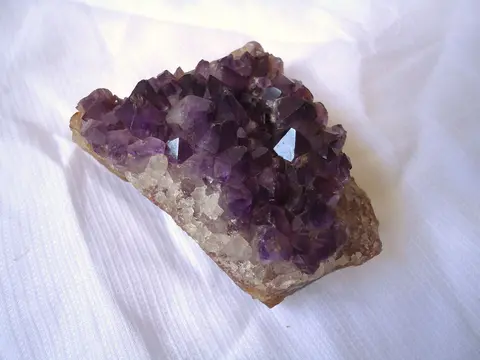
Dealers list amethyst specimens 5 to 10 cm (2 to 4 in) at $15 to $27; rough runs about $5.50 to $8 per pound.
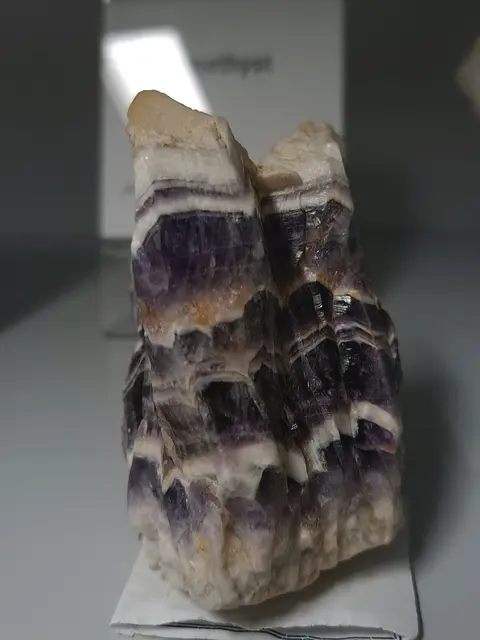
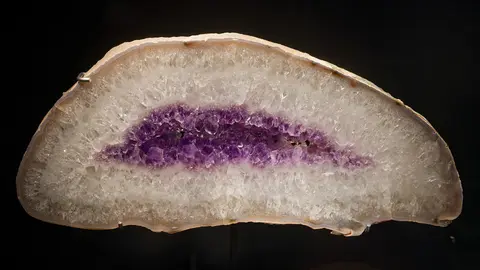
A variety of quartz. Prices checked .
| Form and size | Typical asking price | Range chart | Median | Listings |
|---|---|---|---|---|
| Specimens (per piece) | $17 to $49 | $25 | 73 from 4 dealers | |
| 5 to 10 cm (2 to 4 in) | $15 to $27 | $19 | 39 from 2 dealers | |
| 10 to 20 cm (4 to 8 in) | $35 to $225 | $56 | 21 from 3 dealers | |
| under 5 cm (2 in) | $19 to $35 | $22 | 12 from 2 dealers | |
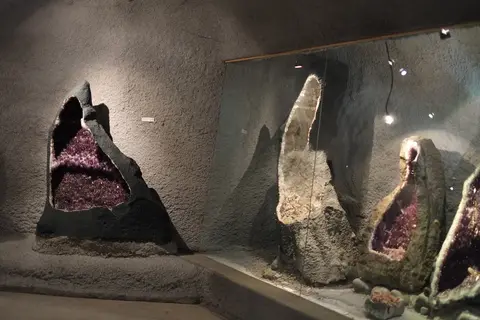
| Geodes and nodules (per piece) | $155 to $384 | $260 | 30 from 1 dealer | |
| 10 to 20 cm (4 to 8 in) | $109 to $206 | $156 | 18 from 1 dealer | |
| 20 to 40 cm (8 to 16 in) | $335 to $688 | $373 | 8 from 1 dealer | |
| Carvings and shapes (per piece) | $8.50 to $72 | $65 | 7 from 1 dealer | |
| 5 to 10 cm (2 to 4 in) | $24 to $76 | $65 | 6 from 1 dealer | |
| Rough (per pound) | $5.46 to $7.83 | $7.38 | 6 from 2 dealers | |
| Tumbled stones (per pound) | Not enough data (2 listings, need 5) | |||
| Cut stones (per carat) | Not enough data (2 listings, need 5) | |||
| Spheres (per piece) | Not enough data (1 listing, need 5) | |||
| Listing | Size | Locality | Asking | Seen |
|---|---|---|---|---|
| Amethyst Facet Rough -Sold by CT (Grade A) Kingsley North | 10 ct | Brazil | $1.50 | |
| 1-2" Dark Purple Amethyst Crystal Clusters - Uruguay FossilEra | 5.1 cm | Uruguay | $3 | |
| 1.5" Polished Amethyst Worry Stone FossilEra | 3.8 cm | $5 | ||
| 1.5" Polished, Deep Purple Amethyst Pocket Stone - Uruguay FossilEra | 3.8 cm | Uruguay | $6 | |
| 2.4" Polished Amethyst Heart - Madagascar FossilEra | 6.1 cm | Madagascar | $7 | |
| 2-3" Dark Purple Amethyst Crystal Clusters - Uruguay FossilEra | 7.6 cm | Uruguay | $7.50 | |
| Banded Amethyst Cabbing Rough 4-6 inches Kingsley North | 15.2 cm | $7.50 | ||
| Amethyst Rough Kingsley North | 3.6 cm | $7.95 | ||
| Amethyst, Brazil, Tumbling Rough, per lb The Gem Shop | 1.1 lb | Brazil | $8 | |
| 2.7" Polished Amethyst Heart - Madagascar FossilEra | 6.9 cm | Madagascar | $10 | |
| Amethyst, India, Tumbling Rough, per lb (Tumbling) The Gem Shop | 1.2 lb | India | $10 | |
| Tree of Life Pendant, Crystal Pendant - Amethyst, Smoky Clear Rose Quartz - Handmade Jewelry, Wire Wrapped Jewelry, E1998 (Amethyst) Throwin Stones | 5 cm | $11 |
These are dealer asking prices: what shops list amethyst for, not what it sells for and not an appraisal. Selling to a dealer usually brings well below retail, because the dealer has to resell it at a margin.
Amethyst is purple quartz. Its color comes from traces of iron combined with natural irradiation, and it ranges from pale lilac to deep violet.
It is quartz colored purple by iron-related color centers; the color can fade with long sunlight or heat. See quartz value for the species as a whole.
Fluorite is hardness 4 and shows flat cleavage planes; it often glows blue under UV.
Lepidolite is a lilac mica that flakes and sparkles with tiny scales.
Iolite turns grayish or yellowish when rotated, from strong pleochroism.
Tanzanite is heavier (SG about 3.35) with a bluer violet and strong pleochroism.
Sapphire is much heavier (SG about 4.0) and harder (9).
Also mistaken for amethyst: fluorite, rainbow fluorite, sugilite, alexandrite, spodumene, kunzite, scapolite.
Common
Common
Occasional
Look through the stone against a white background with a 10x loupe.
Draw a sharp edge of rough across glass.
Can leave a small mark.
In a dark room, shine longwave UV on the piece.
A stone that passes these tests is consistent with natural amethyst, not proven. For valuable pieces, a gem lab report settles treatment and origin.
Keep out of strong sunlight and heat for long periods; color can fade.
Prices: 141 current listings from Dakota Matrix Minerals, FossilEra, iRocks (The Arkenstone), Kingsley North, The Gem Shop, Throwin Stones, seen 2026-11-20 to 2026-11-20. How we collect prices.