Dealers list fluorite specimens 5 to 10 cm (2 to 4 in) at $25 to $175; tumbled stones run about $93 to $160 per pound.
Prices checked . Page updated .
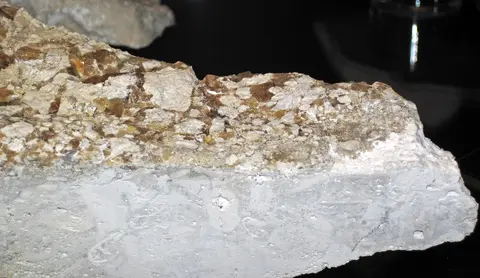
Dolostone breccia with brown fluorite (Lockport Dolomite, Middle Silurian; quarry in Ottawa County, Ohio, USA) 2. Photo: James St. John, CC BY 2.0, via Wikimedia Commons.
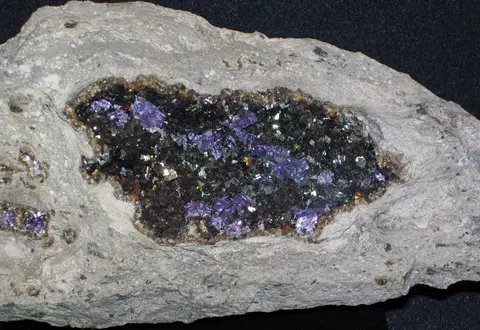
Fluorite (Stoneco Inc. Maumee Quarry, Lucas County, Ohio, USA) 4. Photo: James St. John, CC BY 2.0, via Wikimedia Commons.
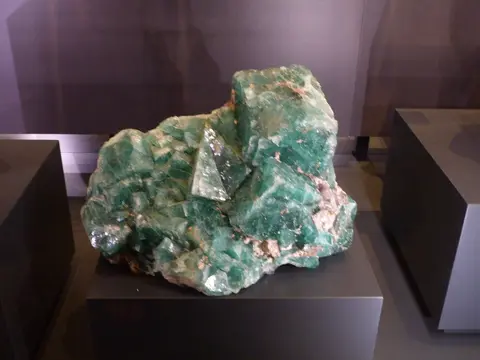
Fluorite (Mineral exhibit 31328637014). Photo: S. Rae from Scotland, UK, CC BY 2.0, via Wikimedia Commons.
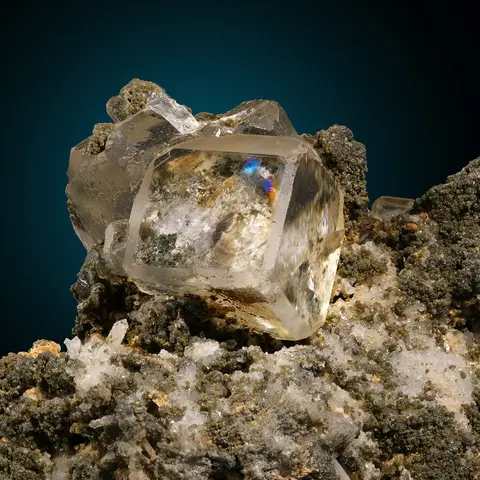
Fluorite crystal. Photo: Masha Milshina, CC BY 4.0, via Wikimedia Commons.
What fluorite is worth
Dealer asking prices for fluorite, middle half of current listings, checked 2026-11-20. Bar shows the 25th to 75th percentile; the dark tick is the median.
These are dealer asking prices: what shops list fluorite for, not what it sells for and not an appraisal. Selling to a dealer usually brings well below retail, because the dealer has to resell it at a margin.
How to identify fluorite
Fluorite is calcium fluoride (CaF2), a common hydrothermal mineral that forms cubic and octahedral crystals in nearly every color. It is soft at Mohs 4, cleaves into octahedra, and gave its name to fluorescence.
Cubic crystals with flat, glassy faces are the classic habit; octahedra and combinations also occur.
Perfect cleavage in four directions: broken corners show flat triangular planes, and pieces can be split into octahedra.
Hardness 4: a steel knife scratches it easily, and it will not scratch glass.
Often color zoned, with bands of purple, green, blue, yellow or clear parallel to the crystal faces.
Feels noticeably heavier than quartz of the same size (specific gravity about 3.18 versus 2.65).
Many specimens glow blue or violet under a longwave UV torch, though not all do.
Fluorite from China, now the largest source of fluorite specimens, from mines such as Xianghualing and Yaogangxian in Hunan and De'an in Jiangxi. A locality label: Chinese fluorite covers every color and habit, from green cubes and purple octahedra to banded material for carvings.
Pink fluorite
Pink to rose fluorite, usually as octahedra, one of the scarcest and most valued fluorite colors. Pink color comes from a different color center than purple or green; it occurs at few localities and commands a strong premium.
Illinois fluorite
Fluorite from the Illinois-Kentucky fluorspar district, the state mineral of Illinois, known for large purple, yellow and blue cubes. A locality label; Illinois fluorite is prized because commercial mining ended in the 1990s, so most specimens are old stock.
Octahedral fluorite
Fluorite in the shape of an eight-sided octahedron, either as natural crystals or, much more often, cleaved from cubes and masses. Fluorite's perfect cleavage lets pieces split into octahedra, so most octahedra sold in bulk are cleaved, not grown; natural octahedral crystals are less common and valued more.
Okorusu fluorite
Fluorite from the Okorusu mine near Otjiwarongo, Namibia, known for green, yellow and purple cubes, often with color zoning and inclusions. A locality name; Okorusu material is recognized by its green and yellow cubes and zoned purple crystals.
Cave-in-rock fluorite
Fluorite from the Cave-in-Rock area of Hardin County, Illinois, famous for large purple, yellow and blue cubes often with sphalerite, calcite and baryte. A classic locality name; Cave-in-Rock specimens are prized old stock since local mining ended.
Elmwood fluorite
Fluorite from the Elmwood mine near Carthage, Smith County, Tennessee, known for deep purple cubes with golden calcite, baryte and sphalerite. A classic locality name; Elmwood is better known for calcite, so fine fluorite from the mine is especially sought.
Rogerley fluorite
Green fluorite from the Rogerley mine in Weardale, County Durham, England, famous for strong daylight fluorescence that makes crystals look blue or purple in sunlight. A locality name; Rogerley material is recognized by its daylight fluorescence and twinned green cubes and is mined specifically for specimens.
Weardale fluorite
Fluorite from Weardale in the North Pennines of England, mostly green and purple, with strong blue fluorescence. A regional label; Weardale includes the Rogerley, Diana Maria, Heights and other mines and is one of the most collected fluorite districts.
Berbes fluorite
Fluorite from Berbes, Ribadesella, Asturias, Spain, known for sharp transparent purple cubes, often with baryte and quartz. A locality name; Berbes is a classic Spanish source of purple fluorite cubes.
Where fluorite comes from
Illinois-Kentucky fluorspar district, USA
Cave-in-Rock and nearby mines in Hardin County, Illinois, produced large purple, yellow and blue cubes until mining ended in the 1990s. Classic old-stock specimens.
Weardale, County Durham, England
Green fluorite with strong daylight fluorescence from the Rogerley, Diana Maria and other mines; highly collected.
Hunan and Jiangxi provinces, China
Xianghualing, Yaogangxian and De'an supply most of today's green, purple and blue crystals and much of the material for spheres and carvings.
Berbes, Asturias, Spain
Sharp purple cubes, often with baryte, from a well-known collecting area.
Okorusu, Namibia
Green, yellow and purple cubes, often with color zoning and inclusions.
Elmwood mine, Tennessee, USA
Deep purple fluorite with golden calcite and other species.
Castleton, Derbyshire, England
The only source of Blue John, a banded purple and yellow fluorite worked into ornaments.
Alps and Peru
Pink octahedral fluorite from Mont Blanc and other Alpine sites and from Huanzala, Peru, are among the most prized fluorite colors.
Glass sold as fluorite spheres, points and tumbles
Occasional
Round bubbles and swirl marks
No cleavage traces or internal color zoning following crystal planes
Lighter in hand (glass about 2.5)
Usually no UV response
Resin-stabilized fluorite
Common
Plastic-like luster in cracks
Resin filling visible under a loupe along fractures
Common in carvings, spheres and Blue John ornaments; acceptable if disclosed
Chinese banded fluorite sold as Blue John
Occasional
Banding and colors differ from Castleton material
No documented Derbyshire origin
Aura or titanium-coated fluorite
Occasional
Metallic rainbow film on the surface
Wears off at edges
Is my fluorite real? Tests you can do at home
Scratch test against glass
Press a sharp corner of the specimen against a glass plate and drag.
Real
Fluorite will not scratch glass; it may leave a powdery trail that wipes off.
Fake or lookalike
Quartz, amethyst, aventurine and emerald scratch glass.
Steel knife scratch
On an unseen spot, drag the tip of a steel knife lightly across the surface.
Real
The knife leaves a scratch, since fluorite is hardness 4.
Fake or lookalike
Quartz and glass resist the knife.
Can leave a small mark.
UV torch
Shine a 365 nm longwave UV flashlight on the specimen in a dark room.
Real
Many fluorites glow blue to violet; Weardale green fluorite glows strongly.
Fake or lookalike
Glass usually stays dark; amethyst does not fluoresce. Lack of glow does not rule out fluorite.
Look for cleavage
Examine broken corners and internal cracks with a loupe.
Real
Flat, mirror-like triangular cleavage planes cutting across the cube corners.
Fake or lookalike
Glass and quartz show curved conchoidal fracture instead.
Vinegar check against calcite
Put a drop of household vinegar on a scraped or powdered spot and watch with a loupe.
Real
Fluorite does not react.
Fake or lookalike
Calcite gives slow tiny bubbles.
Can leave a small mark.
Specific gravity with a kitchen scale
Weigh the dry piece, then weigh the water it displaces when hung by a thread in a cup on the scale; divide.
Real
About 3.18.
Fake or lookalike
Quartz and glass come in around 2.5 to 2.65.
A stone that passes these tests is consistent with natural fluorite, not proven. For valuable pieces, a gem lab report settles treatment and origin.
Treatments
Resin stabilization (common)
Strengthens fractured or massive fluorite so it can be cut into spheres, carvings and Blue John ornaments. Lowers value compared with untreated material for collectors. Resin in cracks under a loupe, plastic-like luster, sometimes a lab test.
Irradiation (rare)
Can deepen or create purple and blue color; some irradiated colors fade in light. Generally requires a lab.
Heating (rare)
Can lighten or remove color. Usually lab only.
Surface coating (occasional)
Adds iridescent color; sold as a novelty and worth less than natural specimens. Surface film that wears at edges.
What moves the price of fluorite
Crystal quality. Sharp, undamaged, lustrous crystals with clean faces are worth far more than massive or etched material.
Color. Pink and saturated blue are the scarcest colors; vivid purple and green with good clarity follow.
Locality. Named classic sources such as Rogerley, Cave-in-Rock, Elmwood, Berbes and Alpine pink carry strong premiums.
Associations and matrix. Crystals on contrasting matrix or with baryte, calcite, quartz or sphalerite add display value.
Fluorescence. Strong daylight fluorescence, as in Weardale material, adds value.
Size. Large single crystals and well-proportioned cabinet pieces command more.
Damage and treatment. Chips along easy cleavage lower value; stabilized or coated material is worth less.
Care and safety
Fluorite cleaves along four directions and chips easily. Do not drop it, clean it in an ultrasonic cleaner or expose it to sudden heat. Some purple and blue specimens fade with long exposure to strong light, so display them away from direct sun.
Questions collectors ask about fluorite
Amethyst vs fluorite: how do you tell them apart?
Amethyst is quartz, hardness 7, scratches glass and grows as six-sided points. Purple fluorite is hardness 4, does not scratch glass, forms cubes or octahedra and often shows flat triangular cleavage at broken corners.
Sources
Prices: 239 current listings from Dakota Matrix Minerals, FossilEra, iRocks (The Arkenstone), Kingsley North, The Gem Shop, Throwin Stones, seen 2026-11-20 to 2026-11-20. How we collect prices.