


Celestite
Celestite is noticeably lighter (SG about 3.95) and is often a paler, more uniform blue.
- Same crystal habit and cleavage
- Weigh both with a kitchen scale to compare SG
Dealers list barite specimens 5 to 10 cm (2 to 4 in) at $75 to $110.
Prices checked . Page updated .
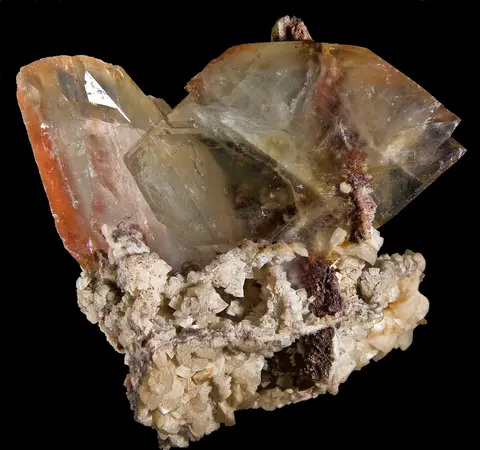
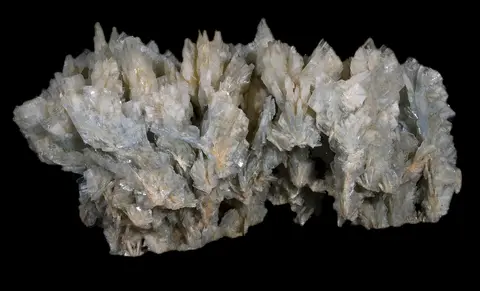
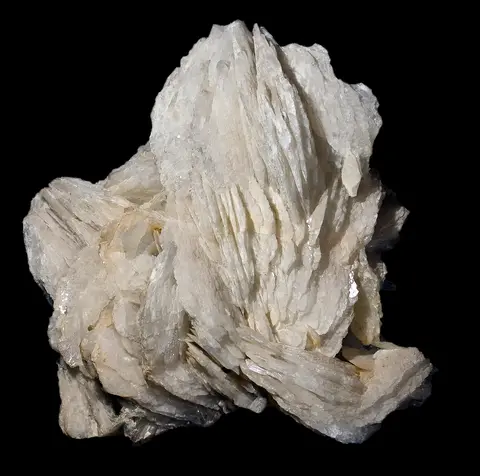
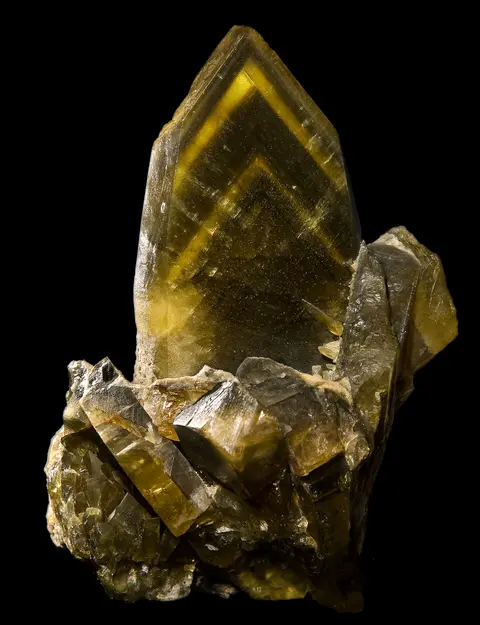
| Form and size | Typical asking price | Range chart | Median | Listings |
|---|---|---|---|---|
| Specimens (per piece) | $61 to $121 | $85 | 34 from 3 dealers | |
| 5 to 10 cm (2 to 4 in) | $75 to $109 | $95 | 17 from 3 dealers | |
| 10 to 20 cm (4 to 8 in) | $76 to $178 | $90 | 10 from 1 dealer | |
| under 5 cm (2 in) | $33 to $80 | $49 | 7 from 3 dealers | |
| Slabs and polished pieces (per piece) | Not enough data (3 listings, need 5) | |||
| Spheres (per piece) | Not enough data (3 listings, need 5) | |||
| Tumbled stones (per pound) | Not enough data (0 listings, need 5) | |||
| Variety | Median | Listings |
|---|---|---|
| Blue barite | $35 per piece | 5 |
| Golden barite | Not enough data | 4 |
| Elk creek barite | Not enough data | 2 |
| Listing | Size | Locality | Asking | Seen |
|---|---|---|---|---|
| 1.95" Gray-Green Tabular Barite With Phantoms- Peru FossilEra | 5 cm | Peru | $19 | |
| 2.9" Sparkling Barite Crystal Cluster - Spain FossilEra | 7.4 cm | Spain | $19 | |
| 2.5" Sparkling Blue Barite Crystal Cluster - Spain FossilEra | 6.4 cm | Spain | $25 | |
| 2.3" Sparkling Blue Barite Crystal Cluster - Spain FossilEra | 5.8 cm | Spain | $25 | |
| 4.5" Gray-Green Tabular Barite With Phantoms - Peru FossilEra | 11.4 cm | Peru | $29 | |
| Baryte with Fluorite #54519 Dakota Matrix Minerals | 4.5 cm | Hilton mine, Scordale, Cumbria, England | $30 | |
| Baryte #BN57537 Dakota Matrix Minerals | 4 cm | Cave-in-Rock, Hardin Co., Illinois, United States | $30 | |
| Baryte #50836 Dakota Matrix Minerals | 2 cm | Elk Creek, Meade Co., South Dakota, United States | $35 | |
| 2.65" Blue Bladed Barite on Galena - Morocco FossilEra | 6.7 cm | Morocco | $35 | |
| 3.1" Sparkling Blue Barite Crystal Cluster - Spain FossilEra | 7.9 cm | Spain | $35 | |
| 4.55" Gray-Green Tabular Barite With Phantoms - Peru FossilEra | 11.6 cm | Peru | $45 | |
| 1.8" Sparkling Bladed Barite Crystal Cluster - Moldova FossilEra | 4.6 cm | $49 |
These are dealer asking prices: what shops list barite for, not what it sells for and not an appraisal. Selling to a dealer usually brings well below retail, because the dealer has to resell it at a margin.
Barite (baryte) is barium sulfate, BaSO4, a common vein and sedimentary mineral that is unusually heavy for a light colored, non-metallic mineral. It is mined mainly as a weighting agent for oil well drilling mud, and fine crystals are popular specimens.
Blue barite is barite with a pale sky blue to deep blue color, found as bladed crystals at localities such as Stoneham, Colorado. It is ordinary barite with blue color, often confused with celestite but heavier.
Barite rose, or rose rock, is a rosette of barite blades that grew in sandstone, incorporating red sand that gives it a reddish brown color. It is barite in a sandy rosette habit; it is heavier and harder than the similar gypsum desert rose.
Golden barite is honey yellow to golden brown barite, often transparent and gemmy. It is barite with golden color; transparent golden crystals are among the most sought barite specimens.
Elk Creek barite comes from concretions in Pierre Shale along Elk Creek in Meade County, South Dakota, and is known for golden to honey colored crystals. It is barite identified by locality, typically transparent golden blades lining concretion cavities.
Cumberland barite comes from the old iron and lead mining districts of Cumberland, now Cumbria, England, a classic source of sharp, lustrous barite. It is barite identified by locality; old Cumbrian specimens are prized for their crystal quality and history.
Celestite is noticeably lighter (SG about 3.95) and is often a paler, more uniform blue.
Calcite fizzes in vinegar, breaks into rhombs and is much lighter.
Gypsum is scratched by a fingernail and is light.
Fluorite forms cubes and octahedral cleavage and is harder (4).
Aragonite fizzes in vinegar and forms prismatic or pseudo-hexagonal crystals.
Also mistaken for barite: desert rose, sulfur, dolomite, iron rose, honey calcite, wulfenite, scheelite, stilbite, cerussite, heulandite.
Occasional
Occasional
Occasional
Pick up the specimen and compare it with a quartz or calcite piece of similar size.
Weigh dry on a kitchen scale, then weigh a cup of water before and after suspending the specimen in it on a thread; divide dry weight by the weight gain.
Place a drop of vinegar on a hidden spot and watch with a loupe; rinse after.
Can leave a small mark.
Try to scratch a hidden spot with a copper coin, then with a steel nail.
Can leave a small mark.
A stone that passes these tests is consistent with natural barite, not proven. For valuable pieces, a gem lab report settles treatment and origin.
Barite is soft and cleaves easily; avoid knocks and ultrasonic cleaners. Some golden and blue barite fades with long exposure to bright light, so display out of direct sun.
Prices: 48 current listings from Dakota Matrix Minerals, FossilEra, iRocks (The Arkenstone), seen 2026-11-20 to 2026-11-20. How we collect prices.