RockValues

Blue john value and identification

Blue John is a banded purple, blue-violet and yellow fluorite found only at Castleton, Derbyshire, England, worked into vases, bowls and jewelry since the 18th century.

A variety of fluorite. Prices checked .
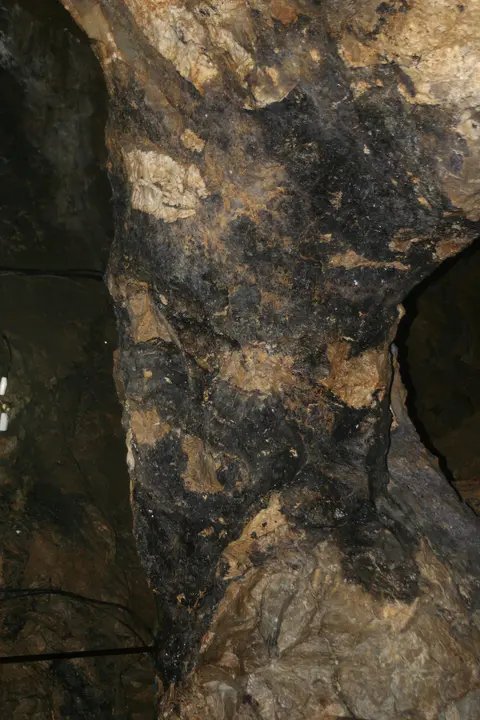
Blue john: Blue John pillar - Treak Cliff Cavern
Blue John pillar - Treak Cliff Cavern. Photo: Dave Pape, Public domain, via Wikimedia Commons.
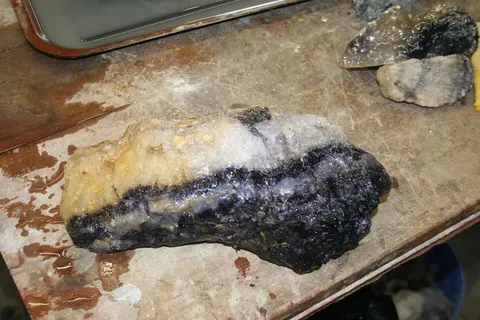
Blue john: Raw Blue John from Treak Cliff Cavern
Raw Blue John from Treak Cliff Cavern. Photo: Dave.Dunford, CC BY-SA 3.0, via Wikimedia Commons.
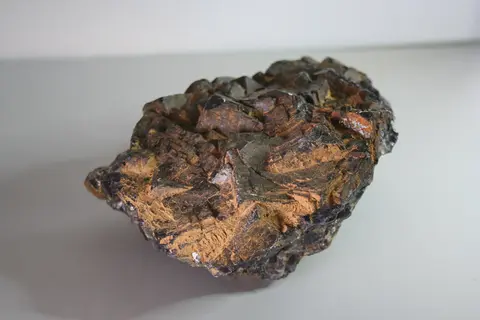
Blue john: Raw Blue John
Raw Blue John. Photo: Dave.Dunford, CC BY-SA 3.0, via Wikimedia Commons.
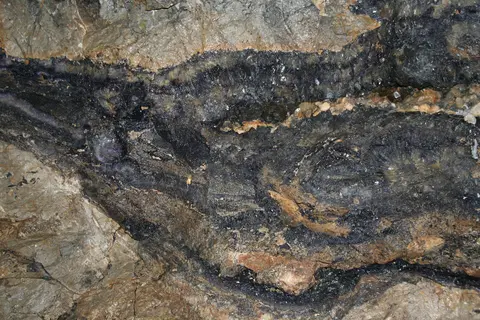
Blue john: Blue John vein
Blue John vein. Photo: Dave.Dunford, CC BY-SA 3.0, via Wikimedia Commons.

What blue john is worth

Not enough data. We have not yet seen 5 or more current dealer listings for blue john in any one form, so we show no range rather than guess.

These are dealer asking prices: what shops list blue john for, not what it sells for and not an appraisal. Selling to a dealer usually brings well below retail, because the dealer has to resell it at a margin.

How to identify blue john

Blue John is defined by its unique banding and its single locality; true Blue John comes only from a few caverns near Castleton and is mined in small amounts each year. See fluorite value for the species as a whole.

  • Wavy or zigzag bands of deep purple to blue-violet alternating with cream or yellow.
  • Usually seen as polished ornaments, cabochons or slabs.
  • Often appears dark until held to light, when bands become translucent.
  • Soft (hardness 4) and usually stabilized with resin.

Other fluorite varieties

Where blue john comes from

Castleton, Derbyshire, England
Blue John Cavern and Treak Cliff Cavern are the sources; small amounts are mined each year and worked locally.

Blue john lookalikes

Chinese and Mexican banded fluorite

Banded fluorite from other places usually has green or blue bands and straighter zoning, and lacks Derbyshire documentation.

  • Same mineral
  • Often sold as Blue John by mistake or on purpose

Chevron amethyst

Chevron amethyst scratches glass and bands are white and purple V shapes.

  • Hardness 7

Fake, dyed and treated blue john

  • Banded fluorite from China or elsewhere sold as Blue John

    Common

    • Colors and banding patterns that do not match Castleton material
    • No provenance
    • Large uniform pieces at low prices
  • Resin-stabilized Blue John

    Very common

    • Traditional practice: rough is boiled in resin before turning
    • Resin luster in fractures
    • Expected and accepted for ornamental pieces

Is my blue john real? Tests you can do at home

  1. Backlight the bands

    Hold a thin piece up to a strong light.

    Real
    Translucent violet and yellow bands with wavy, irregular boundaries.
    Fake or lookalike
    Other banded fluorites often show green or blue zones and straight, regular bands.
  2. Scratch against glass

    Drag an edge across glass.

    Real
    No scratch.
    Fake or lookalike
    Banded amethyst or agate scratch glass.

A stone that passes these tests is consistent with natural blue john, not proven. For valuable pieces, a gem lab report settles treatment and origin.

Treatments

Resin stabilization (almost always)
Standard practice that lets the brittle rough be turned and polished; does not reduce value when disclosed. Resin in cracks under a loupe.

What moves the price of blue john

  1. Provenance. Documented Castleton origin is the main value factor.
  2. Antique status. Georgian and Victorian vases and urns are valued as antiques.
  3. Banding quality. Deep color with crisp contrasting bands is preferred.
  4. Size. Large pieces are rare because limited rough is mined each year.

Sources

Prices: no current dealer listings yet. How we collect prices.