


Paraiba tourmaline
Tourmaline is hard enough (7 to 7.5) to scratch glass easily; apatite is not.
- Tourmaline RI 1.62 to 1.64 with higher birefringence
- Tourmaline SG about 3.06
Dealers list apatite specimens under 5 cm (2 in) at $79 to $95.
Prices checked . Page updated .
| Form and size | Typical asking price | Range chart | Median | Listings |
|---|---|---|---|---|
| Specimens (per piece) | $40 to $90 | $48 | 15 from 3 dealers | |
| under 5 cm (2 in) | $79 to $95 | $85 | 5 from 3 dealers | |
| 5 to 10 cm (2 to 4 in) | $40 to $48 | $45 | 5 from 2 dealers | |
| Carvings and shapes (per piece) | Not enough data (4 listings, need 5) | |||
| Slabs and polished pieces (per piece) | Not enough data (3 listings, need 5) | |||
| Spheres (per piece) | Not enough data (3 listings, need 5) | |||
| Rough (per pound) | Not enough data (2 listings, need 5) | |||
| Tumbled stones (per pound) | Not enough data (0 listings, need 5) | |||
| Variety | Median | Listings |
|---|---|---|
| Green apatite | Not enough data | 2 |
| Yellow apatite | Not enough data | 2 |
| Listing | Size | Locality | Asking | Seen |
|---|---|---|---|---|
| 1.5" Polished Blue Apatite Stones FossilEra | 3.8 cm | $7 | ||
| Blue Apatite, Tumbling Rough, per lb The Gem Shop | 1.9 cm | Brazil | $10 | |
| 2.3" Polished Blue Apatite Heart - Madagascar FossilEra | 5.8 cm | Madagascar | $12 | |
| Blue Apatite Stone Bracelet - Elastic Band FossilEra | $13 | |||
| 2.85" Polished Blue Apatite Heart - Madagascar FossilEra | 7.2 cm | Madagascar | $17 | |
| 2.9" Polished Blue Apatite Heart - Madagascar FossilEra | 7.4 cm | Madagascar | $18 | |
| 1.85" Bright Blue Apatite Sphere - Madagascar FossilEra | 4.7 cm | Madagascar | $18 | |
| 1.85" Bright Blue Apatite Sphere - Madagascar FossilEra | 4.7 cm | Madagascar | $18 | |
| Fluorapatite ps after Stibnite #BAC66098 Dakota Matrix Minerals | 6 cm | Durango, Mexico | $20 | |
| 1.9" Bright Blue Apatite Sphere - Madagascar FossilEra | 4.8 cm | Madagascar | $21 | |
| 3.1" Polished Blue Apatite Heart - Madagascar FossilEra | 7.9 cm | Madagascar | $24 | |
| Blue Apatite, Tumbling Rough, 5 lb lot The Gem Shop | 1.9 cm | Brazil | $25 |
These are dealer asking prices: what shops list apatite for, not what it sells for and not an appraisal. Selling to a dealer usually brings well below retail, because the dealer has to resell it at a margin.
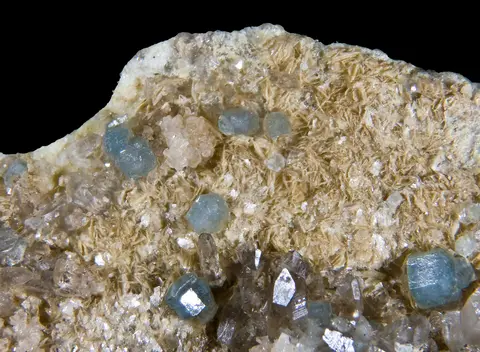
Apatite is a group of calcium phosphate minerals, mostly fluorapatite, the same basic compound as tooth enamel. It occurs in many colors; gem collectors know it best as vivid neon blue to green stones from Madagascar and Brazil and yellow crystals from Mexico.
Green apatite ranges from yellowish green to deep green transparent gem material and opaque green crystals in marble. Same mineral, colored green; less sought after than neon blue but common as both gems and specimens.
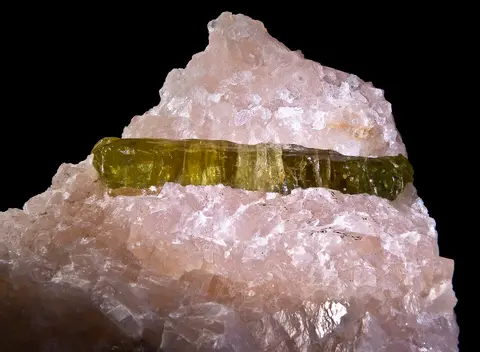
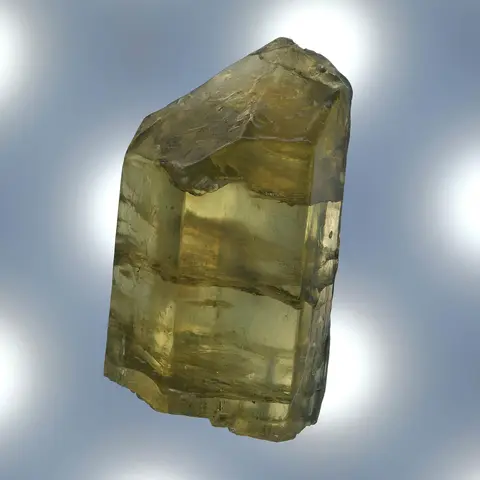
Yellow apatite is golden to greenish yellow apatite, classically from Cerro de Mercado in Durango, Mexico, sometimes called asparagus stone. Same mineral; the yellow color and sharp, glassy Durango crystals make it a favorite specimen variety.
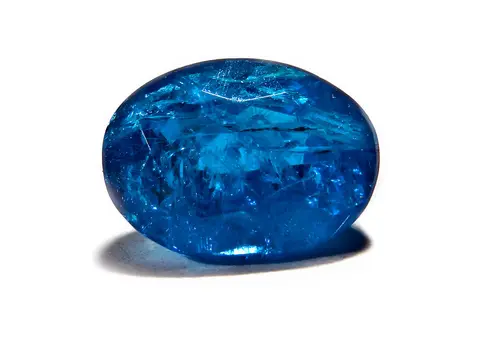
Neon apatite is a trade name for transparent apatite in vivid electric blue to blue green, mostly from Madagascar and Brazil. Describes the brightest blue green apatite; it is ordinary apatite in composition, and the name sometimes leans on 'Paraiba' comparisons without containing copper.
Tourmaline is hard enough (7 to 7.5) to scratch glass easily; apatite is not.
Amazonite is opaque with white feldspar streaks and grid patterns and is lighter (SG 2.56).
Aquamarine is harder (7.5 to 8) and lighter in color, rarely neon.
Fluorite has perfect octahedral cleavage and is softer (4).
Blue topaz scratches glass easily and is heavier (SG about 3.53).
Sodalite has white calcite veins and is lighter (SG about 2.3).
Also mistaken for apatite: beryl, cat's eye chrysoberyl, danburite, pyromorphite.
Common
Occasional
Occasional
Try a sharp edge of rough or the back of a loose stone on a glass bottle.
Can leave a small mark.
Weigh dry, weigh the displaced water, divide. Use a scale reading to 0.01 g for small stones.
Look at facet edges and inside with a 10x loupe.
Rub a hidden spot of a bead with a nail polish remover swab.
A stone that passes these tests is consistent with natural apatite, not proven. For valuable pieces, a gem lab report settles treatment and origin.
Hardness 5 means everyday dust (quartz) scratches it; avoid rings and keep separate from other gems. Sensitive to acids, heat and sudden temperature change; no ultrasonic or steam cleaning.
Prices: 30 current listings from Dakota Matrix Minerals, FossilEra, iRocks (The Arkenstone), The Gem Shop, seen 2026-11-20 to 2026-11-20. How we collect prices.