

Citrine
Citrine is harder (7), has no cleavage and does not glow yellow under UV.
- RI 1.544 to 1.553
- SG 2.65
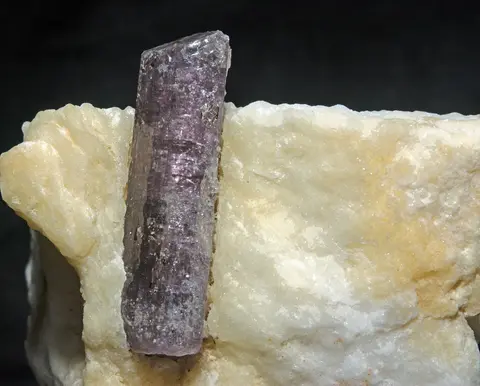
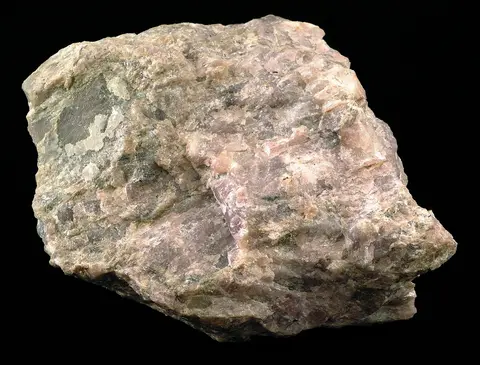
Dealers list scapolite specimens at $49 to $59.
Prices checked . Page updated .
| Form and size | Typical asking price | Range chart | Median | Listings |
|---|---|---|---|---|
| Specimens (per piece) | $49 to $59 | $55 | 10 from 1 dealer | |
| Cut stones (per carat) | Not enough data (2 listings, need 5) | |||
These are dealer asking prices: what shops list scapolite for, not what it sells for and not an appraisal. Selling to a dealer usually brings well below retail, because the dealer has to resell it at a margin.
Scapolite is a series of sodium calcium aluminum silicates between marialite (sodium and chlorine rich) and meionite (calcium and carbonate rich), formed in metamorphic rocks. Gem scapolite is mainly yellow, violet or colorless, and some shows a cat's eye.
Citrine is harder (7), has no cleavage and does not glow yellow under UV.
Amethyst is harder and shows color zoning rather than lengthwise tubes.
Heliodor is harder (7.5 to 8) and forms hexagonal prisms.
Chrysoberyl is much heavier and harder.
Also mistaken for scapolite: hackmanite.
Occasional
Rare
Shine a longwave UV torch in a dark room.
Drag an edge of rough across a glass bottle.
Can leave a small mark.
Examine a faceted stone with a 10x loupe.
A stone that passes these tests is consistent with natural scapolite, not proven. For valuable pieces, a gem lab report settles treatment and origin.
Scapolite is relatively soft for a gem and cleaves; protect from knocks and avoid ultrasonic cleaning.
Prices: 12 current listings from FossilEra, iRocks (The Arkenstone), seen 2026-11-20 to 2026-11-20. How we collect prices.