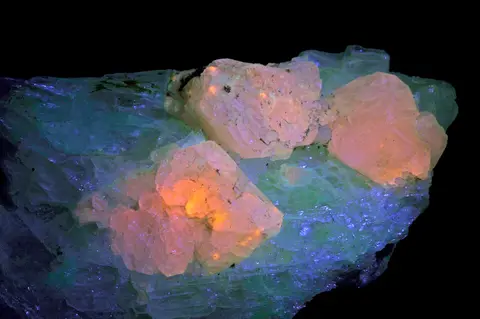
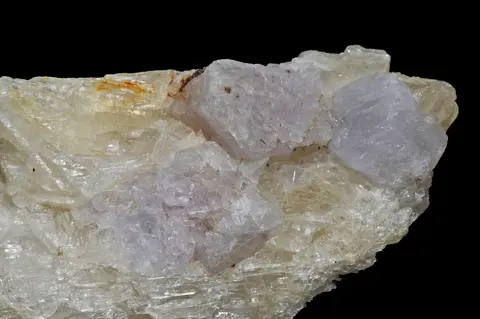
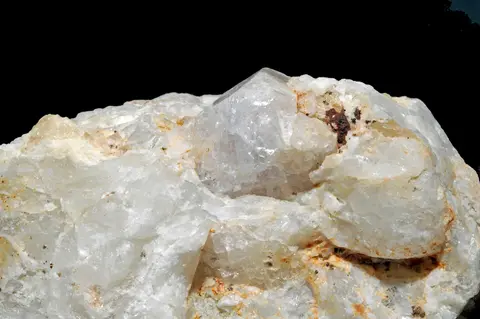
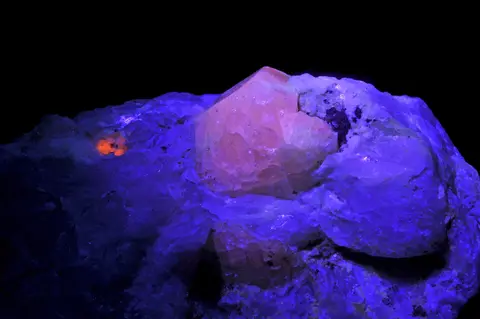
Hackmanite is a sulfur-bearing variety of sodalite, a sodium aluminum silicate with chlorine, known for tenebrescence: its color changes reversibly when exposed to ultraviolet light and fades again in visible light or darkness.
Not enough data. We have not yet seen 5 or more current dealer listings for hackmanite in any one form, so we show no range rather than guess.
These are dealer asking prices: what shops list hackmanite for, not what it sells for and not an appraisal. Selling to a dealer usually brings well below retail, because the dealer has to resell it at a margin.
How to identify hackmanite
Color change after a few minutes under a UV torch or sunlight: often colorless or pale to pink, violet or purple, fading back in normal light.
Bright orange to yellow-orange fluorescence under longwave UV is typical.
Hardness 5.5 to 6: scratches glass weakly or not at all.
Light in the hand: SG about 2.3.
Vitreous luster; poor dodecahedral cleavage.
Gem crystals from Afghanistan are transparent; Canadian and Greenland material is often massive.
Where hackmanite comes from
Badakhshan, Afghanistan
Transparent gem crystals, pink to purple, the best faceting material.
Mont Saint-Hilaire, Quebec, Canada
Classic locality with strongly tenebrescent material.
Fluorite is heavier (3.18), softer (4) and shows octahedral cleavage.
Fake, dyed and treated hackmanite
Ordinary sodalite sold as hackmanite
Common
No color change after UV exposure
Only fluorescence, without tenebrescence
Fluorescent syenite or sodalite pebbles sold as hackmanite
Occasional
Glow under UV but no lasting color change
Synthetic or glass 'color change' stones
Rare
No fluorescence or wrong color
Wrong SG
Is my hackmanite real? Tests you can do at home
Tenebrescence check
Note the color, shine a UV torch (shortwave is strongest, longwave works for many) on it for 30 seconds to a few minutes, then look in normal light.
Real
Color appears or deepens, often to pink or violet, then fades over minutes to hours in light.
Fake or lookalike
Ordinary sodalite and simulants show no lasting change.
Fluorescence
Shine a longwave UV torch in the dark.
Real
Bright orange to yellow-orange glow.
Fake or lookalike
Glass and many simulants are inert or glow a different color.
Specific gravity
Weigh dry and suspended in water on a kitchen or gram scale, then divide.
Real
About 2.3.
Fake or lookalike
Spinel 3.6, fluorite 3.18, scapolite about 2.6.
A stone that passes these tests is consistent with natural hackmanite, not proven. For valuable pieces, a gem lab report settles treatment and origin.
Treatments
None routinely (rare)
Hackmanite is sold untreated; color is managed by light exposure only. Not applicable.
What moves the price of hackmanite
Strength of color change. Strong, fast, vivid tenebrescence is the main attraction.
Transparency. Transparent faceting-grade crystals from Afghanistan lead.
Color. Deep pink to purple in the activated state.
Crystal form and size. Well-formed, sizeable crystals on matrix.
Fluorescence. Bright orange glow adds appeal for fluorescent collectors.
Care and safety
Light fades the color of many hackmanites; store in the dark if you want to keep the activated color, and recharge with UV for display. Avoid knocks; it is relatively soft and brittle.