Dealer asking prices for rutilated quartz, middle half of current listings, checked 2026-11-20. Bar shows the 25th to 75th percentile; the dark tick is the median.
These are dealer asking prices: what shops list rutilated quartz for, not what it sells for and not an appraisal. Selling to a dealer usually brings well below retail, because the dealer has to resell it at a margin.
How to identify rutilated quartz
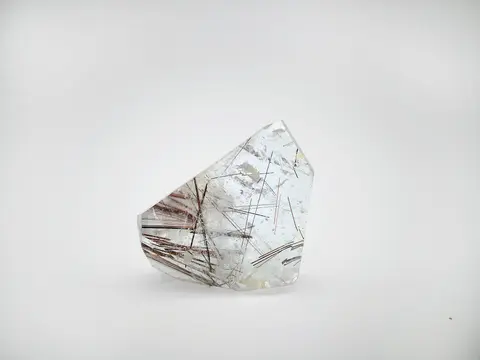
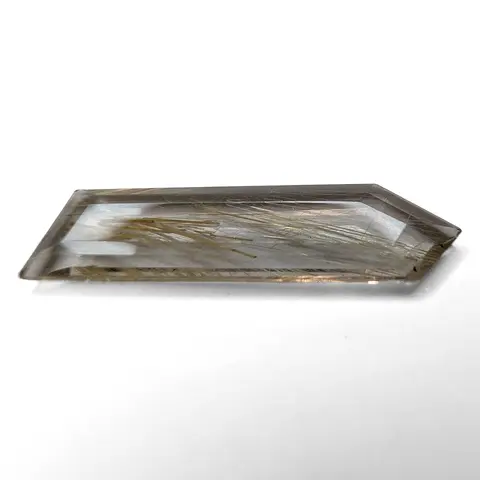
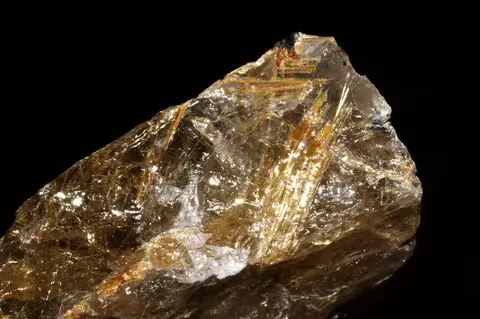
Rutilated quartz is clear or smoky quartz containing needles of rutile, titanium dioxide, in golden, reddish or silvery colors.
It is quartz valued for its needle inclusions; the rutile grew before or during quartz growth. See quartz value for the species as a whole.
Fine metallic needles, golden to red brown or silvery, crossing through clear quartz.
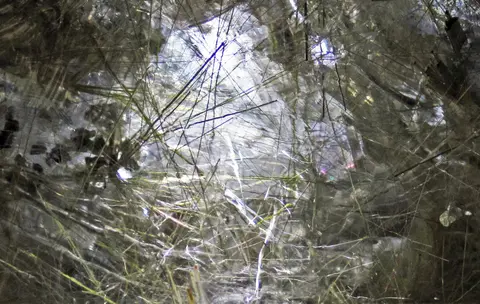
Needles run in different directions, often in sprays or star-like clusters.
Is my rutilated quartz real? Tests you can do at home
Loupe inspection of needles
Look at needles with a 10x loupe.
Real
Natural needles vary in thickness, angle and length and may be bent or broken.
Fake or lookalike
Uniform parallel threads and bubbles.
Scratch test against glass
Use rough on glass.
Real
Scratches glass.
Fake or lookalike
Glass barely marks.
Can leave a small mark.
A stone that passes these tests is consistent with natural rutilated quartz, not proven. For valuable pieces, a gem lab report settles treatment and origin.
Treatments
None routine (rare)
Usually untreated; cracked material may be stabilized. Glassy fills in cracks.
What moves the price of rutilated quartz
Needle color. Rich golden needles are most popular.
Pattern. Dense, even or star-like arrangements sell best.