What alexandrite is worth
Not enough data. We have not yet seen 5 or more current dealer listings for alexandrite in any one form, so we show no range rather than guess.
These are dealer asking prices: what shops list alexandrite for, not what it sells for and not an appraisal. Selling to a dealer usually brings well below retail, because the dealer has to resell it at a margin.
How to identify alexandrite
Ordinary chrysoberyl is yellow to green with no color change; alexandrite contains chromium that produces the daylight to lamp light switch, and it is far rarer. See chrysoberyl value for the species as a whole.
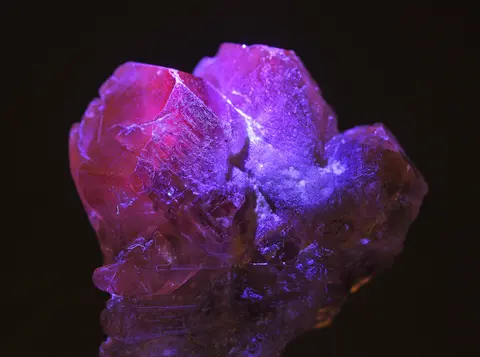
- Color shifts with the light source: green or teal in daylight, red, raspberry or purplish red under a warm bulb.
- Strong pleochroism: green, orange and purple-red can show from different angles even in one light.
- Hardness 8.5 and SG about 3.73, the same as other chrysoberyl.
- Natural stones are usually under a few carats and commonly show needles, fingerprints or two-phase inclusions.
Other chrysoberyl varieties
Where alexandrite comes from
- Ural Mountains, Russia
- Type source from the 1830s, named for the future Tsar Alexander II; old Russian stones are the benchmark for the change.
- Hematita, Minas Gerais, Brazil
- Late 1980s find of fine, strongly changing stones.
- Sri Lanka
- Larger stones, often with an olive or brownish daylight color and a softer change.
- India (Andhra Pradesh, Odisha)
- Steady commercial supply, mostly smaller and included material.
- Tanzania and Madagascar
- Gem gravel and schist sources of alexandrite, including some fine crystals.
Alexandrite lookalikes
Sapphire changes from blue or violet to purple, not from green to red.
- Sapphire hardness 9, SG about 4.0
- Natural color-change sapphire is rarer than its synthetic imitation
Garnet is singly refractive and usually shifts from bluish green or brownish green to purple-red.
- No pleochroism in garnet
- Garnet RI about 1.76 to 1.78
Amethyst stays purple in every light and is lighter and softer.
- Amethyst hardness 7, SG 2.65
- Amethyst shows no green in daylight
amethyst vs alexandrite
Tanzanite is blue-violet and shifts only slightly toward purple under warm light, never green to red.
- Tanzanite hardness 6 to 7, SG about 3.35
- Strong blue, violet and brownish trichroism
tanzanite vs alexandrite
Mystic topaz shows a rainbow surface coating on the facets in any light rather than a body color change.
- The coating wears off at facet edges
- Topaz SG about 3.53
mystic topaz vs alexandrite
Also mistaken for alexandrite: andalusite.
Fake, dyed and treated alexandrite
Synthetic color-change sapphire
Very common
- Grayish blue to mauve or pink change, never a real green
- Curved growth lines or round bubbles under a loupe
- Large, flawless stones in older class rings and souvenir jewelry
Lab-grown alexandrite
Common
- Strong change and very clean even in larger sizes
- Flux fingerprints, metallic platelets or curved striae under magnification
- Natural origin can only be confirmed by a gem lab
Color-change glass
Occasional
- Swirls and bubbles inside
- Soft, easily scratched facet edges
- Weak or no pleochroism
Is my alexandrite real? Tests you can do at home
-
Daylight vs incandescent light
View the stone near a window and then under a warm filament bulb or candle.
- Real
- Green or bluish green turns red or purplish red.
- Fake or lookalike
- Synthetic sapphire goes blue-gray to mauve; glass usually does not change.
-
Loupe inclusion check
Examine the stone with a 10x loupe from several angles.
- Real
- Natural stones often show needles, fingerprints or crystals; lab stones may show flux wisps or platelets.
- Fake or lookalike
- Synthetic sapphire shows curved banding; glass shows round bubbles and swirls.
-
Specific gravity
Weigh the loose stone in air and suspended in water on a kitchen scale and divide.
- Real
- About 3.7 to 3.8.
- Fake or lookalike
- Synthetic sapphire about 4.0; glass usually lower than 3.0.
A stone that passes these tests is consistent with natural alexandrite, not proven. For valuable pieces, a gem lab report settles treatment and origin.
Treatments
- Fracture filling (occasional)
- Improves apparent clarity; reduces value when disclosed. Flash effects and trapped bubbles in fractures under magnification; lab confirmation.
- None (common)
- Most alexandrite is untreated. A lab report covers treatment and origin.
What moves the price of alexandrite
- Color change. A full, clean green to red shift is worth far more than a partial or brownish change.
- Natural vs lab-grown. Natural origin carries a very large premium over lab-grown material.
- Size. Stones over one carat with a strong change are scarce, so value rises steeply with weight.
- Clarity. Eye-clean stones command more; heavy inclusions lower brightness and value.
- Origin. Russian or Brazilian origin documented by a lab adds a premium.
Questions collectors ask about alexandrite
- Is alexandrite worth buying?
- Natural alexandrite with a strong green to red change and a lab report holds value well because supply is small. Lab-grown alexandrite is a fair choice for the look, but it is priced as a manufactured stone; see the price table above for current figures.
- Is alexandrite the rarest birthstone?
- Alexandrite is one of the June birthstones, and natural stones with a strong change are among the scarcest of all birthstones. Most June jewelry uses lab-grown alexandrite or a simulant.
- amethyst vs alexandrite
- Amethyst is purple quartz that stays purple in any light, with hardness 7. Alexandrite is chrysoberyl, harder at 8.5, and switches from green in daylight to red under warm light.
- How much is real alexandrite worth?
- Value depends mostly on the strength of the color change, natural origin, size and clarity, and natural stones sit far above lab-grown ones. See the price table above for observed prices.