What chrysoberyl is worth
Not enough data. We have not yet seen 5 or more current dealer listings for chrysoberyl in any one form, so we show no range rather than guess.
Show 1 of the listings behind these numbers
These are dealer asking prices: what shops list chrysoberyl for, not what it sells for and not an appraisal. Selling to a dealer usually brings well below retail, because the dealer has to resell it at a margin.
How to identify chrysoberyl
- Hardness 8.5: it scratches quartz and topaz, and only corundum and diamond scratch it among common gems.
- Feels heavy for its size (SG about 3.73), noticeably heavier than quartz or beryl of the same size.
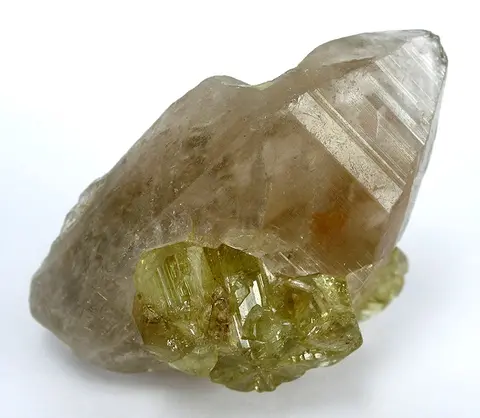
- Ordinary chrysoberyl is yellow, greenish yellow, yellowish green or brown; vivid blue, pink or purple stones are not chrysoberyl.
- Bright vitreous to subadamantine luster on polished faces, brighter than quartz or beryl.
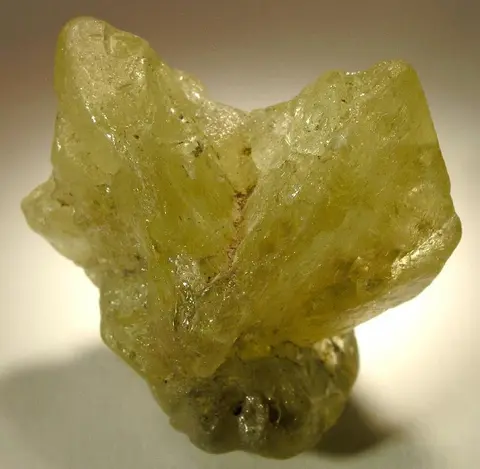
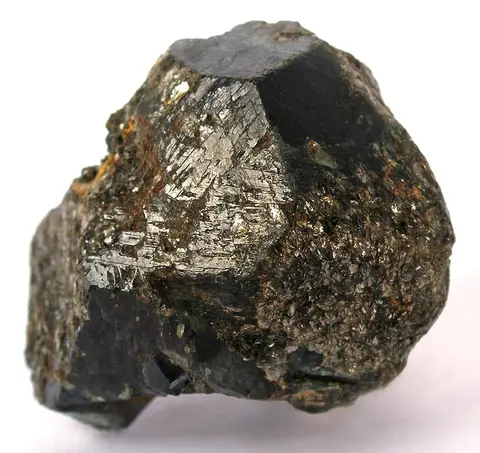
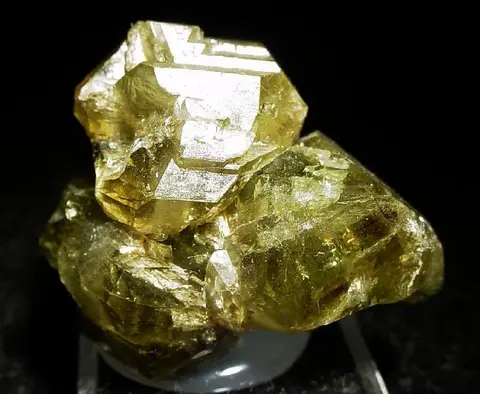
- Rough crystals are often tabular and form cyclic twins (trillings) that look like flat six-sided stars or hexagons, with V-shaped striations on the faces.
- Cat's eye stones show one sharp, narrow line of light that glides across the dome as the stone is turned under a single light.
- Alexandrite shifts from green or bluish green in daylight to red, purplish red or raspberry in incandescent or candle light.
Where chrysoberyl comes from
- Sri Lanka (Ratnapura and other gem gravels)
- Classic source of fine cat's eye chrysoberyl in honey and green-yellow colors, plus yellow faceting rough and some alexandrite.
- Ural Mountains, Russia
- Original alexandrite discovery in the 1830s, in the emerald mines near the Tokovaya River; old Russian stones set the standard for a strong green to red change.
- Minas Gerais and Bahia, Brazil
- Hematita produced fine alexandrite in the late 1980s; Brazil also supplies cat's eye and yellow chrysoberyl.
- Tunduru and Lake Manyara, Tanzania
- Gem gravels yielding alexandrite and yellow-green chrysoberyl; Lake Manyara is known for alexandrite crystals in mica schist.
- Andhra Pradesh and Odisha, India
- Major commercial source of alexandrite and cat's eye chrysoberyl, mostly smaller and included material.
- Madagascar and Zimbabwe
- Madagascar produces yellow-green chrysoberyl and some alexandrite; Zimbabwe's Novello area gave small, intense alexandrite crystals.
Chrysoberyl lookalikes
Peridot is much softer (6.5 to 7) and shows strong doubling of back facets under a loupe; chrysoberyl shows little doubling.
- Peridot SG about 3.3 vs 3.73
- Peridot RI 1.65 to 1.69 vs 1.75
- Peridot is grass green with a hint of olive, rarely the golden yellow of chrysoberyl
Sapphire is heavier (SG about 4.0) and harder (9); a lab separates them by RI (1.76 to 1.77 vs 1.75).
- Sapphire often shows color zoning in straight hexagonal bands
- Heated yellow sapphire may show altered silk
- Both are bright and hard, so home tests rarely separate them
Tourmaline cat's eyes have a broader, fuzzier eye and the stone feels lighter (SG about 3.06).
- Tourmaline hardness 7 to 7.5
- Tourmaline is often visibly dichroic
- Tourmaline eyes come from hollow growth tubes you can see with a loupe
Quartz cat's eyes are noticeably lighter and the eye is softer and less sharp.
- Quartz SG 2.65 vs 3.73
- Quartz hardness 7
- Quartz has a glassier, less bright luster
Andalusite shows green and orange-brown in different parts of the same stone at the same time (pleochroism), not a change with the light source.
- Andalusite hardness 7 to 7.5, SG about 3.15
- Sometimes sold as a cheaper alexandrite alternative
- Color does not switch from green to red when moving from daylight to lamp light
Color-change garnet is singly refractive and usually shifts from blue-green or brownish to purple, not to a true red; a lab polariscope or refractometer separates it.
- Garnet RI about 1.76 to 1.78, close to chrysoberyl
- Garnet never shows a cat's eye of chrysoberyl type
- Garnet has no cleavage
Also mistaken for chrysoberyl: heliodor, titanite, sinhalite.
Fake, dyed and treated chrysoberyl
Synthetic color-change sapphire sold as alexandrite
Very common
- Shifts from slate blue or grayish violet in daylight to purplish pink or mauve in lamp light, never a clear green
- Curved growth lines or gas bubbles under a loupe
- Clean, large stones in older souvenir jewelry and class rings are almost always this material
Lab-grown alexandrite (Czochralski, flux or floating zone)
Common
- Same mineral as natural, so hardness, SG and RI match
- Very clean for its size with an intense, even change
- Flux grown stones show wispy flux fingerprints or platinum platelets; pulled stones may show curved striae
- Only a gem lab can confirm natural origin
Synthetic color-change spinel
Occasional
- Singly refractive (no doubling, no pleochroism)
- Lower RI about 1.72 to 1.73
- Color change is usually blue to purple
Fiber-optic glass cat's eye
Very common
- Sharp eye plus a honeycomb or hexagonal mosaic pattern visible on the sides or base
- Unnaturally vivid colors such as bright red, blue or green
- Much lighter than chrysoberyl and scratched by a steel file
Cymophane and oriental cat's eye trade terms
Occasional
- Cymophane is an old name for cat's eye chrysoberyl and is legitimate
- Oriental cat's eye is sometimes stretched to cover quartz or other species, so ask for the species name
Is my chrysoberyl real? Tests you can do at home
-
Scratch test on glass
Press a sharp edge of the rough or the girdle firmly across a glass plate and wipe it.
- Real
- Chrysoberyl cuts glass easily and is unmarked.
- Fake or lookalike
- Glass simulants struggle to scratch glass or leave a powder trail; they may be scratched themselves.
Can leave a small mark.
-
Light source change for alexandrite
Look at the stone under daylight or a daylight LED, then under a warm incandescent bulb or candle.
- Real
- Natural or lab alexandrite moves from green or bluish green to red or purplish red.
- Fake or lookalike
- Color-change sapphire goes from grayish blue to pink or mauve; glass and most simulants show no change.
-
Specific gravity with a kitchen scale
Weigh the loose stone dry, then weigh it suspended on a thread in a cup of water on the scale; divide dry weight by the weight gain.
- Real
- About 3.7 to 3.8.
- Fake or lookalike
- Quartz cat's eyes about 2.65, glass usually 2.3 to 3.0, tourmaline about 3.06; sapphire about 4.0.
-
Loupe check of a cat's eye
Look at the base and sides of the cabochon with a 10x loupe.
- Real
- Fine parallel silk needles, no visible pattern of cells.
- Fake or lookalike
- Fiber-optic glass shows a honeycomb grid of fibers along the sides.
-
Weight in hand
Compare the stone with a quartz or glass stone of the same size in your palm.
- Real
- Feels clearly heavier.
- Fake or lookalike
- Quartz and most glass feel light.
A stone that passes these tests is consistent with natural chrysoberyl, not proven. For valuable pieces, a gem lab report settles treatment and origin.
Treatments
- Fracture filling with oil or resin (occasional)
- Hides surface-reaching fractures in alexandrite and lowers value once disclosed. Flash effects or flattened bubbles in fractures under magnification; confirmed by a lab.
- Irradiation of cat's eye chrysoberyl (rare)
- Can deepen the brownish yellow body color; disclosed stones sell below untreated equivalents. Requires laboratory testing.
- Untreated material (common)
- Most natural chrysoberyl and alexandrite is sold untreated, which is part of its appeal. A lab report is the only reliable confirmation for valuable stones.
What moves the price of chrysoberyl
- Variety. Alexandrite with a true green to red change sits far above cat's eye chrysoberyl, which sits above plain yellow chrysoberyl.
- Strength of color change. For alexandrite, the percentage and purity of the change matter most: a full green to red switch beats a weak or brownish shift.
- Natural vs lab-grown. Lab-grown alexandrite is the same mineral but trades at a small fraction of natural; a lab report naming natural origin is expected for important stones.
- Eye quality. Cat's eye stones are judged on a sharp, straight, centered eye and a milk and honey effect, with honey yellow and apple green body colors preferred.
- Size. Fine alexandrite over one carat is scarce, so value climbs steeply with size.
- Clarity and cut. Eye-clean alexandrite and well proportioned, non-windowed cuts command more; cat's eyes need a well placed dome.
- Origin. Russian and Brazilian origin on a report can add a premium for alexandrite.
Questions collectors ask about chrysoberyl
- How to check if alexandrite is real?
- Look at it in daylight and then under a warm incandescent bulb: real alexandrite moves from green or bluish green to red or purplish red, while the common synthetic sapphire imitation goes from grayish blue to mauve. A lab is needed to separate natural from lab-grown alexandrite, since both are true chrysoberyl.
- Is alexandrite rarer than diamond?
- Fine natural alexandrite with a strong change is mined in far smaller quantities than gem diamond, so good stones are much rarer. Most alexandrite seen in jewelry is lab-grown or an imitation.
- What does an alexandrite stone look like?
- In daylight it is green to bluish green, and under warm indoor light it turns red to purplish red. Natural stones are usually small and often show some inclusions.
Sources
Prices: 1 current listings from Dakota Matrix Minerals, seen 2026-11-20 to 2026-11-20. How we collect prices.