RockValues

Titanite value and identification

Titanite, still sold as sphene in the gem trade, is a calcium titanium silicate (CaTiSiO5) that forms wedge-shaped crystals. Cut stones show more fire than diamond and very strong double refraction.

Prices checked . Page updated .
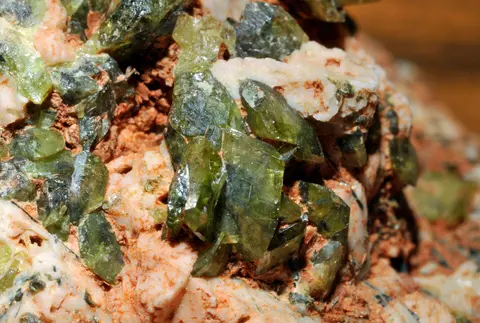
Titanite: Sphène - titanite sur orthose
Sphène - titanite sur orthose. Photo: Parent Géry, CC BY-SA 3.0, via Wikimedia Commons.
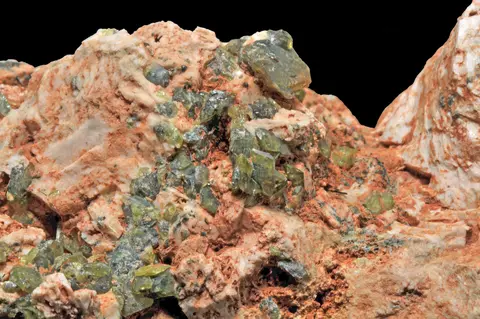
Titanite: Titanite, orthose
Titanite, orthose. Photo: Parent Géry, CC BY-SA 3.0, via Wikimedia Commons.
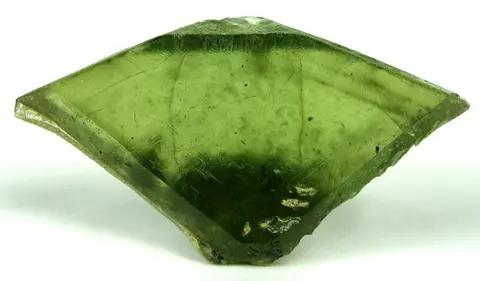
Titanite: Titanite-155006
Titanite-155006. Photo: Robert M. Lavinsky, CC BY-SA 3.0, via Wikimedia Commons.
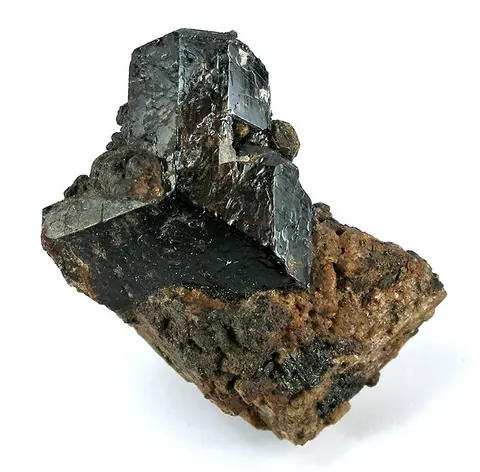
Titanite: Titanite-289025
Titanite-289025. Photo: Robert M. Lavinsky, CC BY-SA 3.0, via Wikimedia Commons.

What titanite is worth

Not enough data. We have not yet seen 5 or more current dealer listings for titanite in any one form, so we show no range rather than guess.

Show 3 of the listings behind these numbers
Sample dealer listings for Titanite
ListingSizeLocalityAskingSeen
3.9" Green Titanite (Sphene), Feldspar, Calcite & Muscovite - Pakistan
FossilEra
9.9 cmPakistan$125
Titanite (Sphene) (21.45 ct)
iRocks (The Arkenstone)
21.45 ctMadagascar$2,750
Titanite (Sphene) in Quartz cabochon (211.24 ct)
iRocks (The Arkenstone)
211.24 ctMadagascar$4,500

These are dealer asking prices: what shops list titanite for, not what it sells for and not an appraisal. Selling to a dealer usually brings well below retail, because the dealer has to resell it at a margin.

How to identify titanite

  • Strong fire: rainbow flashes of dispersion higher than diamond in clean cut stones.
  • Very strong doubling: facet edges on the far side appear doubled through the table under a loupe.
  • Yellow, green, brown or orange, often with an adamantine to resinous luster.
  • Crystals are flat wedges or envelope shapes, often twinned.
  • Distinct pleochroism in deeper colors (yellow, green and orange tones from different angles).
  • Relatively soft for a gem at 5 to 5.5, so facet edges in older stones are often abraded.

Titanite varieties

Sphene

The older name for titanite, still used for faceted gem material in the jewelry trade. Same mineral: the name sphene was dropped by mineralogists in favor of titanite, but sellers and gemologists still call cut stones sphene.

Where titanite comes from

Madagascar
Major source of yellow to green gem rough.
Minas Gerais, Brazil
Gem crystals and facet rough.
Baja California, Mexico
Fine golden to green gem titanite.
Pakistan
Sharp green to brown crystals on matrix from the northern mountains.
Tyrol, Austria and Switzerland
Classic Alpine cleft crystals, often green and twinned.
Ontario and Quebec, Canada
Large dark brown crystals in marble and skarn.

Titanite lookalikes

Demantoid garnet

Demantoid is singly refractive: no doubled facet edges under a loupe.

  • Demantoid often has horsetail inclusions
  • Hardness 6.5 to 7
  • SG about 3.84

Peridot

Peridot has noticeable doubling too, but much less fire and a grassy olive green.

  • RI 1.65 to 1.69
  • Hardness 6.5 to 7

Chrysoberyl

Chrysoberyl is much harder and shows little fire or doubling.

  • Hardness 8.5
  • RI about 1.75

Zircon

Both show doubling and fire; zircon is heavier (SG about 4.6) and harder.

  • Hardness 7.5
  • Edges of old zircons abrade too

Yellow diamond

Diamond shows no doubling and is far harder.

  • Hardness 10
  • Thermal conductivity tester reads diamond

Fake, dyed and treated titanite

  • Yellow-green glass sold as sphene

    Occasional

    • No doubling of facet edges
    • Bubbles or swirls
    • Much less fire
  • Cubic zirconia or synthetic stones in sphene colors

    Occasional

    • No doubling
    • Flawless and heavier (CZ SG about 5.6 to 6)

Is my titanite real? Tests you can do at home

  1. Doubling under a loupe

    Look down through the table at the back facet edges with a 10x loupe, rotating slowly.

    Real
    Back facet edges appear clearly doubled.
    Fake or lookalike
    Glass, CZ and demantoid show single, sharp edges.
  2. Fire in a single light

    Move the stone under a single bright light such as a penlight.

    Real
    Strong rainbow flashes, especially in lighter stones.
    Fake or lookalike
    Glass shows weak fire; peridot almost none.
  3. Specific gravity with a kitchen scale

    For loose stones over a few carats, weigh dry, then the gain in a cup of water when suspended; divide.

    Real
    About 3.5.
    Fake or lookalike
    CZ about 5.7; glass usually 2.4 to 3.0; zircon about 4.6.

A stone that passes these tests is consistent with natural titanite, not proven. For valuable pieces, a gem lab report settles treatment and origin.

Treatments

Heating (occasional)
Can turn brown or green stones orange to reddish; widely accepted and hard to prove. Usually not detectable at home; labs may infer it.

What moves the price of titanite

  1. Color. Vivid chrome green and bright green-yellow command the most; brown least.
  2. Clarity. Eye-clean stones show the best fire; many stones are included.
  3. Size. Clean stones over a few carats are scarce.
  4. Cut. Orientation and cut that show fire without excessive doubling blur add value.
  5. Specimens. For crystals, sharpness, twinning, luster and matrix drive value.

Care and safety

Hardness 5 to 5.5: best in earrings and pendants rather than rings. Avoid ultrasonic and steam cleaning; use warm soapy water.

Sources

Prices: 3 current listings from FossilEra, iRocks (The Arkenstone), seen 2026-11-20 to 2026-11-20. How we collect prices.