RockValues

Rhodonite value and identification

Dealers list rhodonite tumbled stones at $285 to $325 per pound.

Prices checked . Page updated .

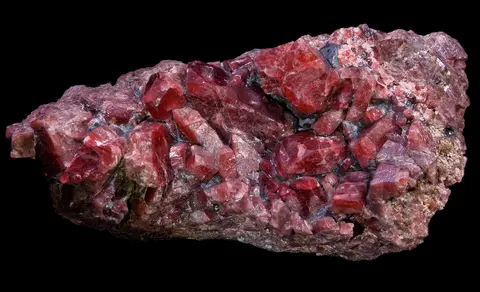
Rhodonite: Rhodonite Australie
Rhodonite Australie. Photo: Didier Descouens, CC BY-SA 4.0, via Wikimedia Commons.
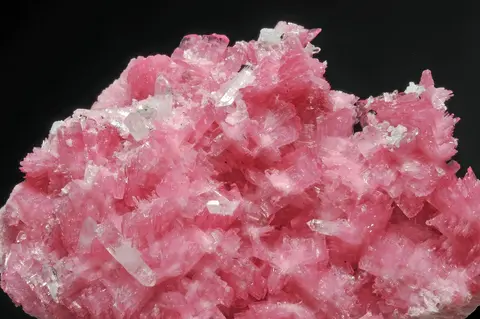
Rhodonite: Rhodonite et quartz (Pérou)
Rhodonite et quartz (Pérou). Photo: Parent Géry, CC BY-SA 3.0, via Wikimedia Commons.
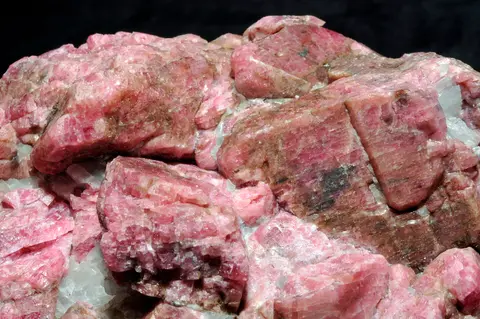
Rhodonite: Rhodonite, calcite 300-4-6540
Rhodonite, calcite 300-4-6540. Photo: Parent Géry, CC BY-SA 3.0, via Wikimedia Commons.
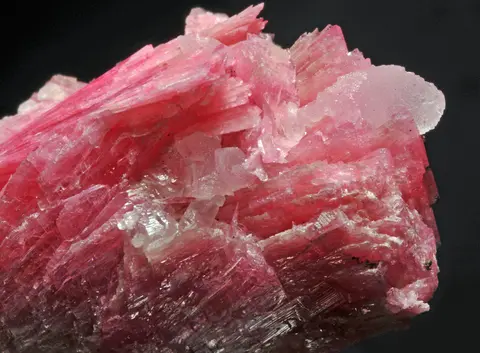
Rhodonite: Rhodonite, quartz et calcite (Pérou)
Rhodonite, quartz et calcite (Pérou). Photo: Parent Géry, CC BY-SA 3.0, via Wikimedia Commons.

What rhodonite is worth

Dealer asking prices for rhodonite, middle half of current listings, checked 2026-11-20. Bar shows the 25th to 75th percentile; the dark tick is the median.
Form and sizeTypical asking priceRange chartMedianListings
Tumbled stones (per pound)$286 to $327$3275 from 1 dealer
Carvings and shapes (per piece)$10 to $13$125 from 1 dealer
Spheres (per piece)Not enough data (1 listing, need 5)
Show 12 of the listings behind these numbers

These are dealer asking prices: what shops list rhodonite for, not what it sells for and not an appraisal. Selling to a dealer usually brings well below retail, because the dealer has to resell it at a margin.

How to identify rhodonite

Rhodonite is a manganese silicate (MnSiO3, with some calcium and iron) that is pink to rose red, usually veined with black manganese oxides. Massive rhodonite is a popular carving and bead stone; transparent crystals are rare collector pieces.

  • Pink to rose red body color with black or dark brown veins and spots of manganese oxide.
  • Hard enough to scratch glass in good material: hardness 5.5 to 6.5.
  • Fairly heavy for a pink stone: specific gravity about 3.4 to 3.7.
  • Vitreous luster on polished surfaces; massive material is fine grained and opaque.
  • Two cleavages at nearly right angles show as flat flashes in coarse-grained pieces.
  • Surface may darken to brown or black where weathered.

Where rhodonite comes from

Broken Hill, New South Wales, Australia
Source of the finest transparent red rhodonite crystals, rare enough to facet.
Middle Urals, Russia
Historic source of massive rhodonite used in Russian imperial carvings and architecture.
Franklin, New Jersey, USA
Classic crystals in the zinc deposits.
Minas Gerais, Brazil
Crystals and massive material from manganese deposits.
British Columbia, Canada
Massive rhodonite with black veining for cabochons and carvings.
Massachusetts, USA
Rhodonite is the Massachusetts state gem.

Rhodonite lookalikes

Rhodochrosite

Rhodochrosite shows curved pink and white bands; rhodonite has black veins and no banding.

  • Rhodochrosite hardness 3.5 to 4, scratched by steel
  • SG 3.5 to 3.7

rhodonite vs rhodochrosite

Rhodolite garnet

Rhodolite is a transparent purplish red gem; massive rhodonite is opaque pink.

  • Garnet hardness 7 to 7.5
  • No cleavage

Unakite

Unakite is salmon pink feldspar mixed with green epidote, not pink with black.

  • Green patches are the giveaway

rhodonite vs unakite

Also mistaken for rhodonite: mangano calcite, eudialyte, tugtupite, zoisite, inesite.

Fake, dyed and treated rhodonite

  • Dyed howlite or magnesite with black veins sold as rhodonite

    Occasional

    • Pink color pooling in cracks
    • White core in drill holes
    • Pink on an acetone swab
  • Rhodonite and rhodochrosite names swapped

    Common

    • Black veins mean rhodonite; banded pink and white means rhodochrosite
  • Dyed quartzite or jasper sold as rhodonite

    Rare

    • Uniform pink without black veins
    • Dye in fractures

Is my rhodonite real? Tests you can do at home

  1. Steel knife scratch

    Press a steel knife point lightly on the back of the piece and pull.

    Real
    Rhodonite resists or only marks lightly.
    Fake or lookalike
    Rhodochrosite, howlite and magnesite scratch easily.

    Can leave a small mark.

  2. Acetone swab

    Rub acetone on a cotton swab against a hidden area or drill hole.

    Real
    No color transfer.
    Fake or lookalike
    Dyed imitations may leave pink.

    Can leave a small mark.

  3. Loupe on veins and drill holes

    Inspect black veins and drill holes with a 10x loupe.

    Real
    Natural black oxide veins with irregular edges; pink all through.
    Fake or lookalike
    White interior or pink dye concentrated along cracks.
  4. Specific gravity with a kitchen scale

    Weigh dry, then measure the gain in a cup of water with the stone suspended; divide.

    Real
    About 3.4 to 3.7.
    Fake or lookalike
    Howlite about 2.5, rose quartz about 2.65.

A stone that passes these tests is consistent with natural rhodonite, not proven. For valuable pieces, a gem lab report settles treatment and origin.

Treatments

Waxing or stabilization (occasional)
Improves polish on porous or fractured material; little effect on value when disclosed. Waxy feel; lab for resin.
Dyeing (rare)
Rarely applied to pale material; lowers value. Acetone swab; dye in cracks.

What moves the price of rhodonite

  1. Transparency. Transparent, facetable crystals (mainly Broken Hill) are in a far higher category than massive material.
  2. Color. Bright, saturated pink to red is preferred; brownish or grayish pink is lower.
  3. Veining. Crisp, attractive black veining helps; heavy black coverage or brown weathering hurts.
  4. Crystal quality. Sharp, lustrous crystals on matrix command the most for specimens.
  5. Size and workmanship. Large, crack-free carvings and well-cut cabochons sell above tumbled stones.

Sources

Prices: 19 current listings from FossilEra, Throwin Stones, seen 2026-11-20 to 2026-11-20. How we collect prices.