RockValues

Libyan desert glass value and identification

Dealers list Libyan desert glass whole stones at $2.50 to $2.50 per gram.

A variety of tektite. Prices checked .
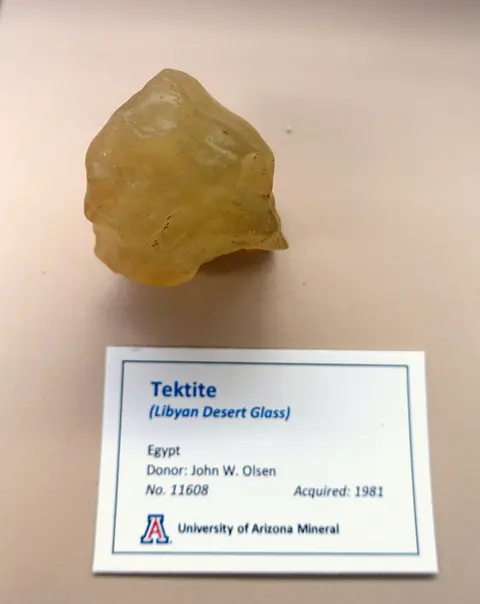
Libyan desert glass: Libyan desert glass, Egypt - University of Arizona Mineral Museum - University of Arizona - Tucson, AZ - DSC08494
Libyan desert glass, Egypt - University of Arizona Mineral Museum - University of Arizona - Tucson, AZ - DSC08494. Photo: Daderot, CC0, via Wikimedia Commons.
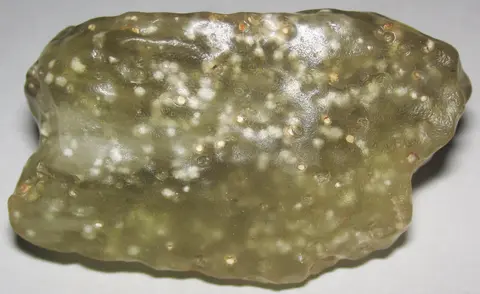
Libyan desert glass: Libyan Desert Glass (Oligocene, 28.5 Ma; Libyan Desert, Egypt) 9
Libyan Desert Glass (Oligocene, 28.5 Ma; Libyan Desert, Egypt) 9. Photo: James St. John, CC BY 2.0, via Wikimedia Commons.
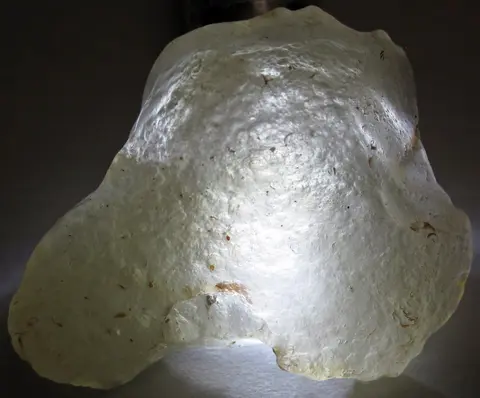
Libyan desert glass: Libyan Desert Glass tektite (Oligocene, 28.5 Ma; Libyan Desert, Egypt) 5
Libyan Desert Glass tektite (Oligocene, 28.5 Ma; Libyan Desert, Egypt) 5. Photo: James St. John, CC BY 2.0, via Wikimedia Commons.
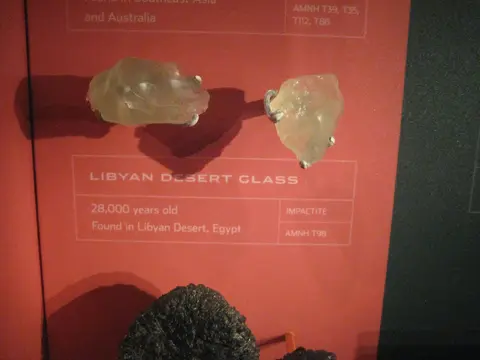
Libyan desert glass: Libyan Desert Glass AMNH
Libyan Desert Glass AMNH. Photo: Claire H., CC BY-SA 2.0, via Wikimedia Commons.

What libyan desert glass is worth

Dealer asking prices for libyan desert glass, middle half of current listings, checked 2026-11-20. Bar shows the 25th to 75th percentile; the dark tick is the median.
Form and sizeTypical asking priceRange chartMedianListings
Whole stones (per gram)$2.28 to $2.61$2.426 from 1 dealer
Cut stones (per carat)Not enough data (1 listing, need 5)
Show 10 of the listings behind these numbers
Sample dealer listings for Libyan desert glass
ListingSizeLocalityAskingSeen
.85" Libyan Desert Glass Pendant (2.6 g) - Impactite
FossilEra
3 g$35
.75" Libyan Desert Glass Pendant (2.7 g) - Impactite
FossilEra
3 g$35
.85" Libyan Desert Glass Pendant (2.9 g) - Impactite
FossilEra
3 g$35
1.9" Libyan Desert Glass (34.5 g) - Meteorite Impactite
FossilEra
4.8 cm$75
2.1" Libyan Desert Glass (28.4 g) - Meteorite Impactite
FossilEra
5.3 cm$75
2" Libyan Desert Glass (43.9 g) - Meteorite Impactite
FossilEra
5.1 cm$99
1.95" Libyan Desert Glass (42.4 g) - Meteorite Impactite
FossilEra
5 cm$99
1.55" Libyan Desert Glass (29.7 g) - Meteorite Impactite
FossilEra
3.9 cm$125
2.3" Libyan Desert Glass (54 g) - Meteorite Impactite
FossilEra
5.8 cm$135
Libyan Desert Glass (97.54 ct)
iRocks (The Arkenstone)
97.54 ctLibyan Desert Glass area, New Valley Governorate, Egypt$12,500

These are dealer asking prices: what shops list libyan desert glass for, not what it sells for and not an appraisal. Selling to a dealer usually brings well below retail, because the dealer has to resell it at a margin.

How to identify libyan desert glass

Libyan desert glass is a pale yellow, nearly pure silica natural glass found in the Great Sand Sea of western Egypt, formed about 29 million years ago, most likely by a meteorite impact or airburst.

Strictly it is an impact glass rather than a classic tektite: it is far richer in silica (about 98 percent), lighter and pale yellow, and was not thrown far as droplets. See tektite value for the species as a whole.

  • Pale yellow to greenish yellow, transparent to milky
  • Wind-polished and sandblasted surfaces, often irregular chunks rather than splash forms
  • Contains wispy dark streaks, bubbles, and sometimes white cristobalite spots
  • SG about 2.2, lighter than most other glass

Other tektite varieties

Where libyan desert glass comes from

Great Sand Sea, western Egypt, near the Libyan border
The only source; pieces lie on the desert floor between dunes.

Libyan desert glass lookalikes

Citrine

Crystalline quartz, doubly refractive, SG 2.65.

  • Hardness 7

Yellow bottle or slag glass

Higher SG, more uniform color and round bubbles only.

Also mistaken for libyan desert glass: fulgurite.

Fake, dyed and treated libyan desert glass

  • Yellow manufactured glass

    Common

    • SG 2.4 or higher
    • Even color
    • No wispy inclusions or cristobalite
  • Citrine or yellow quartz sold as Libyan glass

    Occasional

    • Crystal faces or doubling
    • SG 2.65

Is my libyan desert glass real? Tests you can do at home

  1. Specific gravity

    Weigh dry and in water on a gram scale.

    Real
    About 2.2.
    Fake or lookalike
    Manufactured glass 2.4 to 2.6, quartz 2.65.
  2. Loupe

    Examine at 10x against a light.

    Real
    Wispy dark streaks, bubbles, sandblasted surface.
    Fake or lookalike
    Clean glass, mold marks.

A stone that passes these tests is consistent with natural libyan desert glass, not proven. For valuable pieces, a gem lab report settles treatment and origin.

Treatments

Cutting and polishing (occasional)
Polished pieces are sold; raw natural surfaces are preferred by collectors. Visible.

What moves the price of libyan desert glass

  1. Clarity and color. Clear, bright yellow pieces lead.
  2. Size. Large clean pieces are scarce.
  3. Inclusions. Visible cristobalite or dark swirls can add collector interest.
  4. Provenance. Material from a reputable source with a known history is preferred because fakes exist.

Questions collectors ask about libyan desert glass

Is libyan glass a tektite?
Not in the strict sense. It is an impact glass formed at or near the impact site, with far more silica than tektites, though it is often sold alongside them.
How do I know if my Libyan Desert Glass is real?
Check the specific gravity, which should be close to 2.2, and look for wispy inclusions and a sandblasted natural surface. Manufactured yellow glass is heavier and too clean.
What is Libyan Desert Glass worth?
Clarity, color, size and natural surface drive value. See the price table above for observed figures.

Sources

Prices: 10 current listings from FossilEra, iRocks (The Arkenstone), seen 2026-11-20 to 2026-11-20. How we collect prices.