

Apache tears
Very similar volcanic glass nodules; saffordite tends to have a rougher frosted surface.
Saffordite is a trade name for small, dark, rounded glass nodules from near Safford, Arizona, also sold as 'Cintamani stone'. Research points to a volcanic origin, so it is generally considered a form of obsidian rather than a tektite.
A variety of tektite. Prices checked .
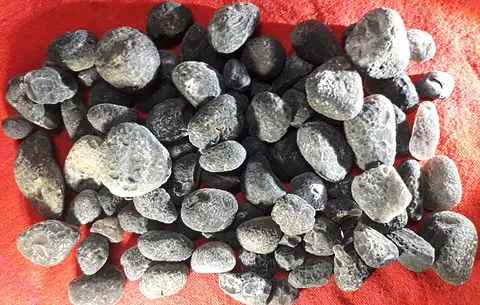
Not enough data. We have not yet seen 5 or more current dealer listings for saffordite in any one form, so we show no range rather than guess.
These are dealer asking prices: what shops list saffordite for, not what it sells for and not an appraisal. Selling to a dealer usually brings well below retail, because the dealer has to resell it at a margin.
Despite being sold with tektites, saffordite is most likely volcanic glass, not impact glass. See tektite value for the species as a whole.
Very similar volcanic glass nodules; saffordite tends to have a rougher frosted surface.
Moldavite is clear green.
Common
Shine a light through a thin edge.
Test with a strong magnet.
A stone that passes these tests is consistent with natural saffordite, not proven. For valuable pieces, a gem lab report settles treatment and origin.
Prices: no current dealer listings yet. How we collect prices.