Dealers list tektite whole stones at $28 to $44 per gram.
Prices checked . Page updated .
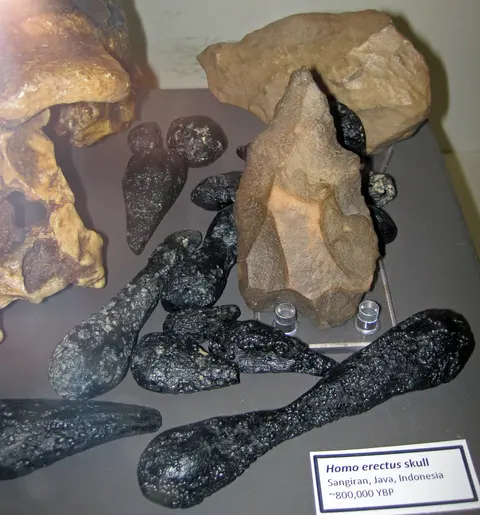
Homo erectus (fossil hominid skull) & indochinite tektites (Pleistocene; southeastern Asia) 4 (45586408531). Photo: James St. John, CC BY 2.0, via Wikimedia Commons.
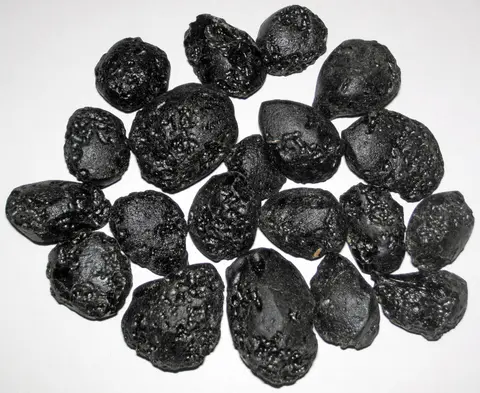
Indochinite tektites (Pleistocene, 783-803 ka; Australasian Tektite Strewn Field, southeastern Asia) 19. Photo: James St. John, CC BY 2.0, via Wikimedia Commons.
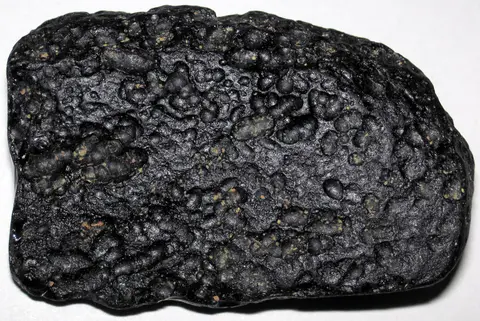
Indochinite tektite (Pleistocene, 783-803 ka; Australasian Tektite Strewn Field, southeastern Asia) 11. Photo: James St. John, CC BY 2.0, via Wikimedia Commons.
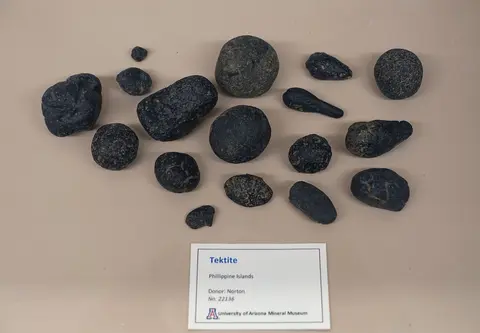
Tektites, Philippines - University of Arizona Mineral Museum - University of Arizona - Tucson, AZ - DSC08496. Photo: Daderot, CC0, via Wikimedia Commons.
What tektite is worth
Dealer asking prices for tektite, middle half of current listings, checked 2026-11-20. Bar shows the 25th to 75th percentile; the dark tick is the median.
Form and size
Typical asking price
Range chart
Median
Listings
Whole stones (per gram)
$28 to $44
$36
47 from 3 dealers
Cut stones (per carat)
Not enough data (1 listing, need 5)
By variety
Median dealer asking price by variety (individual).
These are dealer asking prices: what shops list tektite for, not what it sells for and not an appraisal. Selling to a dealer usually brings well below retail, because the dealer has to resell it at a margin.
How to identify tektite
Tektites are natural silica-rich glass formed when a large meteorite impact melted surface rock and threw the melt through the air, where it cooled into droplets, buttons and splash forms. They are found in a few strewn fields, each linked to one impact event.
Glassy, with conchoidal fracture, but the outer surface is usually pitted, grooved or 'sculpted' by natural etching.
Agni manitite is a trade name for tektites from Java and other parts of Indonesia, part of the Australasian strewn field. They are ordinary Australasian tektites under a metaphysical brand name; scientifically they are the same as other javanites.
Darwin glass
Darwin glass is impact glass from around Darwin crater in western Tasmania, about 0.8 million years old, in green, gray, white and black. It is impact glass formed near the crater, not a far-flung tektite; pieces are frothy and irregular rather than splash shaped.
Indochinite
Indochinites are black tektites from Thailand, Laos, Vietnam, Cambodia and southern China, the most common tektites sold. They are the typical Australasian tektite: black, splash shaped, often large, and much more plentiful than other varieties.
Australite
Australites are tektites from southern Australia, the far southern end of the Australasian strewn field, famous for flanged button shapes formed by melting during atmospheric re-entry. They are small and often show aerodynamic flanges, rings and cores that other tektites lack.
Philippinite
Philippinites, also called rizalites, are black tektites from the Philippines, part of the Australasian strewn field. They are Australasian tektites with often deeply grooved, pitted surfaces.
Georgiaite
Georgiaites are tektites from east central Georgia, USA, part of the North American strewn field from the Chesapeake Bay impact about 35 million years ago. They are green and translucent like small moldavites and are among the scarcest tektites.
Irghizite
Irghizites are small impact glass droplets and fragments from the Zhamanshin crater in Kazakhstan. They are impact glass from a single small crater, usually tiny black twisted forms.
Muong nong tektite
Muong Nong type tektites are large, blocky, layered tektites from Laos, Vietnam and Thailand, named after Muong Nong in Laos. Unlike splash-form tektites they are chunky and layered, can weigh kilograms, and contain more bubbles and mineral inclusions.
Where tektite comes from
Australasian strewn field (Indochina, Philippines, southern China, Indonesia, Australia)
The largest field, about 0.8 million years old; source of indochinites, philippinites and australites, and the bulk of tektites sold.
Southern Bohemia and Moravia, Czech Republic
Moldavite, green tektite from the Ries impact in Germany about 15 million years ago.
Texas and Georgia, USA
North American field, about 35 million years old, linked to the Chesapeake Bay impact: bediasite and georgiaite.
Ivory Coast
Ivorites from the Bosumtwi impact in Ghana, about 1 million years old; rarely sold.
Great Sand Sea, western Egypt
Libyan desert glass, a pale yellow impact glass found on the desert surface.
Surface sculpting. Deep natural sculpting, such as Besednice 'hedgehog' moldavite, adds a premium.
Size and weight. Larger complete pieces are scarcer.
Provenance. Documented locality and a reputable seller matter because fakes are widespread.
Color and clarity. For moldavite and Libyan glass, clearer and brighter pieces lead.
Questions collectors ask about tektite
How to tell if a tektite is real?
Real tektites are non-magnetic glass with a pitted or grooved natural surface and clear brown or olive thin edges with no crystals inside. Obsidian shows smoky edges and crystallites, and slag shows frothy bubbles or metal.
Are tektites radioactive?
No. Tektites contain only the trace uranium and thorium found in ordinary rocks and are not measurably radioactive in any meaningful way.
What is the difference between a meteorite and a tektite?
A meteorite is a piece of an asteroid or planet that fell to Earth; a tektite is Earth rock melted by an impact. Meteorites are heavier and usually magnetic, while tektites are light, non-magnetic glass.
Are tektites valuable?
Common Indochinese tektites are inexpensive; moldavite, Libyan desert glass and North American tektites are worth considerably more. Shape, size and surface quality drive value; see the price table above.
Sources
Prices: 195 current listings from Dave's Rock Shop, FossilEra, iRocks (The Arkenstone), Throwin Stones, seen 2026-11-20 to 2026-11-20. How we collect prices.