


Black opal
Black opal has a dark opal or potch back, not brown ironstone.
- From Lightning Ridge
Dealers list boulder opal specimens under 5 cm (2 in) at $68 to $145.
A variety of opal. Prices checked .
| Form and size | Typical asking price | Range chart | Median | Listings |
|---|---|---|---|---|
| Specimens (per piece) | $75 to $225 | $135 | 40 from 1 dealer | |
| under 5 cm (2 in) | $68 to $144 | $115 | 22 from 1 dealer | |
| 5 to 10 cm (2 to 4 in) | $193 to $961 | $395 | 6 from 1 dealer | |
| Cabochons (per carat) | Not enough data (0 listings, need 5) | |||
| Tumbled stones (per pound) | Not enough data (0 listings, need 5) | |||
These are dealer asking prices: what shops list boulder opal for, not what it sells for and not an appraisal. Selling to a dealer usually brings well below retail, because the dealer has to resell it at a margin.
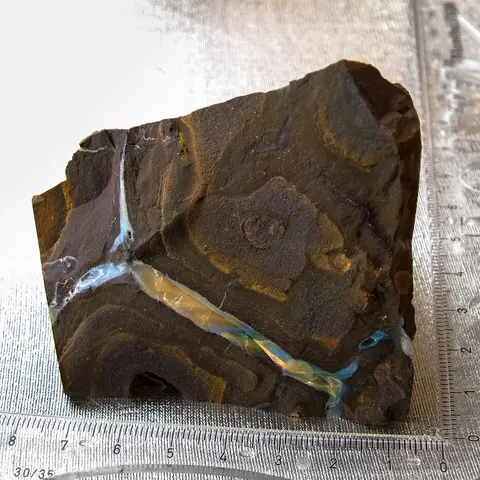
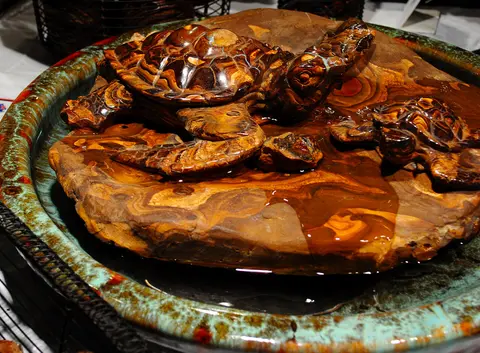
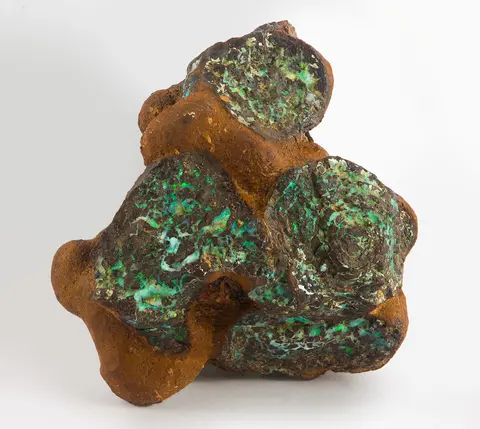
Boulder opal is precious opal that formed in cracks and cavities of brown ironstone concretions in Queensland, Australia. It is cut with the ironstone left on as a natural backing.
Same precious opal, but naturally attached to its host ironstone, often as thin veins; the dark ironstone behind the opal gives a black opal-like intensity. See opal value for the species as a whole.
Black opal has a dark opal or potch back, not brown ironstone.
Matrix opal has opal spread through the rock as specks instead of a distinct layer.
Also mistaken for boulder opal: lightning ridge opal, ammolite.
Occasional
Occasional
Look along the edge under a loupe.
Examine the back surface under a loupe.
Compare with a solid opal of similar size.
A stone that passes these tests is consistent with natural boulder opal, not proven. For valuable pieces, a gem lab report settles treatment and origin.
Prices: 46 current listings from FossilEra, seen 2026-11-20 to 2026-11-20. How we collect prices.