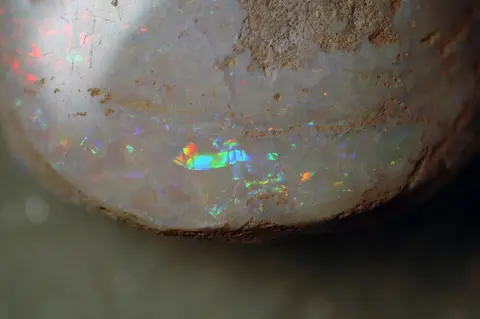
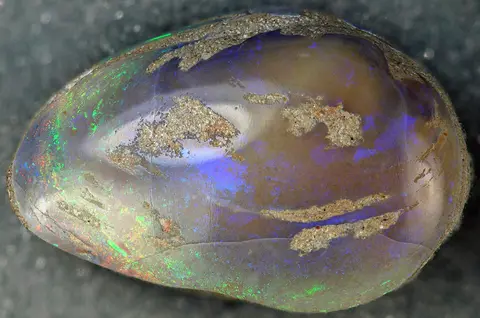
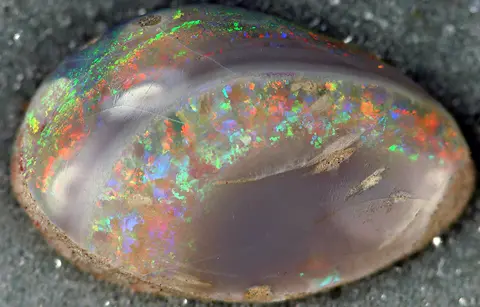
Coober Pedy opal comes from the Coober Pedy field in South Australia, worked since 1915 and long the largest opal producer in the world. It is mostly white and crystal opal.
Opalized Cyrenopsis fossil bivalve (Bulldog Shale, Lower Cretaceous; Coober Pedy Opal Field, South Australia) 04 (15210868952). Photo: James St. John, CC BY 2.0, via Wikimedia Commons.
Opalized fossil bivalve (Bulldog Shale, Lower Cretaceous; Coober Pedy Opal Field, South Australia) 08 (15024739227). Photo: James St. John, CC BY 2.0, via Wikimedia Commons.
Opalized fossil bivalve, Coober Pedy Opal Field, South Australia. Photo: James St. John, CC BY 2.0, via Wikimedia Commons.
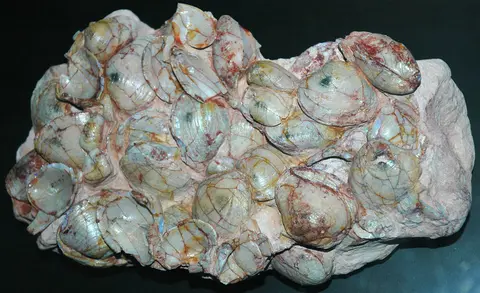
Opalized Cyrenopsis fossil bivalves (Bulldog Shale, Lower Cretaceous; Coober Pedy Opal Field, South Australia) (15024694808). Photo: James St. John, CC BY 2.0, via Wikimedia Commons.
What coober pedy opal is worth
Not enough data. We have not yet seen 5 or more current dealer listings for coober pedy opal in any one form, so we show no range rather than guess.
These are dealer asking prices: what shops list coober pedy opal for, not what it sells for and not an appraisal. Selling to a dealer usually brings well below retail, because the dealer has to resell it at a margin.
How to identify coober pedy opal
A locality name for precious opal; Coober Pedy material is typically light body tone (white or crystal) rather than the dark tones of Lightning Ridge. See opal value for the species as a whole.
Light white to milky or crystal body
Play of color in a wide range of patterns
Often cut as solid cabochons or as doublets and triplets
Ethiopian opal is often hydrophane and clouds when wet.
Digit pattern in some stones
Lab-created white opal
Synthetic shows a lizard-skin pattern.
Lab testing confirms
Fake, dyed and treated coober pedy opal
Ethiopian opal sold as Australian
Occasional
Hydrophane behavior
Digit pattern
Doublets and triplets
Very common
Flat glued layers visible from the side
Is my coober pedy opal real? Tests you can do at home
Side view for layers
Check the edge under a loupe.
Real
Solid opal or natural potch.
Fake or lookalike
Flat join lines.
Brief water drop test
Place a drop of water on the back for a minute, then dry.
Real
Coober Pedy opal does not change.
Fake or lookalike
Hydrophane Ethiopian opal turns clearer.
A stone that passes these tests is consistent with natural coober pedy opal, not proven. For valuable pieces, a gem lab report settles treatment and origin.
What moves the price of coober pedy opal
Brightness and color. Bright reds and multicolor ranks highest.
Crystal versus white. Transparent crystal opal is worth more than milky white.
Solid versus assembled. Solid stones are worth far more.