RockValues

White opal value and identification

White opal is precious opal with a light, milky white to light gray body tone. It is the most common precious opal and most of it comes from Coober Pedy, South Australia.

A variety of opal. Prices checked .
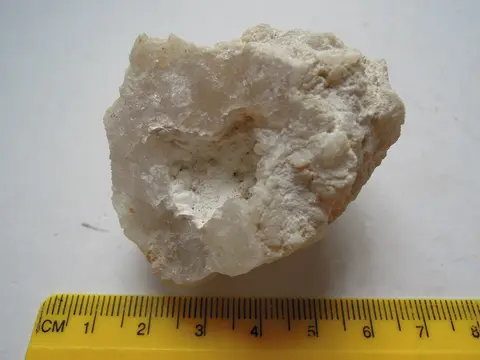
White opal: White opal - SiO2·nH2O (24835588082)
White opal - SiO2·nH2O (24835588082). Photo: Jan Helebrant, CC BY-SA 2.0, via Wikimedia Commons.

What white opal is worth

Not enough data. We have not yet seen 5 or more current dealer listings for white opal in any one form, so we show no range rather than guess.

These are dealer asking prices: what shops list white opal for, not what it sells for and not an appraisal. Selling to a dealer usually brings well below retail, because the dealer has to resell it at a margin.

How to identify white opal

Same material as other precious opal; the light body tone (N7 to N9) makes the play of color look softer and paler than in black opal. See opal value for the species as a whole.

  • Milky white to light gray body tone
  • Play of color in patches over the white background
  • Opaque to translucent, unlike transparent crystal opal
  • Common in commercial jewelry as cabochons and in doublets

Other opal varieties

Where white opal comes from

Coober Pedy, South Australia
Main source of white opal.
Andamooka and Mintabie, South Australia
Also produce light opal along with crystal opal.
Wollo, Ethiopia
Large supply of white hydrophane precious opal.

White opal lookalikes

Opalite glass

Opalite shows a uniform blue sheen and orange backlit glow with no color patches.

  • Gas bubbles under a loupe

Also mistaken for white opal: ethiopian opal.

Fake, dyed and treated white opal

  • Lab-created white opal

    Common

    • Lizard-skin or columnar pattern
    • Very regular color
  • Opalite

    Very common

    • No spectral patches
    • Orange glow against light
  • Resin imitation

    Occasional

    • Very light
    • Soft

Is my white opal real? Tests you can do at home

  1. Loupe on the color patches

    Inspect at 10x from different angles.

    Real
    Irregular, natural patches.
    Fake or lookalike
    Repeating lizard-skin or columnar pattern.
  2. Backlight check

    Hold a flashlight behind the stone.

    Real
    Patchy translucency, play of color persists.
    Fake or lookalike
    Opalite glows uniform orange.
  3. Side view for layers

    Check the edge under a loupe.

    Real
    Solid opal throughout.
    Fake or lookalike
    Flat join line in a doublet.

A stone that passes these tests is consistent with natural white opal, not proven. For valuable pieces, a gem lab report settles treatment and origin.

Treatments

Polymer impregnation (occasional)
Stabilizes porous white opal and can darken it; lowers value. Lab testing.

What moves the price of white opal

  1. Brightness. Bright, full-coverage play of color is the main driver.
  2. Colors and pattern. Red and multicolor flashes and broad patterns rank above blue-green pinfire.
  3. Size and dome. Larger, well-domed solid stones are worth more.
  4. Flaws. Crazing, sand and potch lines reduce value.

Sources

Prices: no current dealer listings yet. How we collect prices.