RockValues

Jasper value and identification

Dealers list jasper tumbled stones at $50 to $285 per pound; rough runs about $5.50 to $13 per pound.

Prices checked . Page updated .
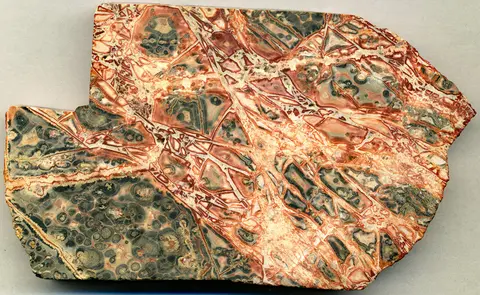
Jasper: Brecciated jasper 2
Brecciated jasper 2. Photo: James St. John, CC BY 2.0, via Wikimedia Commons.
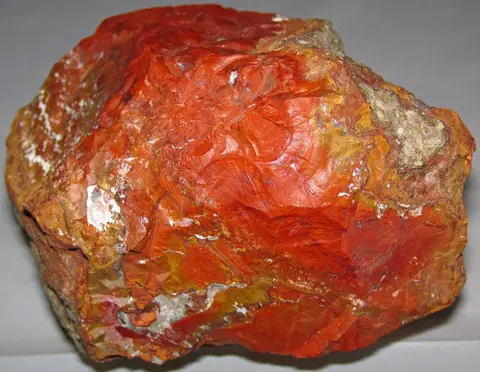
Jasper: Ferruginous chert ("jasper") (19980377486)
Ferruginous chert ("jasper") (19980377486). Photo: James St. John, CC BY 2.0, via Wikimedia Commons.
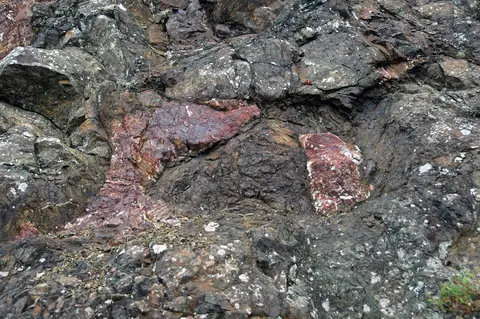
Jasper: Pillow basalts & jasper (Franciscan Complex, Jurassic; Point Bonita, California, USA) 1 (40298109333)
Pillow basalts & jasper (Franciscan Complex, Jurassic; Point Bonita, California, USA) 1 (40298109333). Photo: James St. John, CC BY 2.0, via Wikimedia Commons.

What jasper is worth

Dealer asking prices for jasper, middle half of current listings, checked 2026-11-20. Bar shows the 25th to 75th percentile; the dark tick is the median.
Form and sizeTypical asking priceRange chartMedianListings
Tumbled stones (per pound)$50 to $286$17321 from 2 dealers
Rough (per pound)$5.69 to $13$6.9921 from 2 dealers
Carvings and shapes (per piece)$4.75 to $9$8.5010 from 1 dealer
under 5 cm (2 in)$4 to $9$7.508 from 1 dealer
Spheres (per piece)$3.25 to $192$410 from 1 dealer
Slabs and polished pieces (per piece)Not enough data (2 listings, need 5)

By variety

Median dealer asking price by variety (tumbled).
VarietyMedianListings
Red jasper$357 per pound12
Ocean jasper$153 per pound5
Kambaba jasperNot enough data5
Dalmatian jasperNot enough data3
MookaiteNot enough data3
Leopard skin jasperNot enough data3
Orbicular jasperNot enough data1
Picture jasperNot enough data1
Polychrome jasperNot enough data1
Zebra jasperNot enough data1
Rainforest jasperNot enough data1
Show 12 of the listings behind these numbers
Sample dealer listings for Jasper
ListingSizeLocalityAskingSeen
.9" Polished Cherry Creek Jasper Sphere
FossilEra
$3
.9" Polished Green Hair Jasper Sphere
FossilEra
$3
.9" Polished Zebra Jasper Sphere
FossilEra
$3
1.5" Kambaba Jasper Worry Stone
FossilEra
3.8 cm$3.50
Polished Dalmatian Jasper Worry Stones - 1.5" Size
FossilEra
3.8 cm$4
1.5" Polished Red Jasper Worry Stones
FossilEra
3.8 cm$4
1.5" Polished Miriam Stone (Calligraphy Stone) Worry Stone
FossilEra
3.8 cm$4
.9" Polished Dragon's Blood Jasper Sphere
FossilEra
$4
.9" Polished Red Jasper Sphere
FossilEra
$4
.9" Polished, Brecciated Red Jasper Sphere
FossilEra
$4
1.5" Polished Mookaite Jasper Worry Stone
FossilEra
3.8 cm$4
1.5" Polished Maligano Jasper Worry Stones
FossilEra
3.8 cm$4

These are dealer asking prices: what shops list jasper for, not what it sells for and not an appraisal. Selling to a dealer usually brings well below retail, because the dealer has to resell it at a margin.

How to identify jasper

Jasper is an opaque, fine-grained variety of quartz and chalcedony (silicon dioxide) colored by impurities such as iron oxides, clays and other minerals, which can make up a large share of the stone. Many rocks sold under jasper trade names are actually rhyolite, marble or other rocks.

  • Opaque even at thin edges; light does not pass through like it does in agate or carnelian.
  • Hardness 6.5 to 7: it scratches glass and a steel knife does not mark it.
  • Breaks with a smooth, conchoidal, waxy to dull fracture without visible grains.
  • Takes a high, glassy polish with no pits when sound.
  • Colors are earthy: brick red, brown, yellow, tan, green, often mottled, banded, spotted or orbicular.
  • Feels cool and moderately heavy (SG about 2.6), similar to other quartz.
  • Gives a white to pale streak on porcelain, even when red (iron-rich red jasper may leave a faint reddish tint).

Jasper varieties

Bruneau jasper

Bruneau jasper is a picture jasper from the Bruneau River canyon in Owyhee County, Idaho, in browns, tans and reds, often with round eye-like or concentric patterns. It is a named picture jasper from one Idaho canyon, prized for its round patterns and limited, hard to reach supply.

Fancy jasper

Fancy jasper is a trade name for multicolored jasper in mixed purples, greens, reds, browns and cream, sold widely as beads and tumbles. It is ordinary jasper with a mixed, multicolored look; the name describes appearance, not a specific locality.

Morrisonite jasper

Morrisonite is a rare, highly prized jasper from the Owyhee River area of Oregon, with vivid orbicular, plume and landscape patterns in blue, green, red, yellow and brown. It is one of the most sought after American jaspers because of its bright colors, complex patterns and very limited, private source.

Willow creek jasper

Willow Creek jasper is a picture jasper from Idaho known for pastel greens, pinks, tans and creams with dendrites and plume patterns. It is a named Idaho picture jasper with softer pastel colors than most picture jaspers.

Noreena jasper

Noreena jasper is a layered, banded jasper from the Pilbara region of Western Australia, with red, yellow, brown and cream stripes in folded or wavy bands. It is a sedimentary banded jasper with strong parallel and folded layering rather than orbs or landscape scenes.

Owyhee jasper

Owyhee jasper is a picture jasper from the Owyhee region of Oregon and Idaho, known for tan and brown landscape scenes, often with blue-gray sky areas. It is a named picture jasper prized for clear scenic patterns and bluish tones that most other picture jaspers lack.

Silver leaf jasper

Silver leaf jasper is a trade name for gray, black and white patterned jasper-like stone; the name describes the pattern, and the material varies between suppliers. It differs from typical jasper in its cool gray, black and white tones rather than earthy reds and browns; check hardness, since not all material sold under the name is true jasper.

Deschutes jasper

Deschutes jasper is a picture jasper from central Oregon with tan, brown and cream landscape scenes and dendrites. It is a named Oregon picture jasper valued for scenic patterns and limited supply.

Stone canyon jasper

Stone Canyon jasper is a brecciated jasper from California, with angular fragments of red, brown and yellow jasper cemented by darker or translucent silica. It is a named brecciated jasper with bold angular fragment patterns, from a single California source.

Royal plume jasper

Royal plume jasper is a trade name for plume jasper, a jasper or jasper and agate mix containing feathery, plant-like inclusions. It is defined by its plume inclusions rather than solid or orbicular color, which makes it a lapidary pattern stone.

Where jasper comes from

Oregon and Idaho, USA
The Owyhee, Biggs, Deschutes and Bruneau areas are classic sources of picture jasper with landscape patterns.
Madagascar
Source of ocean jasper, polychrome jasper and kambaba, a large share of the decorative jasper on the market.
Western Australia
Mookaite from the Kennedy Ranges and Noreena jasper from the Pilbara.
India
Major supplier of red, green, yellow and fancy jasper for beads and tumbled stones.
Mexico
Brecciated and orbicular jaspers, plus many rhyolites and dyed rocks sold under jasper names.
Mesabi Range, Minnesota, USA
Mary Ellen jasper, stromatolitic jasper in iron formation about two billion years old.
Morgan Hill, California, USA
Original source of poppy jasper with red and yellow orbs.

Jasper lookalikes

Chert

Chert and jasper are essentially the same microcrystalline quartz; jasper is the name used for colorful, attractively patterned material.

  • Same hardness and SG
  • Chert is usually gray, brown or black and plainer

jasper vs chert

Agate

Agate is translucent at thin edges and usually banded; jasper stays opaque.

  • Same hardness and SG
  • Some stones mix agate and jasper zones

agate vs jasper

Carnelian

Carnelian glows orange-red when held up to a light; red jasper blocks light.

  • Carnelian is translucent chalcedony
  • Same hardness

jasper vs carnelian

Bloodstone

Bloodstone is dark green with red iron oxide spots and is slightly translucent at edges.

  • Also called heliotrope
  • Same hardness and SG

bloodstone vs jasper

Rhyolite

Rhyolite is finely granular under a loupe and often shows tiny crystals; jasper breaks smooth and waxy.

  • Rhyolite polish is often slightly pitted
  • Many jasper trade names are rhyolite

rhyolite vs jasper

Tiger's eye

Tiger's eye shows silky, moving bands of light (chatoyancy) from parallel fibers.

  • Same hardness
  • Golden brown, red or blue

jasper vs tigers eye

Unakite

Unakite is a granular rock of pink feldspar and green epidote with visible crystals.

  • Hardness 6 to 7
  • Distinct pink and pistachio green grains

Also mistaken for jasper: common opal, araucaria, lake superior agate, flint ridge flint, chalcedony.

Fake, dyed and treated jasper

  • Dyed jasper sold as lapis lazuli (Swiss or German lapis)

    Common

    • Even blue with dye concentrated in cracks
    • White streak instead of light blue
    • No pyrite flecks
  • Dyed jasper and porous rock in bright colors

    Common

    • Unnatural pink, blue, purple or bright green
    • Color pooled in fractures and pits
    • Acetone swab picks up color
  • Other rocks sold under jasper trade names

    Very common

    • Rainforest and leopard skin jasper are often rhyolite
    • Picasso jasper is marble and scratches with steel
    • Dalmatian jasper is a feldspar and quartz rock
    • Bumblebee jasper is largely calcite
  • Reconstituted jasper and sea sediment jasper

    Common

    • Angular chips or swirls set in resin
    • Bright dyed colors, sometimes with pyrite or metallic veins
    • Resin areas are softer and feel warmer
  • Glass or ceramic imitation beads

    Occasional

    • Identical pattern on every bead
    • Bubbles under a loupe
    • Glassy, shiny fracture

Is my jasper real? Tests you can do at home

  1. Scratch test on glass

    Drag a sharp edge firmly across a glass plate and wipe away any powder.

    Real
    Jasper scratches glass cleanly.
    Fake or lookalike
    Marble, calcite, resin and dyed howlite cannot scratch glass.

    Can leave a small mark.

  2. Light through the edge

    Hold a thin edge in front of a strong flashlight.

    Real
    No light passes through.
    Fake or lookalike
    Agate and carnelian glow at the edge.
  3. Acetone swab for dye

    Rub a cotton swab dampened with acetone on a hidden spot, especially near cracks.

    Real
    Swab stays clean.
    Fake or lookalike
    Dyed stones often stain the swab.
  4. Vinegar fizz test

    Put a drop of white vinegar on a hidden, unpolished spot and watch with a loupe for a minute, then rinse.

    Real
    No bubbles.
    Fake or lookalike
    Marble and calcite-rich material such as Picasso or bumblebee jasper may bubble.
  5. Loupe texture check

    Look at a broken edge or rough area with a 10x loupe.

    Real
    Smooth, featureless, waxy break.
    Fake or lookalike
    Rhyolite shows grains and tiny crystals; reconstituted stone shows chips in resin.

A stone that passes these tests is consistent with natural jasper, not proven. For valuable pieces, a gem lab report settles treatment and origin.

Treatments

Dyeing (common)
Brightens or changes color for beads and carvings; dyed jasper sells as an inexpensive decorative stone. Color concentrated in cracks and pits; acetone swab.
Resin stabilization (occasional)
Fills porous or fractured material so it can be cut; lowers value for collectors. Shiny filled pits under a loupe.
Waxing (common)
Improves polish on beads and tumbles; minor effect on value. Waxy feel and slightly greasy luster.

What moves the price of jasper

  1. Variety and locality. Named, depleted sources such as Morrisonite, Biggs, Mary Ellen and original Morgan Hill poppy jasper command far more than generic red or fancy jasper.
  2. Pattern. Clear landscape scenes, bold orbs and strong contrast are the main value factor for picture and orbicular jaspers.
  3. Solidity and polish. Material free of cracks, pits and soft spots that takes a mirror polish is preferred.
  4. Form. Finished cabochons, slabs and carvings sell differently from rough by weight; a well framed cabochon of a scenic pattern sells best.
  5. Size. Large sound slabs, spheres and display pieces bring more than tumbles.
  6. Treatment. Dyed, stabilized and reconstituted material is valued well below natural stone.

Questions collectors ask about jasper

What type of stone is jasper?
Jasper is an opaque, microcrystalline form of quartz and chalcedony colored by iron oxides, clays and other mineral impurities. It is a rock-like variety of silica rather than a separate mineral species.
How can I tell if a stone is jasper?
Jasper scratches glass, stays opaque even at thin edges, breaks with a smooth waxy surface and does not fizz in vinegar. Translucent edges point to agate or carnelian, a grainy break points to rhyolite, and a steel-scratchable stone is not jasper.
Is a jasper rock worth money?
Common red, green and fancy jasper is inexpensive, but named picture and orbicular jaspers from depleted localities can be valuable. Pattern, locality, solidity and finish drive value; see the price table above.
Petrified wood vs jasper: what is the difference?
Petrified wood is wood replaced by silica, so it shows growth rings, grain or bark texture. Much petrified wood is jasperized, but plain jasper has no wood structure.
Tigers eye vs jasper: how do you tell them apart?
Tiger's eye shows silky bands of light that move as you tilt it, from parallel fibers. Jasper has no moving sheen and shows mottled, banded or spotted color instead.
What does the Bible say about jasper stone?
Jasper is listed among the stones of the high priest's breastplate in Exodus 28 and as the first foundation stone of the New Jerusalem in Revelation 21. The ancient word iaspis likely covered several green and translucent stones, so biblical jasper may not match the opaque stone sold as jasper today.

Sources

Prices: 99 current listings from FossilEra, Kingsley North, The Gem Shop, Throwin Stones, seen 2026-11-20 to 2026-11-20. How we collect prices.