Jasper vs petrified wood
Petrified wood shows growth rings, wood grain or bark texture.
Side by side
| Property | Jasper | Petrified wood |
|---|---|---|
| Hardness (Mohs) | 6.5 to 7 | 6.5 to 7 for quartz-replaced wood; about 5.5 to 6 for opalized wood |
| Specific gravity | 2.58 to 2.91 | About 2.6 for quartz-replaced wood; lower (about 2.0 to 2.2) for opalized wood |
| Luster | Vitreous to waxy when polished, dull on rough | Waxy to vitreous when polished, dull when rough |
| Streak | White | |
| Crystal system | Trigonal (microcrystalline quartz) | |
| Cleavage | None | |
| Refractive index | About 1.54 | |
| Formula | SiO2 (with impurities) | Mostly SiO2 (chalcedony, quartz or opal), with iron oxides and other trace minerals |
| Typical dealer asking price | $50 to $286 (tumbled stones) | $99 to $293 (slabs and polished pieces) |
How to tell them apart
- Often jasperized or agatized
- Same hardness
Jasper has no growth rings in cross section and no cell structure under a loupe.
- Same hardness and SG
- Banding may look like grain but does not show rays and rings
- Some 'wood' jaspers are really silicified volcanic rock
Photos of each
Jasper
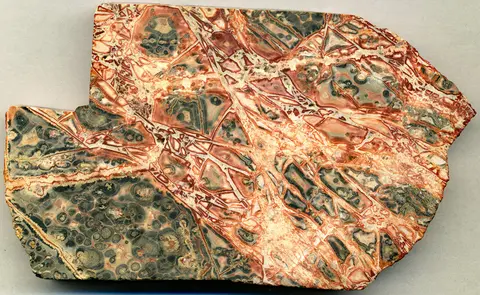

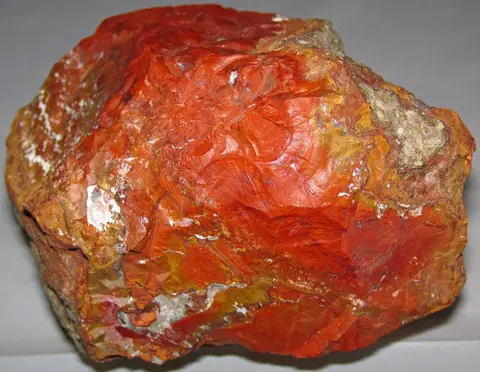

Petrified wood
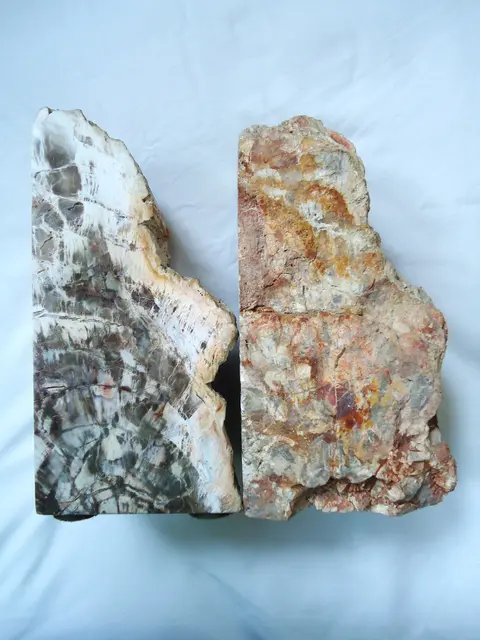

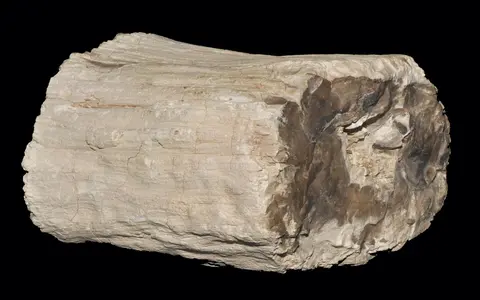

More on each: jasper value and identification and petrified wood value and identification.