What petrified wood is worth
By variety
By origin
- United States: $115 to $298, median $175 (72 listings)
- Madagascar: $90 to $126, median $119 (10 listings)
- Indonesia: $49 to $158, median $87 (10 listings)
- Australia: $134 to $318, median $167 (6 listings)
Show 12 of the listings behind these numbers
These are dealer asking prices: what shops list petrified wood for, not what it sells for and not an appraisal. Selling to a dealer usually brings well below retail, because the dealer has to resell it at a margin.
How to identify petrified wood
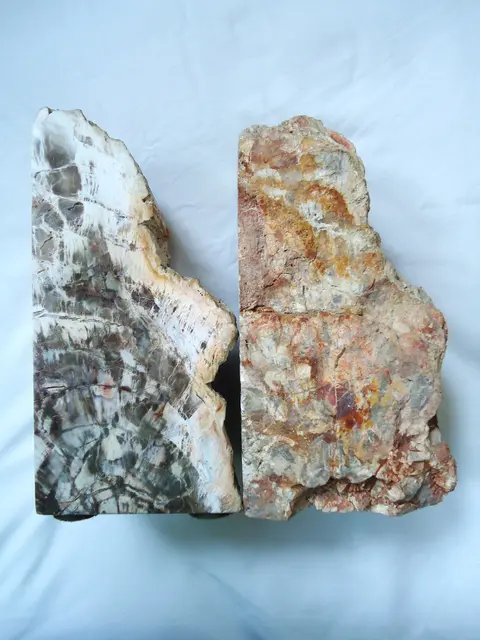
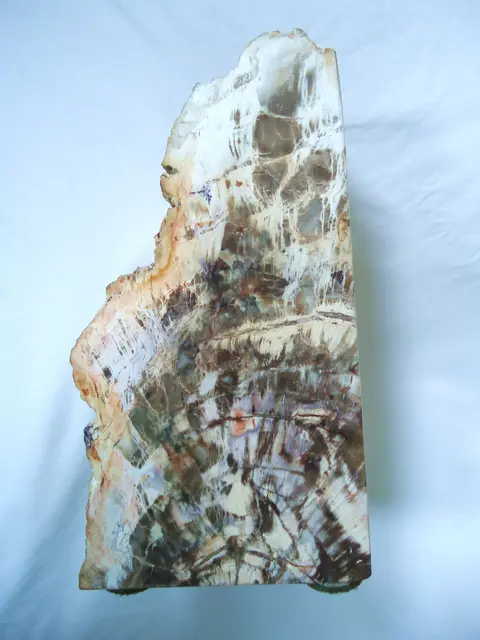
Petrified wood is fossil wood in which the original plant tissue has been replaced or filled by minerals, usually quartz (chalcedony) and sometimes opal. Silica-rich groundwater, often from volcanic ash, preserved the shape and frequently the cell structure of the tree.
- Growth rings visible on cross sections, like a cut log
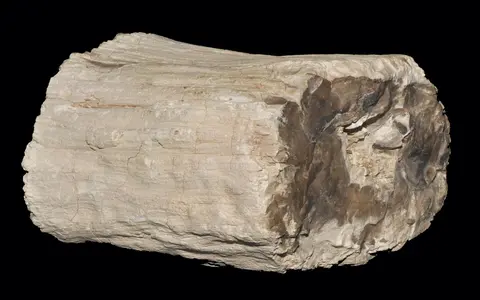
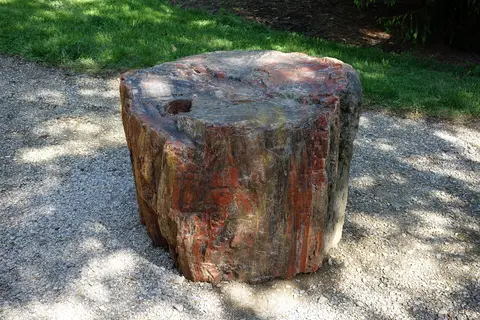
- Wood grain, bark texture, knots or branch scars on the outside
- Fine cell structure visible with a loupe on polished or clean broken surfaces
- Hard and heavy like stone: scratches glass and feels much heavier than wood
- Colors from minerals: red, yellow and brown from iron, black and gray from carbon, plus white, pink and purple
- Often breaks into short sections with flat, clean cross-grain breaks
- Waxy to glassy luster on polished faces
Petrified wood varieties
Arizona petrified wood
Arizona petrified wood is Late Triassic wood from the Chinle Formation, famous for its bright red, yellow, purple and white colors. A locality name. It is mostly conifer wood (often called araucaria), and the legal supply comes from private land near Holbrook rather than the national park.
Indonesian petrified wood
Indonesian petrified wood comes mainly from Java and is sold in large logs, slabs, tables and polished decor pieces. A locality name; much of it is chalcedony or opalized wood in tan, brown, gray and orange tones, including palm wood.
Washington petrified wood
Washington petrified wood is Miocene wood preserved under Columbia River basalt lava flows, notable for the large number of tree species represented. A locality name; collectors value it for identifiable species such as ginkgo, oak and other hardwoods, while colors are generally more muted than Arizona wood.
Madagascar petrified wood
Madagascar petrified wood is colorful agatized wood sold in large volume as polished rounds, slabs and tumbled stones. A locality name; it is usually brightly colored red, brown, yellow and black with good polish and is a major source of decor rounds.
Texas palm wood
Texas palm wood is petrified palm from the Catahoula Formation of East Texas and the state stone of Texas. A locality name for petrified palm wood, recognized by dots in cross section and rods lengthwise, with no growth rings.
Opalized wood
Opalized wood is petrified wood in which the wood was replaced by opal instead of chalcedony or quartz. It is lighter (SG about 2.0 to 2.2) and slightly softer than agatized wood, often with a waxy or pearly look, and rare pieces show precious opal play of color.
Eden valley wood
Eden Valley wood is Eocene petrified wood from the Eden Valley area near Farson, Wyoming, best known for limb casts. A locality name; limb casts here are often dark brown to black with chalcedony-replaced interiors and are collected for their shape and texture.
Hampton butte wood
Hampton Butte wood is petrified wood from Hampton Butte in central Oregon, known for its bright green color. A locality name; green petrified wood is uncommon, which makes Hampton Butte material a collector favorite.
Where petrified wood comes from
- Petrified Forest National Park and Holbrook area, Arizona, USA
- Brightly colored Late Triassic logs from the Chinle Formation, about 225 million years old. Collecting in the park is illegal; commercial material comes from nearby private land.
- Vantage and Saddle Mountains, Washington, USA
- Miocene wood from many tree species, buried by Columbia River basalt lava flows.
- Eden Valley, Wyoming, USA
- Eocene limb casts, often dark with interesting replacement textures.
- Hampton Butte, Oregon, USA
- Known for uncommon bright green petrified wood.
- Madagascar
- Large supply of colorful polished rounds and slabs for the decor market.
- Java, Indonesia
- Large logs and slabs used for furniture and decor, including colorful opalized and chalcedony wood.
- Texas and Louisiana, USA
- Petrified palm wood from the Catahoula Formation; palmwood is the Texas state stone and the Louisiana state fossil.
Petrified wood lookalikes
Jasper has no growth rings in cross section and no cell structure under a loupe.
- Same hardness and SG
- Banding may look like grain but does not show rays and rings
- Some 'wood' jaspers are really silicified volcanic rock
petrified wood vs jasper
Chert is uniform and fine-grained, with no rings, knots or cell structure.
- Same hardness
- Often gray, tan or black with conchoidal fracture
chert vs petrified wood
Agate shows concentric bands that follow the shape of a cavity, not rings around a pith with radiating rays.
- Translucent banded chalcedony
- Same chemistry; some petrified wood has agate-filled cracks
agate vs petrified wood
Tiger's eye shows a moving, silky chatoyant band of light from parallel fibers; wood shows grain and rings without that rolling glow.
- Tiger's eye is quartz replacing crocidolite fibers
- Golden to brown with a strong sheen
tigers eye vs petrified wood
Opalized wood is lighter, slightly softer and often has a glassy or pearly look; it is a type of petrified wood rather than a different material.
- SG about 2.0 to 2.2
- May show play of color in rare pieces
opalized wood vs petrified wood
Bone shows a honeycomb of round cells, not linear grain and growth rings.
- Cell pattern is cellular and bubbly
- Often red, yellow or black
Also mistaken for petrified wood: mahogany obsidian, biggs jasper, palm wood, stromatolite.
Fake, dyed and treated petrified wood
Banded jasper, chert or silicified rock sold as petrified wood
Occasional
- No growth rings in cross section
- No cell structure under a loupe
- Banding does not curve around knots
Resin-filled or epoxy-backed slabs and rounds
Common
- Clear or tinted glassy fills in cracks and voids
- Fills are softer and warmer to the touch than stone
- Sometimes a fiberglass or resin backing on thin slabs
Lacquered or oiled pieces sold as polished
Common
- Glossy film that can be scratched with a fingernail or steel
- Shine wears or clouds after washing with soap
- Rough texture visible under the gloss
Dyed petrified wood
Rare
- Unnatural blue or bright green colors
- Color pooled in cracks
- Acetone swab picks up color
Is my petrified wood real? Tests you can do at home
-
Loupe on a cross section
Look at the end grain or a polished face with a 10x loupe.
- Real
- Growth rings, rays and tiny cell outlines like modern wood.
- Fake or lookalike
- Jasper and chert show uniform grain or random banding.
-
Scratch test against glass
Drag a sharp edge of the rock across a glass bottle or tile.
- Real
- Quartz-replaced wood scratches glass easily.
- Fake or lookalike
- Resin fills and lacquer coatings do not; real wood or calcite-replaced wood is too soft.
Can leave a small mark.
-
Steel point on fills and coatings
Press a steel pin into a glossy fill or edge of the polished face in a hidden spot.
- Real
- Stone resists the pin.
- Fake or lookalike
- Resin dents or scratches; lacquer flakes.
Can leave a small mark.
-
Weight in hand
Compare with a stone of similar size.
- Real
- Feels as heavy as any quartz rock.
- Fake or lookalike
- Real dry wood or resin is much lighter.
A stone that passes these tests is consistent with natural petrified wood, not proven. For valuable pieces, a gem lab report settles treatment and origin.
Treatments
- Resin or epoxy stabilization and filling (common)
- Fills cracks and voids in slabs, rounds and tables; lowers value compared with natural stone, especially if not disclosed. Glassy fills that are softer than stone; steel pin dents them.
- Coating with lacquer, oil or wax (common)
- Mimics a true polish cheaply; collectors prefer a real stone polish. Coating scratches easily and dulls with soap and water.
- Dyeing (rare)
- Creates unnatural colors; dyed pieces have decor value only. Acetone swab, color in cracks.
What moves the price of petrified wood
- Color. Bright, varied colors such as reds, yellows, purples and the uncommon greens and blues bring more than plain brown and gray.
- Preserved structure. Clear rings, bark, knots and fine cell detail add value; for palm wood, sharp eye patterns.
- Size and form. Large rounds, full log sections, bookends and slabs without cracks are scarce and costly to ship.
- Finish. A true high polish on stone beats coated or partly polished pieces.
- Locality. Arizona rainbow wood, Washington species wood, opalized wood and limb casts from known localities carry collector interest.
- Cracks and fills. Open cracks and resin fills reduce value.
- Species identification. Pieces with identified species and documented locality appeal to fossil collectors.
Questions collectors ask about petrified wood
- What is a petrified wood fossil?
- It is the remains of a tree in which the wood was replaced or filled by minerals, usually silica, so the shape and often the cell structure were preserved in stone. It counts as a plant fossil.
- What does petrified wood look like?
- It looks like a piece of log or branch turned to stone: growth rings on the ends, grain and bark texture on the sides, and colors from brown and gray to red, yellow and purple. Polished faces have a glassy shine.
- How to tell if a rock is actually petrified wood?
- Look at the end with a loupe for growth rings, radiating rays and tiny cell outlines. Banded jasper and chert can look grainy, but they lack rings that circle a center and the cell structure of real wood.
- How to know how old petrified wood is?
- Its age is the age of the rock layer it came from, dated by geologists from the formation. Arizona wood from the Chinle Formation is about 225 million years old, while Washington wood is Miocene, about 15 million years old.
- Is it illegal to own a piece of petrified wood?
- No, owning petrified wood is legal. Collecting it is illegal in national parks such as Petrified Forest, and on US public land managed by the BLM hobby collectors may take limited amounts for personal, noncommercial use; private land needs the owner's permission.
- How do I tell if my petrified wood is valuable?
- Value rises with bright color, well-preserved rings and bark, large crack-free size, a true polish and a known locality. Compare your piece with the price table above for similar size and finish.
- Is petrified wood expensive?
- Common rough and small tumbled pieces are inexpensive, while large polished rounds, colorful Arizona slabs and furniture pieces cost far more. See the price table above for current observed prices by form.
- Petrified wood vs agatized wood
- Agatized wood is petrified wood in which the replacing silica is chalcedony (agate), giving translucent, glossy and often colorful material. Most petrified wood on the market is agatized; the rest is opalized or replaced by coarser quartz.
Sources
Prices: 191 current listings from Dave's Rock Shop, FossilEra, The Gem Shop, Throwin Stones, seen 2026-11-20 to 2026-11-20. How we collect prices.