Chert and flint vs petrified wood
Petrified wood shows growth rings, bark texture or wood grain.
Side by side
| Property | Chert and flint | Petrified wood |
|---|---|---|
| Hardness (Mohs) | 6.5 to 7 | 6.5 to 7 for quartz-replaced wood; about 5.5 to 6 for opalized wood |
| Specific gravity | 2.5 to 2.65 | About 2.6 for quartz-replaced wood; lower (about 2.0 to 2.2) for opalized wood |
| Luster | Waxy to dull; flint can be subvitreous | Waxy to vitreous when polished, dull when rough |
| Streak | White | |
| Cleavage | None | |
| Formula | SiO2 (microcrystalline quartz) | Mostly SiO2 (chalcedony, quartz or opal), with iron oxides and other trace minerals |
| Typical dealer asking price | Not enough data | $99 to $293 (slabs and polished pieces) |
How to tell them apart
- Often also chert or chalcedony in composition
- Look along the length for fiber structure
Chert is uniform and fine-grained, with no rings, knots or cell structure.
- Same hardness
- Often gray, tan or black with conchoidal fracture
Photos of each
Chert and flint
Petrified wood
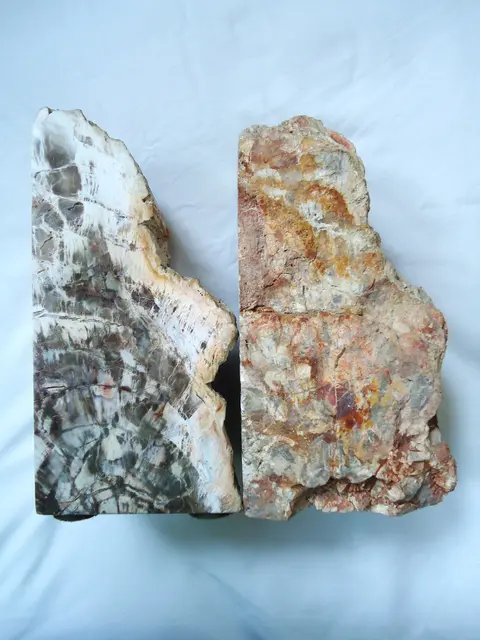

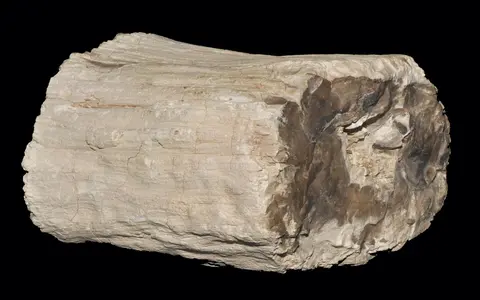

More on each: chert and flint value and identification and petrified wood value and identification.