RockValues

Chalcedony value and identification

Dealers list chalcedony tumbled stones at $185 to $515 per pound.

Prices checked . Page updated .
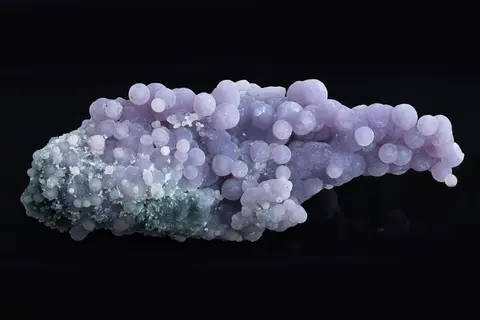
Chalcedony: Botryoidal Purple Grape Agate Chalcedony from Indonesia
Botryoidal Purple Grape Agate Chalcedony from Indonesia. Photo: JJ Harrison ( https://www.jjharrison.com.au/ ), CC BY-SA 4.0, via Wikimedia Commons.
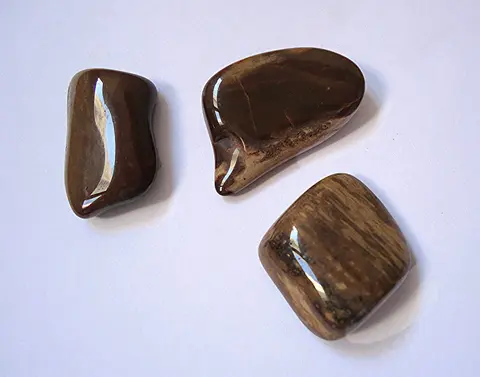
Chalcedony: Brown chalcedony, Brazil (9393342871)
Brown chalcedony, Brazil (9393342871). Photo: MAURO CATEB from Brazil, CC BY 2.0, via Wikimedia Commons.
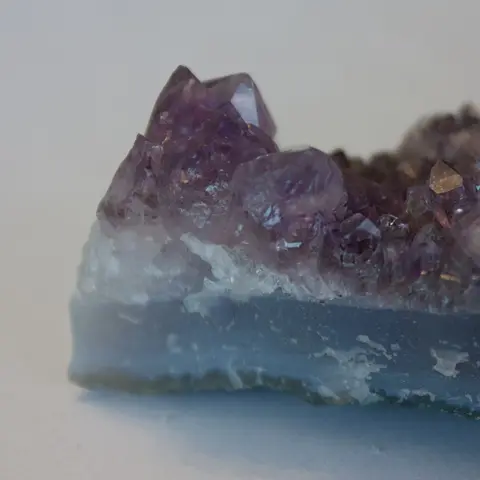
Chalcedony: Amethyst on blue chalcedony
Amethyst on blue chalcedony. Photo: Feedmepaperr, CC BY-SA 4.0, via Wikimedia Commons.

What chalcedony is worth

Dealer asking prices for chalcedony, middle half of current listings, checked 2026-11-20. Bar shows the 25th to 75th percentile; the dark tick is the median.
Form and sizeTypical asking priceRange chartMedianListings
Geodes and nodules (per piece)$25 to $55$4582 from 1 dealer
5 to 10 cm (2 to 4 in)$24 to $45$3744 from 1 dealer
10 to 20 cm (4 to 8 in)$47 to $90$5531 from 1 dealer
Slabs and polished pieces (per piece)$49 to $185$11579 from 1 dealer
10 to 20 cm (4 to 8 in)$75 to $159$11536 from 1 dealer
20 to 40 cm (8 to 16 in)$145 to $265$19525 from 1 dealer
5 to 10 cm (2 to 4 in)$17 to $45$3915 from 1 dealer
Carvings and shapes (per piece)$12 to $95$1864 from 1 dealer
5 to 10 cm (2 to 4 in)$12 to $43$1647 from 1 dealer
10 to 20 cm (4 to 8 in)$98 to $168$11312 from 1 dealer
Spheres (per piece)$29 to $285$12553 from 1 dealer
5 to 10 cm (2 to 4 in)$23 to $152$9936 from 1 dealer
10 to 20 cm (4 to 8 in)$280 to $420$34512 from 1 dealer
Tumbled stones (per pound)$184 to $515$35719 from 3 dealers
Specimens (per piece)$21 to $233$2514 from 1 dealer
5 to 10 cm (2 to 4 in)$19 to $25$258 from 1 dealer
Rough (per pound)Not enough data (4 listings, need 5)
Cabochons (per carat)Not enough data (0 listings, need 5)

By origin

  • United States: $39 to $58, median $45 (40 listings)
  • Morocco: $22 to $55, median $37 (29 listings)
  • Mexico: $20 to $35, median $22 (7 listings)
Show 12 of the listings behind these numbers
Sample dealer listings for Chalcedony
ListingSizeLocalityAskingSeen
Small Spheroidal Chalcedony Nodules From Morocco
FossilEra
Morocco$2
Small Botryoidal Chalcedony Nodules From Morocco
FossilEra
Morocco$2
Medium Spheroidal Chalcedony Nodules From Morocco
FossilEra
Morocco$3
2.4" Polished Flower Agate Palm Stone - Madagascar
FossilEra
6.1 cmMadagascar$3
.9" Polished Banded Carnelian Agate Sphere
FossilEra
$3
.9" Polished Bloodstone (Heliotrope) Sphere
FossilEra
$4
1.5" Vibrant Polished Carnelian Agate Stones
FossilEra
3.8 cm$4.50
Polished Carnelian Agate Heart - 1.25 to 1.5" Size
FossilEra
3.8 cm$4.50
2.6" Polished Flower Agate Palm Stone - Madagascar
FossilEra
6.6 cmMadagascar$5
2.35" Polished Flower Agate Palm Stone - Madagascar
FossilEra
6 cmMadagascar$5
2.3" Polished Flower Agate Palm Stone - Madagascar
FossilEra
5.8 cmMadagascar$5
Blue CHALCEDONY Crystal Chips - Small Crystals, Gemstones, Jewelry Making, Tumbled Crystals, E1804
Throwin Stones
2.5 cm$5.40

These are dealer asking prices: what shops list chalcedony for, not what it sells for and not an appraisal. Selling to a dealer usually brings well below retail, because the dealer has to resell it at a margin.

How to identify chalcedony

Chalcedony is microcrystalline quartz (silicon dioxide) made of tiny fibrous crystals, so it is translucent and waxy rather than glassy and crystalline. Agate, carnelian, onyx, chrysoprase and bloodstone are all chalcedony.

  • Waxy to glassy luster and a soft translucent glow when held to light.
  • Hard: scratches glass and resists a steel knife (Mohs 6.5 to 7).
  • No cleavage; chips show smooth curved conchoidal fracture with a dull waxy surface.
  • Often botryoidal (bubbly), banded, or filling cavities and veins in volcanic rock.
  • Feels cool and about as heavy as quartz for its size.
  • Even, saturated colors like jet black, bright blue or vivid green usually mean dye.

Chalcedony varieties

Pink chalcedony

Pink chalcedony is chalcedony in soft pink to peach shades, often botryoidal; much bright pink material on the market is dyed. Chalcedony with a natural pale pink color; strong hot pink usually indicates dye.

Mtorolite

Mtorolite is chromium-colored green chalcedony from Zimbabwe, named for the Mtoroshanga area. Green chalcedony colored by chromium rather than the nickel of chrysoprase, giving a cooler, deeper green.

Holley blue agate

Holley blue agate is violet-blue to lavender chalcedony from around Holley, near Sweet Home, Oregon. Despite the agate name, it is usually unbanded chalcedony, valued for its natural violet-blue color.

Where chalcedony comes from

Rio Grande do Sul, Brazil and Artigas, Uruguay
Huge volumes of gray agate and chalcedony, much of it heated or dyed into carnelian, onyx and bright colors.
Gujarat, India
Long-established source and cutting center for carnelian and bloodstone beads.
Queensland and Western Australia
Main source of fine nickel-green chrysoprase.
Namibia, Turkey and Malawi
Sources of natural blue and lavender chalcedony.
Arizona, USA
Copper mines produced gem silica, chalcedony colored by chrysocolla.
Oregon, USA
Holley blue agate and blue botryoidal chalcedony.

Chalcedony lookalikes

Agate

Agate is banded chalcedony; plain, unbanded material is called chalcedony.

  • Same hardness, SG and chemistry
  • Difference is pattern only

chalcedony vs agate

Chert

Chert is opaque and dull with a grainier texture.

  • Same hardness
  • Chert contains more impurities and transmits little light

chalcedony vs chert

Jasper

Jasper is opaque even at thin edges; chalcedony glows at thin edges.

  • Jasper is impure, grainy microcrystalline quartz
  • Same hardness

chalcedony vs jasper

Common opal

Opal is lighter and softer and can be scratched by hardened steel.

  • Opal SG about 2.0 to 2.2
  • Opal hardness 5.5 to 6.5
  • Opal can craze as it dries

chalcedony vs opal

Obsidian

Obsidian has bright glassy fractures and is scratched by quartz.

  • Obsidian hardness 5 to 5.5
  • SG about 2.35 to 2.6
  • Volcanic glass with no crystalline structure

black chalcedony vs obsidian

Glass

Glass shows round bubbles and swirl marks under a loupe.

  • Hardness 5 to 6
  • Glassy, not waxy, luster

Also mistaken for chalcedony: white jade, hyalite opal, yellow jasper, blue lace agate, chrysoprase, moonstone.

Fake, dyed and treated chalcedony

  • Dyed agate or chalcedony (black onyx, blue, green, pink, purple)

    Very common

    • Color stronger in porous bands and weaker in denser ones
    • Unnaturally bright or perfectly even color
    • Acetone swab may lift some dyes
  • Heated agate sold as carnelian

    Very common

    • Banded red-orange agate with sharp color layering
    • Brownish-red in dense bands, paler in porous ones
  • Glass beads sold as chalcedony or onyx

    Common

    • Gas bubbles
    • Mold seams on beads
    • Lower hardness
  • Banded calcite sold as onyx

    Very common

    • Scratched by a knife
    • Fizzes with acid
  • Plastic or resin imitations

    Occasional

    • Very light and warm in hand
    • Soft; a pin marks it

Is my chalcedony real? Tests you can do at home

  1. Glass scratch test

    Try to scratch a glass plate with a sharp edge or the girdle of a bead.

    Real
    Chalcedony scratches glass.
    Fake or lookalike
    Calcite, plastic and many glass imitations do not.

    Can leave a small mark.

  2. Acetone swab for dye

    Rub nail polish remover on a cotton swab against a drill hole or back face.

    Real
    Natural color stays put.
    Fake or lookalike
    Some dyed stones leave color on the swab; many modern dyes are stable, so a clean swab does not prove natural color.
  3. Loupe look at bands and drill holes

    Examine banding and drill holes with a 10x loupe.

    Real
    Natural color varies softly; no bubbles.
    Fake or lookalike
    Dyed material shows color concentrated in specific bands or around holes; glass shows round bubbles.
  4. Backlight test

    Hold a flashlight behind a thin edge.

    Real
    Chalcedony glows with a soft, even translucency.
    Fake or lookalike
    Obsidian looks smoky or black; plastic and glass may glow but look glassy.
  5. Weight in hand

    Compare with a known quartz piece of similar size.

    Real
    Feels like quartz.
    Fake or lookalike
    Plastic feels light; glass may feel similar, so combine with other tests.

A stone that passes these tests is consistent with natural chalcedony, not proven. For valuable pieces, a gem lab report settles treatment and origin.

Treatments

Dyeing (common)
Gives cheap gray chalcedony strong colors. Black onyx is almost always dyed; blue, green and pink dyed material is everywhere. Dyed pieces are worth far less than natural color. Color concentration in porous bands, acetone swab, lab spectroscopy.
Heating (common)
Turns iron-bearing chalcedony red to orange, producing most commercial carnelian. Stable and widely accepted. Hard to prove at home; heated stones often look more uniform and brownish-red.
Sugar and acid treatment (common)
Carbonizes sugar inside the pores to make black onyx; permanent. Lab only; deep even black in a material that rarely occurs naturally black.

What moves the price of chalcedony

  1. Variety. Fine chrysoprase and gem silica sit far above common gray or dyed chalcedony.
  2. Natural color. Untreated, saturated color is valued; dyed material is cheap.
  3. Translucency. Even, glowing translucency without cloudy patches.
  4. Uniformity. Even color without patchiness or cracks for cut stones.
  5. Size. Large clean pieces of fine color are scarce.
  6. Cut and carving quality. Precise cabochons, cameos and carvings add labor value.
  7. Specimen form. Botryoidal or stalactitic specimens with good luster sell as mineral specimens.

Questions collectors ask about chalcedony

Obsidian vs onyx: what is the difference?
Obsidian is volcanic glass, hardness 5 to 5.5, with a bright glassy luster on breaks. Onyx is chalcedony, hardness about 7, with a waxier look; black onyx sold today is almost always dyed chalcedony.
Jet vs onyx: how do you tell them apart?
Jet is fossilized wood: very light, warm to the touch and soft enough to mark with a pin, and it leaves a brown streak. Onyx is chalcedony, cool, much heavier and hard enough to scratch glass.

Sources

Prices: 456 current listings from FossilEra, Kingsley North, The Gem Shop, Throwin Stones, seen 2026-11-20 to 2026-11-20. How we collect prices.