RockValues

Blue lace agate value and identification

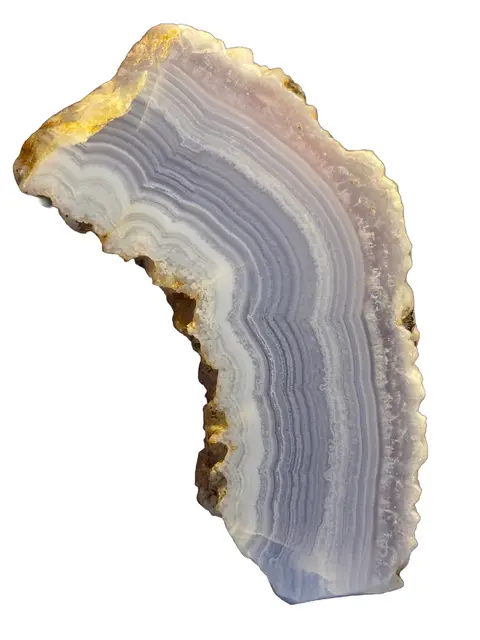
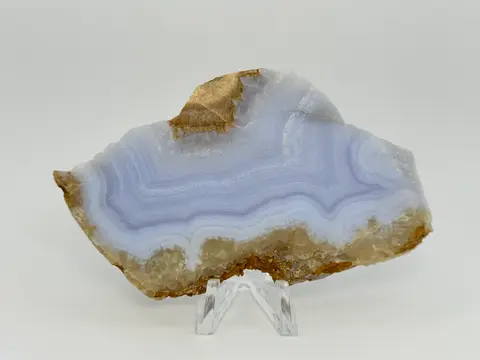
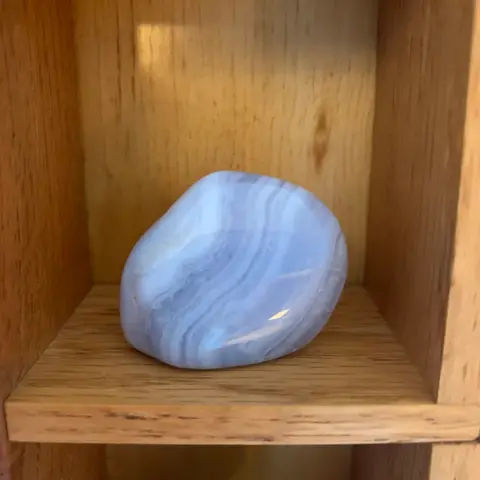
Blue lace agate is pale blue chalcedony with fine white and light blue lacy bands, best known from southern Namibia.

A variety of agate. Prices checked .
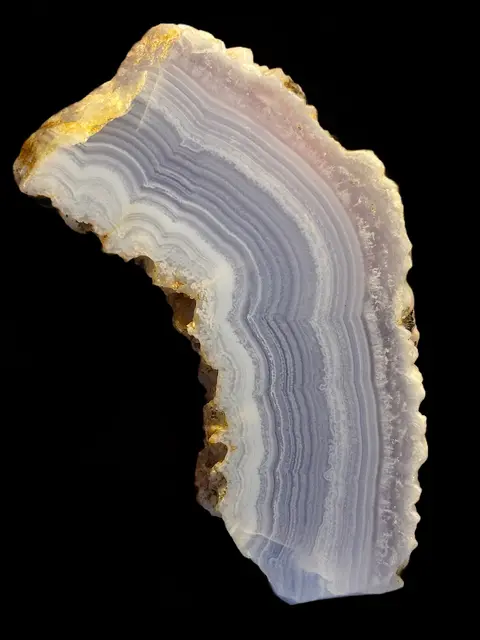
Blue lace agate: Blue Lace Agate
Blue Lace Agate. Photo: Unknown author Unknown author, CC0, via Wikimedia Commons.
Blue lace agate: Blue Lace Agate (white)
Blue Lace Agate (white). Photo: I2Overcome, CC0, via Wikimedia Commons.
Blue lace agate: Blue lace agate lapidary slab
Blue lace agate lapidary slab. Photo: I2Overcome, CC BY 4.0, via Wikimedia Commons.
Blue lace agate: Blue Lace Agate from Namibia (polished)
Blue Lace Agate from Namibia (polished). Photo: I2Overcome, CC BY 4.0, via Wikimedia Commons.

What blue lace agate is worth

Not enough data. We have not yet seen 5 or more current dealer listings for blue lace agate in any one form, so we show no range rather than guess.

Show 2 of the listings behind these numbers
Sample dealer listings for Blue lace agate
ListingSizeLocalityAskingSeen
1.5" Polished Blue Lace Agate Worry Stone
FossilEra
3.8 cm$5
Blue Lace Agate Rough
Kingsley North
1.1 lb$29

These are dealer asking prices: what shops list blue lace agate for, not what it sells for and not an appraisal. Selling to a dealer usually brings well below retail, because the dealer has to resell it at a margin.

How to identify blue lace agate

It is defined by its soft natural sky blue color and wavy lace banding, a color that is rare in natural agate. See agate value for the species as a whole.

  • Pale to medium sky blue with white wavy lace bands
  • Translucent at thin edges
  • Often sold as tumbled stones, cabochons and beads
  • Hardness about 7

Other agate varieties

Where blue lace agate comes from

Karas Region, southern Namibia
The classic source; supply of top material has been limited.
South Africa and Malawi
Similar blue banded chalcedony is reported from southern Africa.

Blue lace agate lookalikes

Holley blue agate

Holley blue is lavender to violet blue from Oregon, usually without lace patterns.

  • Same material type

Larimar

Larimar is blue pectolite with a fibrous, silky texture and white web pattern; it is softer (4.5 to 5).

  • Larimar is not translucent like agate

Also mistaken for blue lace agate: caribbean calcite.

Fake, dyed and treated blue lace agate

  • Dyed blue agate sold as blue lace

    Very common

    • Deep, saturated blue rather than pale sky blue
    • Color concentrated in cracks and porous bands
    • Bright cobalt or teal shades
  • Blue glass beads

    Occasional

    • Bubbles
    • No fine lace banding

Is my blue lace agate real? Tests you can do at home

  1. Color and dye check with a loupe

    Examine cracks and bands at 10x.

    Real
    Soft, gradual blue tones with no pooling.
    Fake or lookalike
    Dye pools in cracks and porous layers; color is too vivid.
  2. Acetone swab

    Rub a hidden spot with an acetone-dampened swab.

    Real
    Swab stays clean.
    Fake or lookalike
    Some cheap dyes transfer; a clean swab does not prove natural color.

A stone that passes these tests is consistent with natural blue lace agate, not proven. For valuable pieces, a gem lab report settles treatment and origin.

Treatments

Dyeing of pale material (occasional)
Strengthens blue; undisclosed dye lowers value sharply. Loupe and color check.

What moves the price of blue lace agate

  1. Color. Clear sky blue with crisp white lace is the top grade; grey or washed out stones are lower.
  2. Pattern. Fine, even lace across the stone beats patchy banding.
  3. Origin. Namibian material is the reference standard.
  4. Form. Larger polished pieces and good cabochons sell above tumbled stones.

Sources

Prices: 2 current listings from FossilEra, Kingsley North, seen 2026-11-20 to 2026-11-20. How we collect prices.