RockValues

Chrysoprase value and identification

Chrysoprase is apple green chalcedony colored by nickel, the most valuable common variety of chalcedony.

A variety of chalcedony. Prices checked .
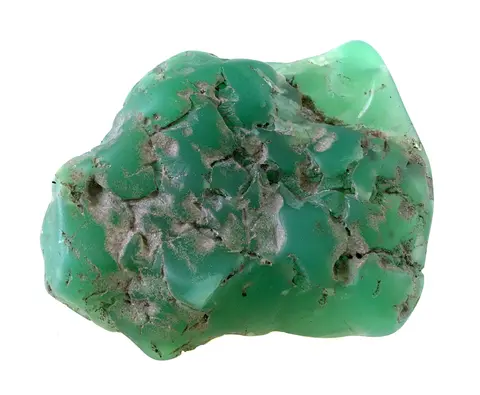
Chrysoprase: Chrysoprase brute (Australie)
Chrysoprase brute (Australie). Photo: Parent Géry, Public domain, via Wikimedia Commons.
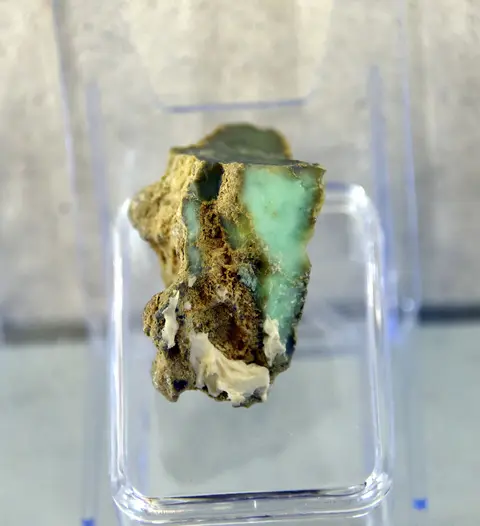
Chrysoprase: Chrysoprase from Poland. Erbil Stones and Gems Museum, Erbil Citadel, Hawler, Iraq
Chrysoprase from Poland. Erbil Stones and Gems Museum, Erbil Citadel, Hawler, Iraq. Photo: Osama Shukir Muhammed Amin FRCP(Glasg), CC BY-SA 4.0, via Wikimedia Commons.
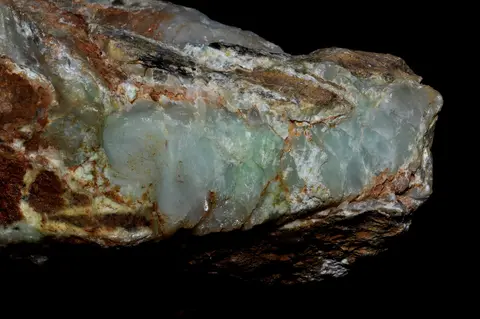
Chrysoprase: Chrysoprase (GeoDIL number - 2262)
Chrysoprase (GeoDIL number - 2262). Photo: Shannon Heinle, CC0, via Wikimedia Commons.

What chrysoprase is worth

Not enough data. We have not yet seen 5 or more current dealer listings for chrysoprase in any one form, so we show no range rather than guess.

Show 3 of the listings behind these numbers
Sample dealer listings for Chrysoprase
ListingSizeLocalityAskingSeen
1.8" Polished Chrysoprase Pocket Stones
FossilEra
4.6 cm$7
4.6" Free-Standing, Polished Green Chrysoprase - Madagascar
FossilEra
11.7 cmMadagascar$18
4.4" Polished Lemon Chrysoprase Section - Western Australia
FossilEra
11.2 cmWestern Australia$49

These are dealer asking prices: what shops list chrysoprase for, not what it sells for and not an appraisal. Selling to a dealer usually brings well below retail, because the dealer has to resell it at a margin.

How to identify chrysoprase

Chalcedony with nickel-bearing inclusions that give a bright, even apple green; natural, not dyed. See chalcedony value for the species as a whole.

  • Bright apple to mint green, translucent
  • Color is even and soft rather than banded
  • Waxy luster, scratches glass
  • Lower grades are paler or cloudy with brown matrix

Other chalcedony varieties

Where chrysoprase comes from

Queensland and Western Australia
Main modern source of fine chrysoprase.
Lower Silesia, Poland
Historic European source used in older jewelry.
Tanzania
Produces chrysoprase, often paler.

Chrysoprase lookalikes

Jadeite

Jadeite is heavier and has a granular, slightly dimpled polish.

  • SG about 3.3
  • Hardness 6.5 to 7

Prehnite

Prehnite is often yellow-green with a pearly, fibrous look.

  • SG about 2.9
  • Hardness 6 to 6.5

Variscite

Variscite is softer and often veined.

  • Hardness 3.5 to 4.5

Also mistaken for chrysoprase: jade, imperial jade, peruvian opal, bloodstone, amazonite.

Fake, dyed and treated chrysoprase

  • Dyed green chalcedony or agate

    Very common

    • Color too saturated and slightly bluish or emerald green
    • Color concentrated in bands or drill holes
  • Lemon chrysoprase

    Common

    • Yellow-green and opaque
    • Usually magnesite with nickel minerals, not chalcedony
    • Softer than chalcedony
  • Green glass

    Occasional

    • Bubbles
    • Glassy luster

Is my chrysoprase real? Tests you can do at home

  1. Loupe on color distribution

    Look at the stone and drill holes at 10x with a light behind it.

    Real
    Even, soft green throughout.
    Fake or lookalike
    Dyed material shows stronger color in bands or around holes.
  2. Glass scratch test

    Test against a glass plate.

    Real
    Scratches glass.
    Fake or lookalike
    Magnesite sold as lemon chrysoprase and glass fail.

    Can leave a small mark.

A stone that passes these tests is consistent with natural chrysoprase, not proven. For valuable pieces, a gem lab report settles treatment and origin.

Treatments

Dyeing (common)
Imitates chrysoprase with ordinary chalcedony; much lower value. Color concentration; lab spectroscopy.

What moves the price of chrysoprase

  1. Color. Saturated, even apple green is most valuable.
  2. Translucency. Glowing, clean material without brown matrix.
  3. Size. Large clean pieces are scarce.
  4. Natural color. Dyed imitations are worth little.

Care and safety

Can fade with prolonged heat or strong sunlight; store away from sunny windows and heat.

Sources

Prices: 3 current listings from FossilEra, seen 2026-11-20 to 2026-11-20. How we collect prices.