What bloodstone is worth
Not enough data. We have not yet seen 5 or more current dealer listings for bloodstone in any one form, so we show no range rather than guess.
Show 12 of the listings behind these numbers
These are dealer asking prices: what shops list bloodstone for, not what it sells for and not an appraisal. Selling to a dealer usually brings well below retail, because the dealer has to resell it at a margin.
How to identify bloodstone
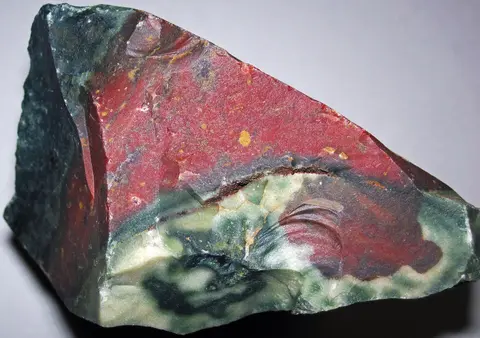
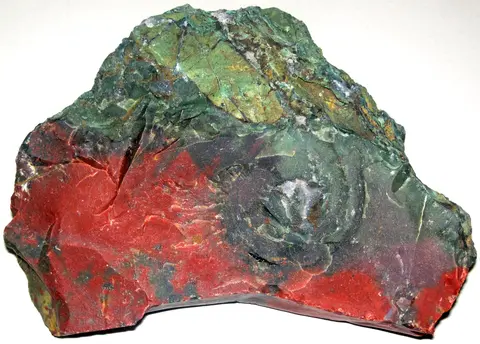
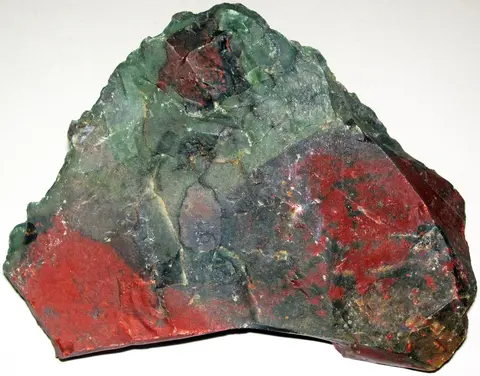
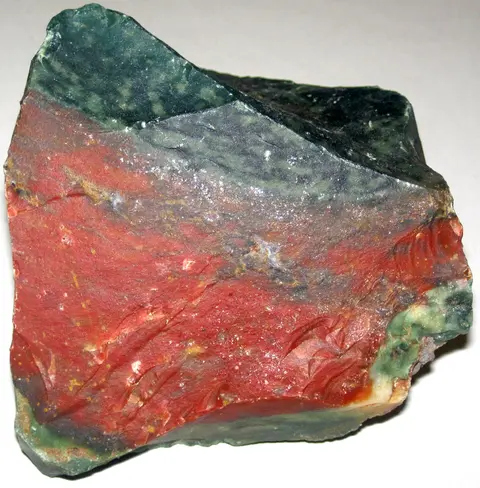
Green chalcedony or jasper defined by red to orange iron oxide spots; usually more opaque than typical chalcedony. See chalcedony value for the species as a whole.
- Dark green body with irregular red, orange or brownish spots
- Thin edges may glow green when backlit
- Waxy polish, scratches glass
- Spots are random, not uniform dots
Other chalcedony varieties
Where bloodstone comes from
- India
- Main source of commercial bloodstone.
- Brazil and Australia
- Also produce bloodstone.
Bloodstone lookalikes
Green jasper lacks the red spots.
Chrysoprase is a bright apple green and more translucent, with no red spots.
Unakite has pink feldspar and green epidote in a grainy texture.
- Granite-like rock
- Pink patches, not red spots
unakite vs bloodstone
Also mistaken for bloodstone: jasper.
Fake, dyed and treated bloodstone
Glass imitation bloodstone
Occasional
- Bubbles
- Spots too regular or painted on the surface
Dyed green jasper or chalcedony with added spots
Occasional
- Even green color
- Red only at the surface
Is my bloodstone real? Tests you can do at home
-
Loupe at the red spots
Inspect the red spots at 10x.
- Real
- Spots have soft, irregular edges and continue into the stone.
- Fake or lookalike
- Painted or applied spots sit on the surface; glass shows bubbles.
-
Glass scratch test
Try the stone against glass.
- Real
- Scratches glass.
- Fake or lookalike
- Many imitations do not.
Can leave a small mark.
-
Weight and temperature
Hold in the palm.
- Real
- Cool and quartz-heavy.
- Fake or lookalike
- Resin and plastic feel light and warm.
A stone that passes these tests is consistent with natural bloodstone, not proven. For valuable pieces, a gem lab report settles treatment and origin.
Treatments
- Waxing (occasional)
- Improves polish; minor effect. Greasy feel.
What moves the price of bloodstone
- Pattern. Deep green with bright, well-distributed red spots.
- Translucency. Edges that glow green are preferred.
- Carving. Seals, intaglios and cameos add value.
Questions collectors ask about bloodstone
- How can I tell if bloodstone is real or fake?
- Real bloodstone scratches glass, feels cool and quartz-heavy, and its red spots are irregular and run into the stone. Glass imitations show bubbles, and plastic feels light and warm.
- Is bloodstone good for a ring?
- Yes. At hardness 6.5 to 7 with no cleavage it wears well in rings, though it can scratch over time against harder stones.
- Is bloodstone worth money?
- Bloodstone is a modestly priced stone; well-patterned pieces with deep green and bright red, and fine carvings, bring the most. See the price table above for real sales.
Sources
Prices: 13 current listings from FossilEra, Kingsley North, Throwin Stones, seen 2026-11-20 to 2026-11-20. How we collect prices.