Jasper vs rhyolite
Rhyolite is finely granular under a loupe and often shows tiny crystals; jasper breaks smooth and waxy.
Side by side
| Property | Jasper | Rhyolite |
|---|---|---|
| Hardness (Mohs) | 6.5 to 7 | 6 to 6.5 (varies with texture) |
| Specific gravity | 2.58 to 2.91 | 2.4 to 2.6 |
| Luster | Vitreous to waxy when polished, dull on rough | Dull to vitreous; glassy in obsidian-rich bands |
| Streak | White | White |
| Crystal system | Trigonal (microcrystalline quartz) | |
| Cleavage | None | |
| Refractive index | About 1.54 | |
| Formula | SiO2 (with impurities) | |
| Typical dealer asking price | $50 to $286 (tumbled stones) | $112 to $199 (slabs and polished pieces) |
How to tell them apart
- Rhyolite polish is often slightly pitted
- Many jasper trade names are rhyolite
Jasper breaks with a smooth, waxy surface and takes a glassy polish without grains; rhyolite looks finely granular under a loupe.
- Jasper hardness 6.5 to 7, consistently scratches glass
- Rhyolite often shows tiny quartz or feldspar crystals
- Many rocks sold as jasper (rainforest, leopard skin) are actually rhyolite
Photos of each
Jasper
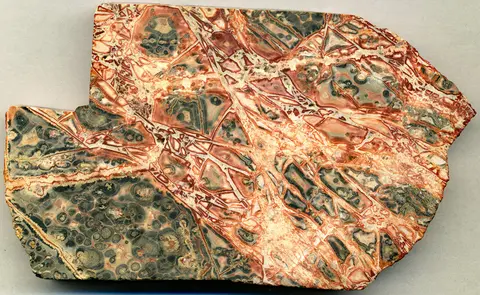

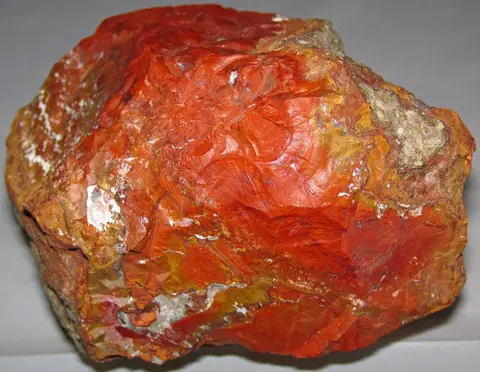

Rhyolite
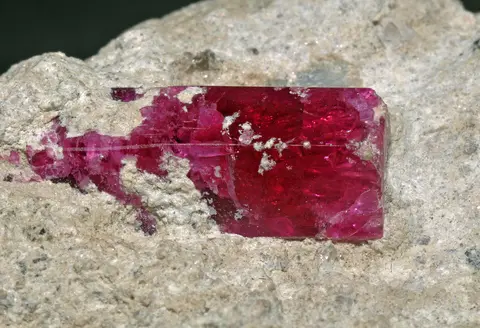

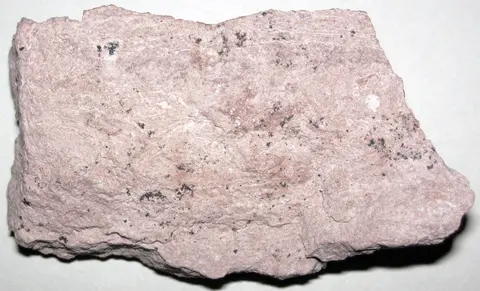

More on each: jasper value and identification and rhyolite value and identification.