


Black onyx
Onyx is about twice as heavy and feels cold; it is hardness 7 and cannot be scratched by steel.
- Onyx SG about 2.6
- No streak on porcelain
- Most black onyx is dyed chalcedony
Jet is a hard, compact form of lignite: fossilized wood, largely from ancient conifers, that was compressed in marine mud and can be carved and polished. It is an organic gem, used for black jewelry since prehistoric times and most famously in Victorian mourning pieces.
Prices checked . Page updated .
Not enough data. We have not yet seen 5 or more current dealer listings for jet in any one form, so we show no range rather than guess.
| Listing | Size | Locality | Asking | Seen |
|---|---|---|---|---|
| JET Tumbled Stones - Polished Petrified Wood Pebble, Fossilized Black Amber Gift, E0336 (Small) Throwin Stones | 2.5 cm | $6.30 | ||
| JET Tumbled Stones - Polished Petrified Wood Pebble, Fossilized Black Amber Gift, E0336 (Medium) Throwin Stones | 2.5 cm | $7.65 | ||
| JET Tumbled Stones - Polished Petrified Wood Pebble, Fossilized Black Amber Gift, E0336 (Large) Throwin Stones | 2.5 cm | $8.10 | ||
| JET Crystal Bracelet - Petrified Wood, Tumbled Beads - Beaded Bracelet, Handmade Jewelry, Healing Crystal Bracelet, E1241 (Small) Throwin Stones | 17.8 cm | $16 | ||
| JET Crystal Bracelet - Petrified Wood, Tumbled Beads - Beaded Bracelet, Handmade Jewelry, Healing Crystal Bracelet, E1241 (Large) Throwin Stones | 17.8 cm | $20 | ||
| JET Crystal Bracelet - Petrified Wood, Tumbled Beads - Beaded Bracelet, Handmade Jewelry, Healing Crystal Bracelet, E1241 (Extra Large) Throwin Stones | 17.8 cm | $27 |
These are dealer asking prices: what shops list jet for, not what it sells for and not an appraisal. Selling to a dealer usually brings well below retail, because the dealer has to resell it at a margin.
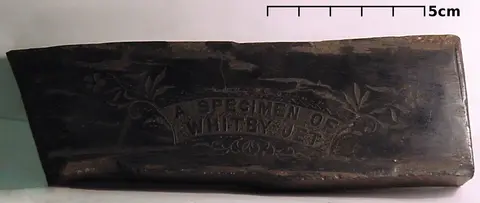
Whitby jet comes from Jurassic shales on the North Yorkshire coast of England around Whitby, where it was mined and carved on an industrial scale in the 19th century. It is the classic hard jet that set the standard for the material; Whitby origin and period carving add value compared with jet from other sources.
Onyx is about twice as heavy and feels cold; it is hardness 7 and cannot be scratched by steel.
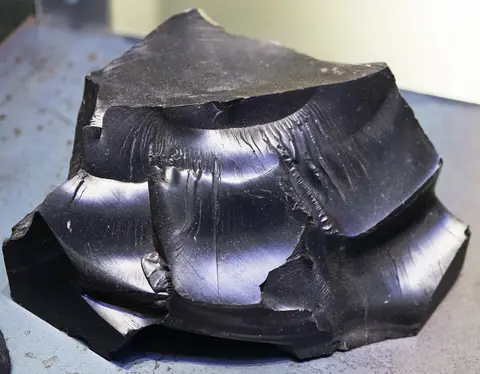
Obsidian is a glassy volcanic rock that is far heavier, colder and glassier, with sharp conchoidal fractures.
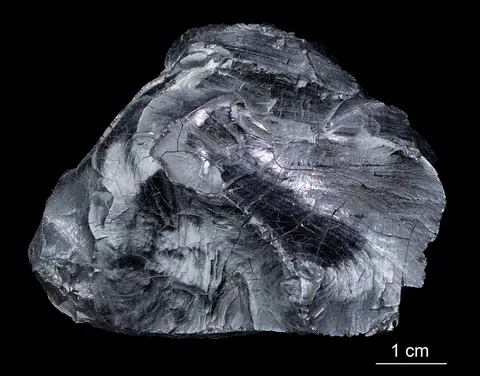
Hematite is very heavy and leaves a reddish brown streak.
Glass feels cold and heavy and does not leave a streak.
Molded ornaments with seam lines; vulcanite fades to brown or greenish brown and smells of sulfur when rubbed.
Also mistaken for jet: black jade.
Very common
Common
Occasional
Occasional
Rub a hidden spot, such as the back of a bead hole, across the back of an unglazed porcelain tile.
Can leave a small mark.
Hold the piece to your cheek or the inside of your wrist, then compare its weight with a glass bead of similar size.
Rub the piece briskly on wool or cloth and hold it near small bits of tissue paper.
Heat a needle and touch it to an inconspicuous spot, keeping your face away and working in a ventilated area.
Damages the stone: test only an inconspicuous spot or a piece you do not mind marking.
A stone that passes these tests is consistent with natural jet, not proven. For valuable pieces, a gem lab report settles treatment and origin.
Soft and can crack if dried out or shocked. Keep it away from heat and harsh chemicals, wipe with a soft damp cloth, and store it separately from harder jewelry.
Prices: 6 current listings from Throwin Stones, seen 2026-11-20 to 2026-11-20. How we collect prices.