What spinel is worth
By origin
- Tanzania: $583 to $1,160, median $798 (84 listings)
- Myanmar: $382 to $965, median $586 (19 listings)
- Madagascar: $324 to $795, median $515 (6 listings)
- Vietnam: $784 to $2,285, median $1,364 (5 listings)
Show 12 of the listings behind these numbers
These are dealer asking prices: what shops list spinel for, not what it sells for and not an appraisal. Selling to a dealer usually brings well below retail, because the dealer has to resell it at a margin.
How to identify spinel
Spinel is magnesium aluminum oxide (MgAl2O4), a hard cubic gem that occurs in red, pink, purple, blue, gray and black. For centuries red spinel was confused with ruby; several famous crown jewel rubies, including the Black Prince's Ruby, are spinel.
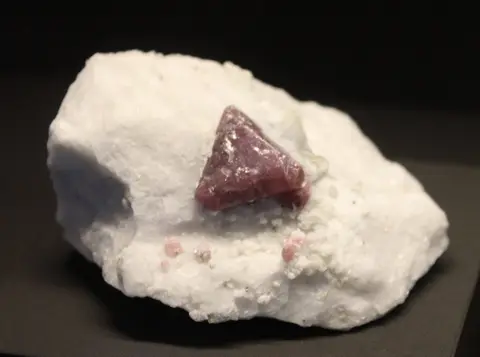
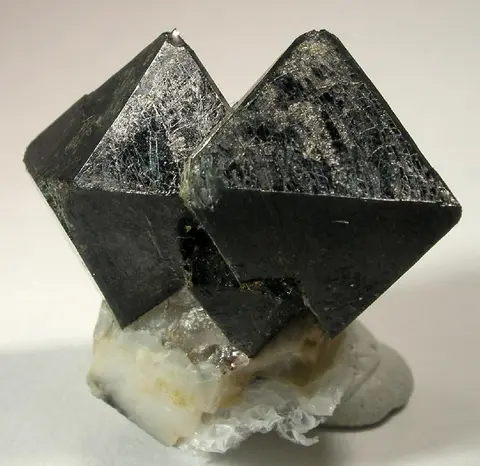
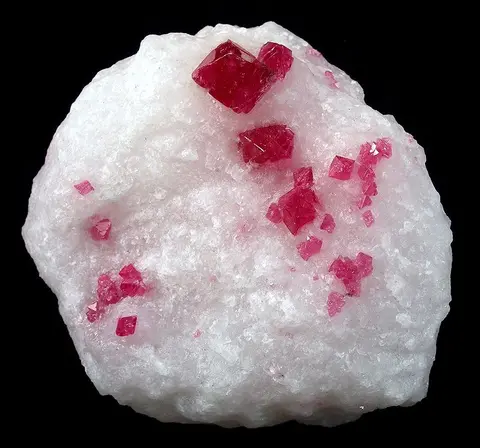
- Sharp octahedral crystals (two pyramids base to base), often flattened twins
- Hardness 8: scratches quartz and glass easily
- Singly refractive: no doubling of facet edges under a loupe, and no change of color with viewing direction
- Bright vitreous luster, slightly sub-adamantine when polished
- Heavier than quartz (SG about 3.58 to 3.61)
- Red and pink stones often glow red under a longwave UV torch
- No cleavage, conchoidal fracture
Spinel varieties
Mahenge spinel
Mahenge spinel is pink to red spinel from the Mahenge area of Tanzania, known for neon saturation and strong fluorescence since a major find in 2007. It is defined by origin and its vivid neon pink to red color, which ranks among the most valued spinel colors.
Burmese spinel
Burmese spinel is spinel from the Mogok valley of Myanmar, the classic source of red and hot pink spinel found alongside ruby in marble. It is defined by its Mogok origin, which carries a market premium, and is typically red to pink with strong red fluorescence.
Gahnite
Gahnite is zinc aluminum oxide (ZnAl2O4), a separate mineral species in the spinel group, usually dark blue-green to green octahedra. Gahnite carries zinc instead of magnesium, which makes it heavier (SG about 4.3 to 4.6) and darker than gem spinel.
Where spinel comes from
- Mogok, Myanmar
- Classic source of red and hot pink spinel, often in marble, with strong red fluorescence.
- Mahenge and Tunduru, Tanzania
- Mahenge produces vivid pink to red spinel; Tunduru gravels yield many colors.
- Sri Lanka
- Gem gravels with pink, purple, blue and gray spinel, including rare cobalt blue.
- Luc Yen, Vietnam
- Pink, red and purple spinel, and cobalt blue spinel.
- Badakhshan, Tajikistan and Afghanistan
- Historic source of the large pink to red balas rubies set in old crown jewels.
Spinel lookalikes
Ruby is doubly refractive and pleochroic (purplish red one way, orange red the other); spinel looks the same color from every direction.
- Ruby hardness 9, SG 4.00, heavier
- Ruby RI 1.762 to 1.770
- Ruby crystals are hexagonal barrels, spinel octahedra
spinel vs ruby
Sapphire shows pleochroism and higher SG (4.00); spinel is singly refractive.
- Sapphire RI 1.762 to 1.770
- Sapphire often shows straight color banding
spinel vs sapphire
Garnets are also singly refractive but most red garnets are heavier and darker, with RI above 1.73.
- Almandine SG about 4.0, pyrope about 3.7
- Garnet crystals are dodecahedra and trapezohedra
- Red garnets rarely fluoresce
spinel vs garnet
Tourmaline shows strong doubling and pleochroism and is lighter (SG about 3.06).
- Hardness 7 to 7.5
- RI 1.62 to 1.64
tourmaline vs spinel
Peridot is olive green with strong doubling of back facets; green spinel is singly refractive.
- Peridot hardness 6.5 to 7
- RI 1.65 to 1.69
Also mistaken for spinel: corundum, burmese ruby, padparadscha sapphire, star ruby, taaffeite, musgravite.
Fake, dyed and treated spinel
Flame-fusion synthetic spinel
Very common
- Usually sold as imitation aquamarine, blue zircon, peridot or birthstones rather than as spinel
- Curved growth lines or gas bubbles under magnification
- RI slightly higher than natural (about 1.727)
- Strong patchy strain pattern in a polariscope
Flux-grown synthetic red and pink spinel
Occasional
- Flux fingerprints and metallic platelets
- Needs lab confirmation
Red or blue glass
Common
- Gas bubbles and swirls
- Soft (hardness 5 to 6), worn facet edges
- Lighter in hand
Balas ruby and other old ruby names
Rare
- Historic name for red spinel; spinel is singly refractive, ruby is not
Is my spinel real? Tests you can do at home
-
Doubling check with a loupe
Look through the table at the back facet edges with a 10x loupe.
- Real
- Spinel shows single sharp edges with no doubling.
- Fake or lookalike
- Tourmaline, zircon and peridot show doubled edges; ruby shows slight doubling in some directions.
-
Longwave UV torch
In a dark room shine a 365 nm UV torch on the stone.
- Real
- Red and pink spinel often glows red, sometimes strongly.
- Fake or lookalike
- Red glass and most red garnets stay dark; ruby also glows red, so this separates spinel from garnet and glass only.
-
Specific gravity by water displacement
Weigh the loose stone dry on a scale reading to 0.01 g, then suspended in water; divide dry weight by the loss.
- Real
- Spinel gives about 3.6.
- Fake or lookalike
- Ruby and sapphire give about 4.0, tourmaline about 3.06, glass about 2.4 to 3.0.
-
Dichroism with a polarizing filter
Look through the stone with a polarizing sunglass lens or a calcite dichroscope, rotating it 90 degrees.
- Real
- Spinel keeps the same color in every orientation.
- Fake or lookalike
- Ruby, sapphire, tourmaline and iolite change color shade with rotation.
A stone that passes these tests is consistent with natural spinel, not proven. For valuable pieces, a gem lab report settles treatment and origin.
Treatments
- Heating (occasional)
- Spinel does not improve much with heat, so most is sold unheated; heated stones are valued lower. Lab examination of altered inclusions and spectra.
- Fracture filling (occasional)
- Oil or resin fills surface reaching fractures in lower grade stones; lowers value. Flash effects or glassy fillings in cracks under a loupe.
What moves the price of spinel
- Color. Vivid red, hot pink (Mahenge style neon) and cobalt blue rank highest; grayish and steely tones rank lowest.
- Saturation and tone. Bright, saturated colors without gray or brown.
- Size. Fine red and cobalt blue spinel above a few carats is rare.
- Clarity. Eye clean stones; octahedral negative crystals are acceptable.
- Origin. Mogok, Mahenge and cobalt blue origins carry premiums when documented.
- Treatment. Unheated, unfilled stones are the market norm and expected.
- Crystal quality. For specimens, sharp octahedra on white marble matrix.
Questions collectors ask about spinel
- How to tell if a gem is spinel?
- Spinel is singly refractive, so facet edges do not double under a loupe and the color does not shift with direction, unlike ruby, sapphire and tourmaline. It has hardness 8 and an SG near 3.6, and red stones often glow red under a longwave UV torch.
- What is the rarest color of spinel?
- Saturated cobalt blue and pure vivid red are the rarest and most sought colors, along with the neon pink to red from Mahenge and Burma.
- Is spinel a valuable stone?
- Fine red, neon pink and cobalt blue spinel are valuable collector gems, while gray, lavender and black spinel are more affordable. Color, size and clarity drive the price; see the price table above.
- Burmese spinel vs ruby
- Burmese red spinel and Burmese ruby come from the same Mogok mines and both glow red under UV. Spinel is singly refractive with SG about 3.6, while ruby is doubly refractive, pleochroic and heavier at SG 4.0.
- Tourmaline vs spinel
- Tourmaline is doubly refractive with visible doubling of facet edges and strong color change with direction. Spinel shows neither and is harder (8 against 7 to 7.5).
- Peridot vs spinel
- Peridot is olive green with strong doubling of the back facets. Green spinel is uncommon, singly refractive and harder.
Sources
Prices: 368 current listings from FossilEra, iRocks (The Arkenstone), Natural Gemstones, seen 2026-11-20 to 2026-11-20. How we collect prices.