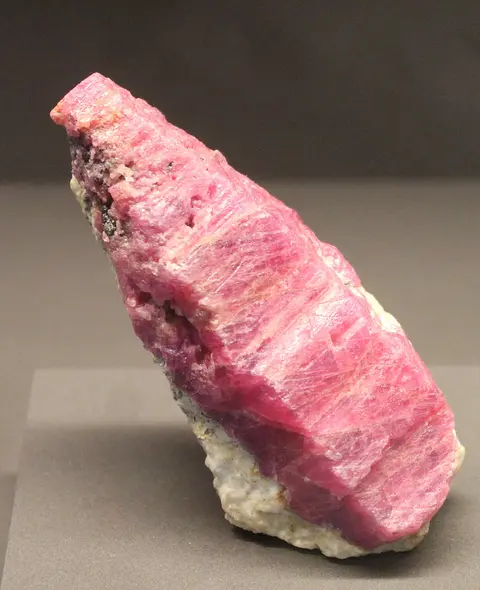
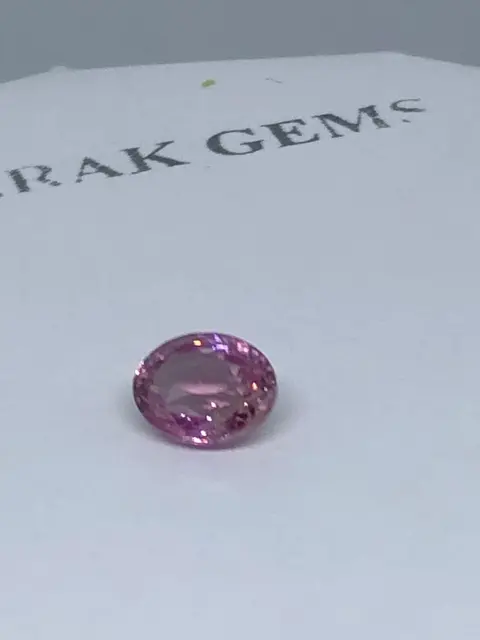
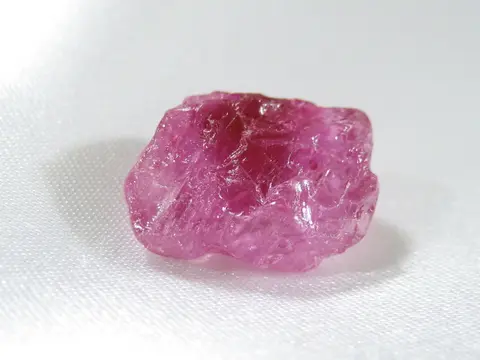
What pink sapphire is worth
Not enough data. We have not yet seen 5 or more current dealer listings for pink sapphire in any one form, so we show no range rather than guess.
These are dealer asking prices: what shops list pink sapphire for, not what it sells for and not an appraisal. Selling to a dealer usually brings well below retail, because the dealer has to resell it at a margin.
How to identify pink sapphire
Chemically like ruby with less chromium; the line between pink sapphire and ruby is set by saturation and differs between labs and markets. See corundum value for the species as a whole.
- Pink to hot pink with purple or orange secondary tones.
- Often glows orange red to red under a longwave UV torch.
- Dichroic and heavy (SG about 4.0); scratches quartz.
- Straight color zoning and fine silk under a loupe.
Where pink sapphire comes from
- Ilakaka, Madagascar
- Main modern source of pink sapphire.
- Sri Lanka
- Pastel to medium pink.
- Myanmar
- Vivid hot pink from Mogok.
- Tanzania and Vietnam
- Commercial pink to purplish pink.
Fake, dyed and treated pink sapphire
Synthetic pink sapphire
Very common
- Curved bands and bubbles
- Flawless at low price
Beryllium diffused pinkish orange stones
Common
- Orange rim along facets when immersed
- Lab test needed
Pink glass
Common
Is my pink sapphire real? Tests you can do at home
-
UV torch
Shine a 365 nm torch in the dark.
- Real
- Often orange red to red glow.
- Fake or lookalike
- Morganite, kunzite and glass usually differ; synthetics also glow.
-
Loupe for zoning and bubbles
View through the side with a 10x loupe.
- Real
- Straight zoning and silk.
- Fake or lookalike
- Curved bands and bubbles.
-
Specific gravity
Weigh dry and in water on a 0.01 g scale.
- Real
- About 4.0.
- Fake or lookalike
- Tourmaline 3.06, morganite 2.8, kunzite 3.18.
A stone that passes these tests is consistent with natural pink sapphire, not proven. For valuable pieces, a gem lab report settles treatment and origin.
Treatments
- Heat (almost always)
- Removes purple or brownish tones; accepted. Lab.
- Beryllium diffusion (occasional)
- Shifts color toward orange pink; low value. Lab.
What moves the price of pink sapphire
- Color. Vivid, pure hot pink ranks highest; pale or grayish pink lowest.
- Treatment. Unheated stones carry a premium.
- Size and clarity. Clean stones over a few carats are uncommon.
- Origin. Burma origin on a lab report adds value.
Questions collectors ask about pink sapphire
- How to tell if pink sapphire is real?
- A real pink sapphire scratches quartz, weighs about 4.0 in specific gravity, shows dichroism and straight color zoning under a loupe, and often glows red under UV. Curved bands or bubbles point to a synthetic, and a lab report is the only certain test.
- Are pink sapphires more valuable than blue sapphires?
- Generally fine blue sapphire sells for more than pink of the same size and quality, but vivid hot pink stones can outrank average blue. Color quality matters more than the hue name.
- How much is pink sapphire worth?
- Value follows color saturation, treatment, clarity, size and origin, with vivid unheated stones at the top. See the price table above for current observations.