RockValues

Blue zircon value and identification

Blue zircon is zircon heated from brown rough, mostly from Cambodia, into a bright blue to greenish blue gem with strong fire.

A variety of zircon. Prices checked .
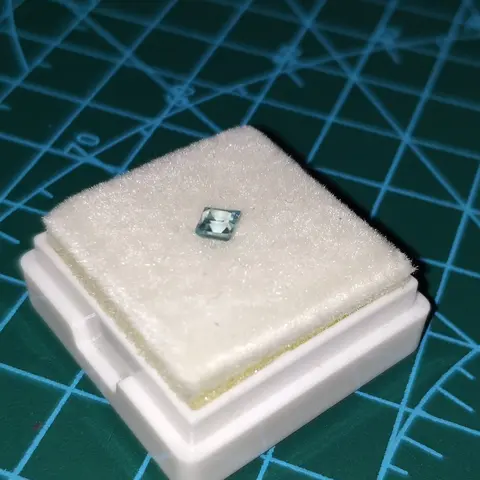
Blue zircon: 0.45cts gem grade blue zircon
0.45cts gem grade blue zircon. Photo: 千玄, CC BY-SA 4.0, via Wikimedia Commons.

What blue zircon is worth

Not enough data. We have not yet seen 5 or more current dealer listings for blue zircon in any one form, so we show no range rather than guess.

These are dealer asking prices: what shops list blue zircon for, not what it sells for and not an appraisal. Selling to a dealer usually brings well below retail, because the dealer has to resell it at a margin.

How to identify blue zircon

The most popular zircon color; nearly all of it is heat-treated, and it is strongly pleochroic, blue in one direction and nearly colorless in another. See zircon value for the species as a whole.

  • Bright pastel to electric blue, sometimes slightly green
  • Strong doubling of back facets and high fire
  • Deepest blue seen looking down the crystal axis, so good cutters orient the table that way
  • Feels heavy for its size

Other zircon varieties

Where blue zircon comes from

Ratanakiri, Cambodia
Source of the best blue zircon rough.
Chanthaburi, Thailand
Major heating and cutting center.
Sri Lanka and Myanmar
Also produce rough suitable for heating.

Blue zircon lookalikes

Blue apatite

Apatite is softer and lighter with low fire.

  • Hardness 5
  • SG about 3.2

Tanzanite

Tanzanite shows violet and purple flashes and less fire.

  • Hardness 6 to 6.5

Also mistaken for blue zircon: blue diamond, topaz.

Fake, dyed and treated blue zircon

  • Synthetic blue spinel

    Occasional

    • No doubling
    • Lower fire
  • Blue glass

    Occasional

    • Bubbles
    • Light in hand
    • No doubling
  • Blue topaz or cubic zirconia sold as blue zircon

    Occasional

    • No doubling
    • Topaz feels lighter; cubic zirconia heavier

Is my blue zircon real? Tests you can do at home

  1. Loupe doubling test

    Look through the table at the back facet edges with a 10x loupe.

    Real
    Doubled edges.
    Fake or lookalike
    Topaz, spinel, glass and cubic zirconia show single edges.
  2. Rotation color check

    Turn the stone and view it from the side and from the table.

    Real
    Shifts between blue and near colorless from different directions.
    Fake or lookalike
    Topaz and spinel stay the same blue.

A stone that passes these tests is consistent with natural blue zircon, not proven. For valuable pieces, a gem lab report settles treatment and origin.

Treatments

Heating (almost always)
Creates the blue color; accepted and priced in. Assumed.

What moves the price of blue zircon

  1. Color. Saturated pure blue without green or gray.
  2. Size. Large stones with strong color are scarce.
  3. Cut. Correct orientation and sharp, unchipped facet edges.
  4. Clarity. Eye-clean expected.

Care and safety

Keep away from long direct sunlight, which can shift some heated blue zircon toward brown.

Sources

Prices: no current dealer listings yet. How we collect prices.