RockValues

Ulexite value and identification

Ulexite is a hydrated sodium calcium borate that forms in dry lake evaporite deposits. Its tightly packed parallel fibers carry light like optical fibers, so a polished slab shows print from underneath on its top surface, giving it the name TV stone.

Prices checked . Page updated .
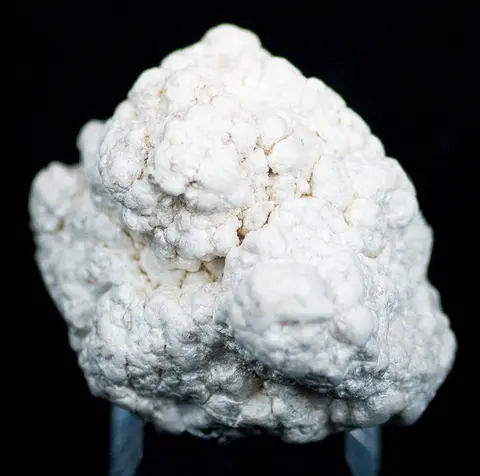
Ulexite: Ulexite-199920
Ulexite-199920. Photo: Robert M. Lavinsky, CC BY-SA 3.0, via Wikimedia Commons.
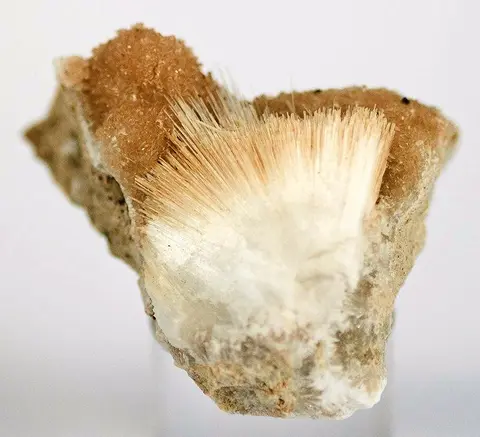
Ulexite: Ulexite-pas-84a
Ulexite-pas-84a. Photo: Robert M. Lavinsky, CC BY-SA 3.0, via Wikimedia Commons.
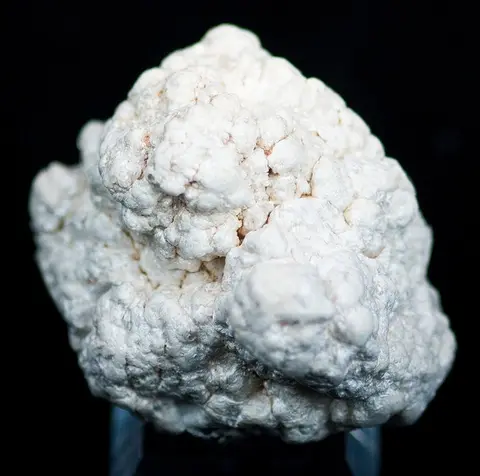
Ulexite: Ulexite-Calcite-199577
Ulexite-Calcite-199577. Photo: Robert M. Lavinsky, CC BY-SA 3.0, via Wikimedia Commons.

What ulexite is worth

Not enough data. We have not yet seen 5 or more current dealer listings for ulexite in any one form, so we show no range rather than guess.

Show 2 of the listings behind these numbers
Sample dealer listings for Ulexite
ListingSizeLocalityAskingSeen
.95" Natural Ulexite Crystal Formation - California
FossilEra
California$9
1.1" Natural Ulexite Crystal Formation - California
FossilEra
2.8 cmCalifornia$9

These are dealer asking prices: what shops list ulexite for, not what it sells for and not an appraisal. Selling to a dealer usually brings well below retail, because the dealer has to resell it at a margin.

How to identify ulexite

  • Polished across the fibers, it projects an image of whatever lies underneath onto the top surface.
  • White, silky fibrous masses with fibers running parallel through the piece.
  • Very soft, hardness about 2.5; scratched by a copper coin.
  • Very light in the hand, specific gravity about 1.95.
  • Also occurs as cottony 'cotton ball' nodules in playa clays.
  • Polished surfaces dull and scratch quickly with handling.

Where ulexite comes from

Boron (Kramer district), California, USA
The best known source of fibrous TV stone seams in a large borax mine.
Death Valley region, California, USA
Cotton ball ulexite from playa deposits, historically mined for borax.
Turkey
Large borate deposits supply much of the polished ulexite on the market.
Argentina and Chile
High-altitude salt flats in the Andes produce ulexite in quantity, mostly for industry.

Ulexite lookalikes

Satin spar gypsum

Satin spar does not project a clear image through its fibers the way ulexite does.

  • Gypsum hardness 2, SG about 2.3
  • Satin spar is often sold as selenite
  • Both are soft and silky

Selenite

Selenite is clear and platy with one perfect cleavage, not fibrous.

  • Selenite peels into thin flexible sheets
  • No fiber optic effect

ulexite vs selenite

Fiber optic glass

Glass shows a perfectly regular honeycomb of fibers under a loupe and is much harder.

  • Glass hardness about 5.5, ulexite 2.5
  • Glass SG higher, usually above 2.5

Also mistaken for ulexite: chrysotile, gypsum, borax, colemanite.

Fake, dyed and treated ulexite

  • Fiber optic glass sold as ulexite or TV stone

    Common

    • Perfect hexagonal grid of fibers under a loupe
    • Often shows cat's eye stripe and comes in dyed colors
    • Too hard to scratch with a copper coin
    • Feels heavier and colder

Is my ulexite real? Tests you can do at home

  1. Copper coin scratch

    Press the edge of a copper coin against an unpolished side or base.

    Real
    Copper leaves a scratch or groove; hardness is about 2.5.
    Fake or lookalike
    Fiber optic glass is not marked by copper.

    Can leave a small mark.

  2. Loupe check of the fibers

    Look at the polished end with a 10x loupe under strong light.

    Real
    Irregular silky fibers of slightly varying thickness.
    Fake or lookalike
    A perfectly regular honeycomb pattern indicates manufactured glass.
  3. Image projection

    Lay the polished piece on printed text and look straight down at the top.

    Real
    The text appears on the top surface.
    Fake or lookalike
    Satin spar gives at most a blurry glow; fiber optic glass also projects, so combine with the hardness test.
  4. Weight in hand

    Compare with a similar sized piece of glass or quartz.

    Real
    Noticeably light (SG about 1.95).
    Fake or lookalike
    Glass feels heavier.

A stone that passes these tests is consistent with natural ulexite, not proven. For valuable pieces, a gem lab report settles treatment and origin.

Treatments

Polishing and coating (common)
Cut faces are polished to show the TV effect; some pieces are lacquered to protect the soft surface. This is normal for the material. A plastic-like film may be visible at edges.

What moves the price of ulexite

  1. Clarity of the image. Sharp text projection through a clean, crack-free piece is what buyers pay for.
  2. Thickness. Thicker pieces that still project a clear image are scarcer.
  3. Polish condition. Scratched, hazy faces reduce the effect and value.
  4. Natural versus glass. Fiber optic glass sells as a novelty, not as ulexite.
  5. Specimen form. Natural cotton balls and crystal specimens appeal to borate collectors.

Care and safety

Very soft and slightly water soluble. Keep it dry, do not wash it, and store it so the polished faces do not rub against other stones.

Sources

Prices: 2 current listings from FossilEra, seen 2026-11-20 to 2026-11-20. How we collect prices.