RockValues

Chrysotile value and identification

The fibrous form of serpentine, made of fine, flexible fibers that make up most of the world's commercial asbestos.

A variety of serpentine. Prices checked .
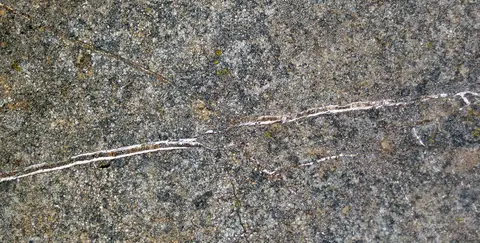
Chrysotile: Chrysotile asbestos veins in serpentinized komatiite (Upper Komatiitic Unit, Kidd-Munro Assemblage, Neoarchean, 2.711-2.717 Ga; southwest of the Potter Mine, east of Timmins, Ontario, Canada) 1 (46971714425)
Chrysotile asbestos veins in serpentinized komatiite (Upper Komatiitic Unit, Kidd-Munro Assemblage, Neoarchean, 2.711-2.717 Ga; southwest of the Potter Mine, east of Timmins, Ontario, Canada) 1 (46971714425). Photo: James St. John, CC BY 2.0, via Wikimedia Commons.
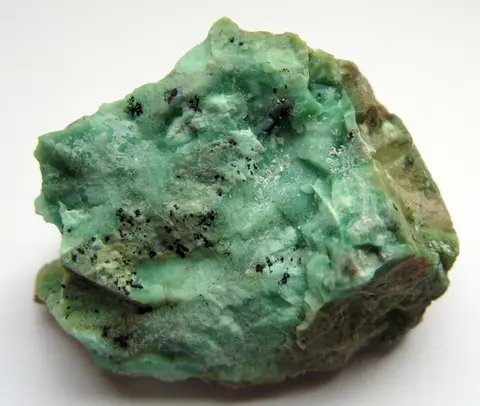
Chrysotile: Clinochrysotile - Group Serpentine from China
Clinochrysotile - Group Serpentine from China. Photo: Ra'ike (see also: de:Benutzer:Ra'ike ), CC BY 3.0, via Wikimedia Commons.
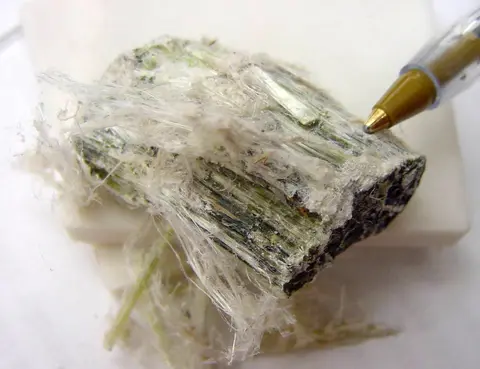
Chrysotile: Chrysotile fibreuse
Chrysotile fibreuse. Photo: Tiia Monto, CC BY-SA 3.0, via Wikimedia Commons.
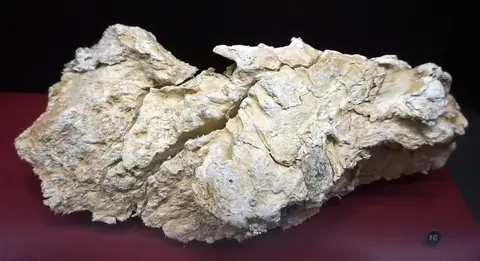
Chrysotile: Chrysotile - USGS Mineral Specimens 302
Chrysotile - USGS Mineral Specimens 302. Photo: Andrew Silver, Public domain, via Wikimedia Commons.

What chrysotile is worth

Not enough data. We have not yet seen 5 or more current dealer listings for chrysotile in any one form, so we show no range rather than guess.

Show 1 of the listings behind these numbers
Sample dealer listings for Chrysotile
ListingSizeLocalityAskingSeen
1.7" Polished Chrysotile Serpentine Hearts - Australia
FossilEra
4.3 cmAustralia$25

These are dealer asking prices: what shops list chrysotile for, not what it sells for and not an appraisal. Selling to a dealer usually brings well below retail, because the dealer has to resell it at a margin.

How to identify chrysotile

Chrysotile is serpentine grown as silky fibers in seams (cross-fiber veins) rather than as massive stone; the fibers can split into tiny breathable strands. See serpentine value for the species as a whole.

  • Silky, flexible, hair-like fibers in veins running across green serpentinite.
  • Golden, greenish or white fibers with a silky luster.
  • Fibers can be teased apart into finer and finer threads.
  • Vein walls usually massive green serpentine.

Where chrysotile comes from

Thetford Mines and Asbestos, Quebec, Canada
Historically the largest chrysotile mining district.
Gila County, Arizona, USA
High-quality long-fiber chrysotile was mined near Globe.
New Idria and Coalinga, California, USA
Serpentinite bodies with chrysotile.
Urals, Russia
Large chrysotile mines.

Chrysotile lookalikes

Tiger's eye

Tiger's eye is hard quartz that cannot be pulled apart; chrysotile fibers are soft and separate.

  • Tiger's eye hardness 7

Ulexite

Ulexite fibers are brittle and white and transmit images through polished ends.

  • SG about 1.95

Okenite

Okenite forms white puffballs in basalt cavities, not veins in green serpentinite.

  • Hardness 4.5 to 5

Fake, dyed and treated chrysotile

  • Chrysotile-bearing serpentine sold under trade names without disclosure

    Occasional

    • Silky fibrous seams in green stone
    • Fibers that fray at broken edges

Is my chrysotile real? Tests you can do at home

  1. Visual check for fibers

    Look at broken edges and seams with a 10x loupe without rubbing or scraping them.

    Real
    Parallel silky fibers running across the vein.
    Fake or lookalike
    Massive serpentine shows no fibers.
  2. Flexibility observation

    Look for loose fiber ends that bend rather than snap; do not pull fibers free.

    Real
    Fibers are flexible and silky.
    Fake or lookalike
    Ulexite and tiger's eye are rigid.

A stone that passes these tests is consistent with natural chrysotile, not proven. For valuable pieces, a gem lab report settles treatment and origin.

What moves the price of chrysotile

  1. Specimen quality. Long, silky, intact cross-fiber veins in solid matrix are what collectors want.
  2. Locality. Classic mine localities are preferred.
  3. Stability. Specimens that shed fibers are hard to sell and ship.

Care and safety

Chrysotile is asbestos. Keep specimens sealed in a closed box, do not break, sand or crush them, and wash hands after handling; never let fibers become airborne.

Sources

Prices: 1 current listings from FossilEra, seen 2026-11-20 to 2026-11-20. How we collect prices.