RockValues

Borax value and identification

Borax is a hydrated sodium borate mineral that forms in dry lake evaporite deposits and is the natural source of the household cleaning powder. Mineral specimens are clear prismatic crystals that slowly turn to white chalky tincalconite in dry air.

Prices checked . Page updated .

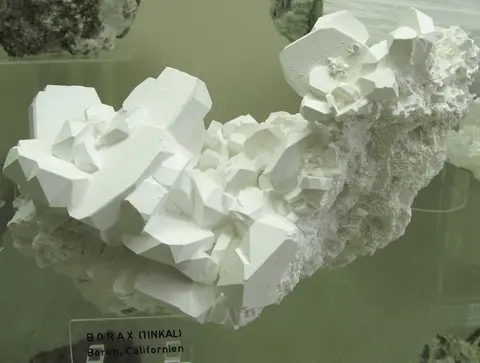
Borax: Borax - Boron, Californien, USA
Borax - Boron, Californien, USA. Photo: Ra'ike (see also: de:Benutzer:Ra'ike ), CC BY-SA 3.0, via Wikimedia Commons.
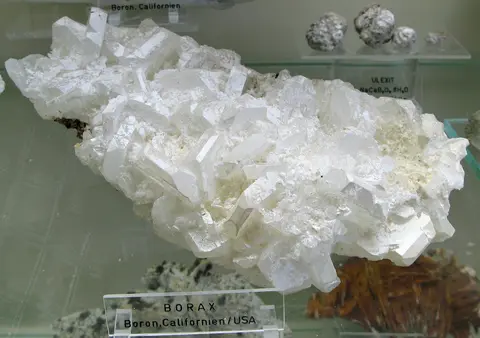
Borax: Borax (teilweise durchscheinend) - Boron, Californien, USA
Borax (teilweise durchscheinend) - Boron, Californien, USA. Photo: Ra'ike (see also: de:Benutzer:Ra'ike ), CC BY-SA 3.0, via Wikimedia Commons.
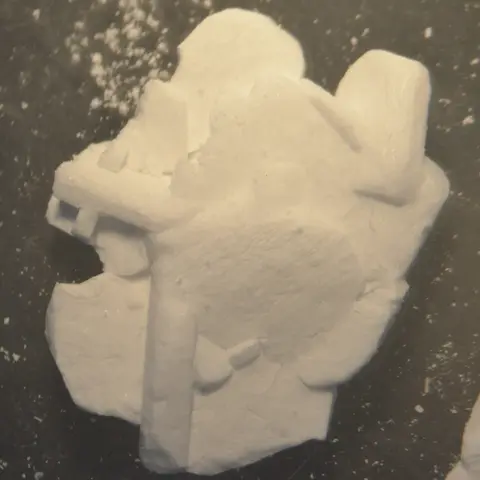
Borax: Crystal of borax (Na2B4O7)
Crystal of borax (Na2B4O7). Photo: Alessandro e Damiano, CC BY 4.0, via Wikimedia Commons.
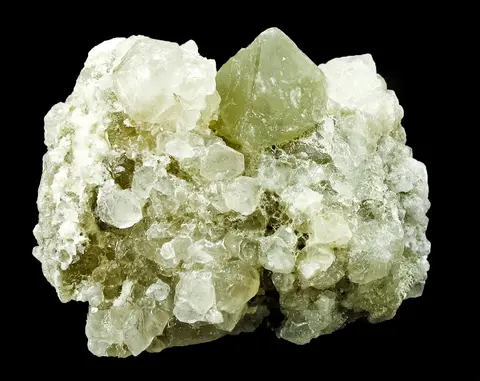
Borax: Sulphohalite-Borax-453883
Sulphohalite-Borax-453883. Photo: Robert M. Lavinsky, CC BY-SA 3.0, via Wikimedia Commons.

What borax is worth

Not enough data. We have not yet seen 5 or more current dealer listings for borax in any one form, so we show no range rather than guess.

These are dealer asking prices: what shops list borax for, not what it sells for and not an appraisal. Selling to a dealer usually brings well below retail, because the dealer has to resell it at a margin.

How to identify borax

  • Colorless to white, short prismatic crystals with a glassy luster when fresh.
  • Surfaces turn opaque white and powdery as the crystal loses water and alters to tincalconite.
  • Very soft, hardness 2 to 2.5; a fingernail can just mark it.
  • Very light, specific gravity about 1.7.
  • Dissolves in water, faster in warm water.
  • Occurs in borate mines and dry playa lake beds with ulexite, kernite and halite.

Where borax comes from

Boron (Kramer district), California, USA
Large open pit borate mine and the source of the best known large borax crystals.
Searles Lake, California, USA
Dry lake deposit that has produced well-formed borax crystals.
Death Valley region, California, USA
Historic borax mining area famous for the twenty mule team era.
Turkey
Holds the largest borate reserves in the world; mostly industrial production.
Tibet and Ladakh
Historic source of tincal (crude borax) traded along Asian routes.

Borax lookalikes

Tincalconite

Tincalconite is the chalky white alteration product of borax; many old borax specimens are now tincalconite throughout.

  • Fine-grained and powdery
  • No glassy luster

Ulexite

Ulexite is fibrous and silky, not blocky glassy crystals.

  • Ulexite SG about 1.95
  • Found in the same deposits

Halite

Halite forms cubes and breaks into cubic cleavage pieces; borax forms prismatic crystals.

  • Halite SG about 2.17
  • Both are water soluble

Selenite

Selenite does not dissolve in water and peels into thin flexible sheets.

  • Gypsum SG about 2.3
  • Hardness 2

Fake, dyed and treated borax

  • Altered crystals coated to look fresh

    Occasional

    • Shiny plastic film over white chalky interior
    • Coating peels at edges
  • Tincalconite sold as borax

    Common

    • Opaque white throughout with no clear core
    • Crumbles to powder

Is my borax real? Tests you can do at home

  1. Fingernail scratch

    Press a fingernail into a hidden spot on the base.

    Real
    Leaves a faint mark or powder; hardness is about 2 to 2.5.
    Fake or lookalike
    Halite and harder minerals are not marked.

    Can leave a small mark.

  2. Water drop on a hidden spot

    Put one drop of water on the base, wait a minute, then dab it dry.

    Real
    The spot dissolves slightly and becomes etched.
    Fake or lookalike
    Gypsum and most other minerals are unchanged.

    Can leave a small mark.

  3. Weight in hand

    Compare with a similar sized quartz or calcite crystal.

    Real
    Feels very light (SG about 1.7).
    Fake or lookalike
    Quartz and calcite feel noticeably heavier.

A stone that passes these tests is consistent with natural borax, not proven. For valuable pieces, a gem lab report settles treatment and origin.

Treatments

Sealing with oil, lacquer or resin (common)
Slows dehydration so specimens stay clear longer; considered acceptable conservation if disclosed. Slick or sticky surface; film visible at edges.

What moves the price of borax

  1. Freshness. Clear, glassy, unaltered crystals are worth far more than chalky ones.
  2. Crystal size and form. Large, sharp, terminated prisms are scarce.
  3. Locality. Classic California borate localities are the collector standard.
  4. Damage. Soft crystals chip easily; broken terminations lower value.

Care and safety

Borax is a common household chemical but should not be swallowed; keep it away from children and pets, wash hands after handling powder, and note that the EU classifies borax as a reproductive toxicant.

Store in a sealed container away from dry heat and direct sunlight to slow its change to white tincalconite. Never wash it.

Questions collectors ask about borax

Is borax just baking soda?
No. Borax is sodium borate, a boron mineral, while baking soda is sodium bicarbonate. They are different compounds with different chemistry and uses.
Borax vs boric acid
Borax is a sodium borate mineral. Boric acid is a different compound that is made from borax or other borates by reacting them with an acid.
Borax vs boron
Boron is a chemical element. Borax is one of the natural minerals that contains boron, and it is a major ore of it.
What is the Indian name for borax?
In Hindi borax is called suhaga. The old trade name tincal for crude borax comes from the Sanskrit word tankana.
Borax vs washing soda
Washing soda is sodium carbonate, a different sodium compound with no boron in it. Borax is sodium borate.

Sources

Prices: no current dealer listings yet. How we collect prices.