RockValues

Galena value and identification

Dealers list galena specimens 5 to 10 cm (2 to 4 in) at $25 to $40.

Prices checked . Page updated .
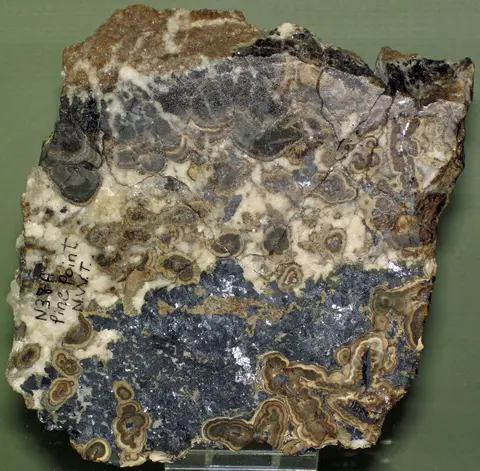
Galena: Dolomite-sphalerite-galena (Pine Point Mine, Northwest Territories, Canada) (40704477664)
Dolomite-sphalerite-galena (Pine Point Mine, Northwest Territories, Canada) (40704477664). Photo: James St. John, CC BY 2.0, via Wikimedia Commons.
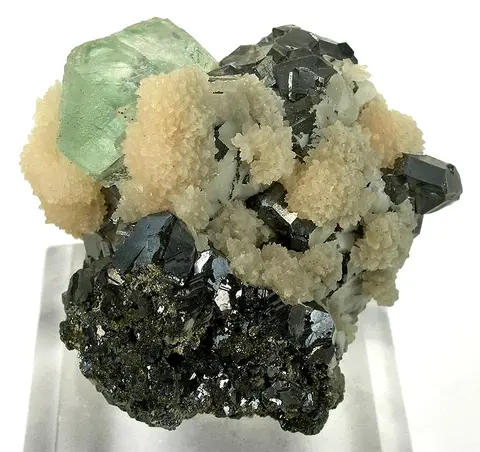
Galena: Calcite-Fluorite-Galena-rom31a
Calcite-Fluorite-Galena-rom31a. Photo: Robert M. Lavinsky, CC BY-SA 3.0, via Wikimedia Commons.
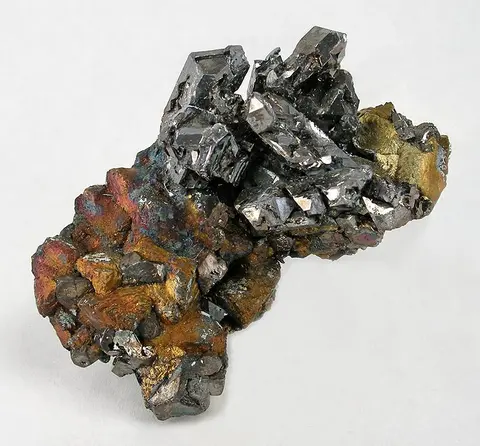
Galena: Chalcopyrite-Galena-k305b
Chalcopyrite-Galena-k305b. Photo: Robert M. Lavinsky, CC BY-SA 3.0, via Wikimedia Commons.
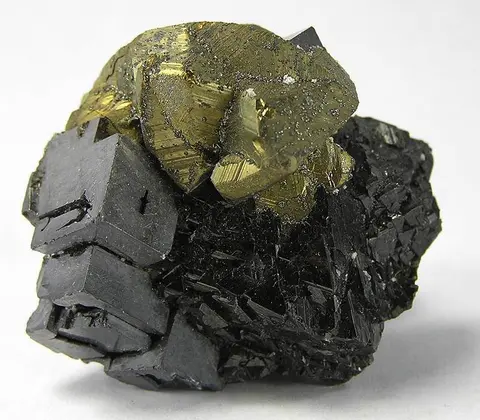
Galena: Chalcopyrite-Sphalerite-Galena-171985
Chalcopyrite-Sphalerite-Galena-171985. Photo: Robert M. Lavinsky, CC BY-SA 3.0, via Wikimedia Commons.

What galena is worth

Dealer asking prices for galena, middle half of current listings, checked 2026-11-20. Bar shows the 25th to 75th percentile; the dark tick is the median.
Form and sizeTypical asking priceRange chartMedianListings
Specimens (per piece)$25 to $135$4013 from 2 dealers
5 to 10 cm (2 to 4 in)$25 to $40$309 from 2 dealers
Show 12 of the listings behind these numbers
Sample dealer listings for Galena
ListingSizeLocalityAskingSeen
Anglesite with Galena #62955
Dakota Matrix Minerals
8 cmNorthwest of Sasabe, Arizona, United States$25
Galena with Quartz & Sphalerite #AH65176
Dakota Matrix Minerals
9 cmSunnyside mine, Eureka dist., San Juan Co., Colorado, United States$25
Galena with Quartz & Sphalerite #AH65178
Dakota Matrix Minerals
8 cmSunnyside mine, Eureka dist., San Juan Co., Colorado, United States$25
2.35" Gleaming Galena Crystals on Quartz - China
FossilEra
6 cmChina$25
Pyroxmangite with Galena #65720
Dakota Matrix Minerals
7 cmSunnyside mine, Eureka dist., San Juan Co., Colorado, United States$30
Galena #64543
Dakota Matrix Minerals
6 cmClausthal, Harz Mtns., Niedersachsen, Germany$35
Pyroxmangite with Galena & Chalcopyrite #AH65722
Dakota Matrix Minerals
8 cmSunnyside mine, Eureka dist., San Juan Co., Colorado, United States$40
Valentinite with Galena #CL62653
Dakota Matrix Minerals
4.5 cmSan José mine, Oruro City, Oruro Dept., Bolivia$62
Hessite with Galena #SW67760
Dakota Matrix Minerals
1.5 cmWard mine, Ely dist., White Pine Co., Nevada, United States$75
7.4" Sparkling Galena, Sphalerite, Pyrite, and Quartz Cluster - Kosovo
FossilEra
18.8 cmKosovo$135
Galena #65499
Dakota Matrix Minerals
5 cmPenberthy Croft mine, St. Hilary, Cornwall, England$175
2.7" Glassy Yellow Anglesite Crystals on Galena - Morocco
FossilEra
6.9 cmMorocco$395

These are dealer asking prices: what shops list galena for, not what it sells for and not an appraisal. Selling to a dealer usually brings well below retail, because the dealer has to resell it at a margin.

How to identify galena

Galena is lead sulfide (PbS), the main ore of lead and an important source of silver. It forms bright lead-gray metallic cubes and breaks into smaller cubes along three perfect cleavages.

  • Very heavy: SG about 7.5, so even a small piece feels surprisingly weighty in the hand.
  • Bright silvery lead-gray metallic luster on fresh surfaces, dulling to a darker gray with exposure.
  • Breaks into perfect cubes or stair-stepped blocks along three cleavages at right angles.
  • Soft (2.5): scratched by a copper coin and leaves a gray mark on paper.
  • Lead-gray to black streak.
  • Crystals are cubes, octahedrons or combinations of both, often with sphalerite, calcite, dolomite, quartz or fluorite.
  • Not magnetic.

Galena varieties

Where galena comes from

Viburnum Trend and Old Lead Belt, Missouri, USA
One of the largest lead districts in the world, producing large cubo-octahedral crystals with calcite, sphalerite and chalcopyrite.
Tri-State district (Missouri, Kansas, Oklahoma), USA
Historic source of large galena cubes with sphalerite and calcite.
Upper Mississippi Valley (Galena, Illinois and Wisconsin), USA
Historic lead district; the town of Galena, Illinois is named after the ore.
Madan, Rhodope Mountains, Bulgaria
Sharp crystals with quartz, sphalerite and calcite.
Dalnegorsk, Primorsky Krai, Russia
Lustrous crystals on mixed sulfide specimens.
Trepca, Kosovo
Classic European specimens, often with sphalerite and pyrite.
Broken Hill, New South Wales, Australia
Major silver, lead and zinc ore body.
Naica, Chihuahua, Mexico
Galena with calcite and other sulfides.

Galena lookalikes

Pyrite

Pyrite is brassy yellow and hard (6 to 6.5), and it does not cleave into cubes.

  • Pyrite SG about 5.0, lighter
  • Pyrite streak greenish black
  • Pyrite cubes are often striated

Hematite

Hematite leaves a red-brown streak; galena leaves gray.

  • Hematite hardness 5 to 6.5
  • Hematite SG about 5.3
  • No cubic cleavage

Stibnite

Stibnite forms long striated blades and needles rather than cubes.

  • Stibnite SG about 4.6
  • Bends slightly before breaking

Native silver

Silver bends and dents instead of cleaving, and tarnishes to black.

  • Silver SG about 10.5
  • Silver streak silver-white and shiny

Bismuth

Lab-grown bismuth shows iridescent stair-stepped hopper crystals; natural bismuth is pinkish silver.

  • Bismuth SG about 9.8
  • Bismuth cleavage is not cubic

Dark sphalerite

Sphalerite has a resinous to submetallic luster and a pale yellow-brown streak.

  • Sphalerite SG about 4.0
  • Six cleavage directions rather than three

Also mistaken for galena: platinum nugget, cobaltite, skutterudite.

Fake, dyed and treated galena

  • Cleavage cubes sold as natural galena crystals

    Common

    • Faces are perfectly flat and mirror bright, with small steps
    • No growth features, etching or attached matrix
    • Edges sharp and freshly broken
  • Oiled or lacquered galena

    Occasional

    • Unnaturally glossy, slightly sticky surface
    • Oil residue on fingers or packaging
  • Magnetic synthetic hematite ('hematine') sold as galena

    Rare

    • Strongly attracted to a magnet
    • Molded shapes
    • Dark red-brown to black streak

Is my galena real? Tests you can do at home

  1. Weight in hand

    Compare the piece with a similar sized piece of pyrite or ordinary rock.

    Real
    Galena feels markedly heavier than almost any other common mineral.
    Fake or lookalike
    Pyrite and hematite feel lighter; cast metal fakes may feel similar, so combine with other tests.
  2. Streak test

    Rub a corner on the back of an unglazed white tile.

    Real
    Lead-gray to black streak.
    Fake or lookalike
    Hematite red-brown, pyrite greenish black, sphalerite pale yellowish.

    Can leave a small mark.

  3. Copper coin scratch

    Try to scratch a hidden spot with the edge of a copper coin.

    Real
    Galena is scratched or marked by copper.
    Fake or lookalike
    Pyrite and hematite are not scratched.

    Can leave a small mark.

  4. Magnet test

    Hold a strong magnet against the specimen.

    Real
    No attraction.
    Fake or lookalike
    Magnetite and synthetic magnetic hematite stick.
  5. Specific gravity by water displacement

    Weigh the piece dry and suspended in water on a kitchen scale and divide dry weight by the weight lost (matrix lowers the result).

    Real
    About 7.4 to 7.6 for clean galena.
    Fake or lookalike
    Pyrite about 5.0, hematite about 5.3, stibnite about 4.6.

A stone that passes these tests is consistent with natural galena, not proven. For valuable pieces, a gem lab report settles treatment and origin.

Treatments

Cleaning with acid or oxalic acid (common)
Removes calcite or iron staining and restores luster; acceptable when it does not etch the crystals. Etched or frosted faces and missing matrix minerals.
Oiling or coating (occasional)
Hides dull tarnish; disliked by collectors. Greasy feel and residue.

What moves the price of galena

  1. Crystal form. Sharp natural cubes, octahedrons and spinel-law twins are worth far more than cleavage fragments or massive ore.
  2. Luster. Bright, untarnished faces command more.
  3. Associations. Galena on contrasting calcite, fluorite, sphalerite or quartz is more desirable.
  4. Locality. Classic Missouri, Tri-State, Madan and Dalnegorsk pieces carry recognition.
  5. Size. Large, well formed crystals and cabinet pieces bring more.
  6. Damage. Galena is soft and cleaves easily; chipped edges and corners lower value.

Care and safety

Galena contains lead. Wash hands after handling, keep it away from children and pets, do not cut or grind it without dust control, and never put it in drinking water or the mouth.

Questions collectors ask about galena

How do you tell pyrite from galena?
Galena is lead gray, soft enough to scratch with a copper coin, very heavy and breaks into perfect cubes. Pyrite is brassy yellow, too hard to scratch with steel easily, noticeably lighter and does not cleave.

Sources

Prices: 13 current listings from Dakota Matrix Minerals, FossilEra, seen 2026-11-20 to 2026-11-20. How we collect prices.