What native silver is worth
Not enough data. We have not yet seen 5 or more current dealer listings for native silver in any one form, so we show no range rather than guess.
Show 2 of the listings behind these numbers
These are dealer asking prices: what shops list native silver for, not what it sells for and not an appraisal. Selling to a dealer usually brings well below retail, because the dealer has to resell it at a margin.
How to identify native silver
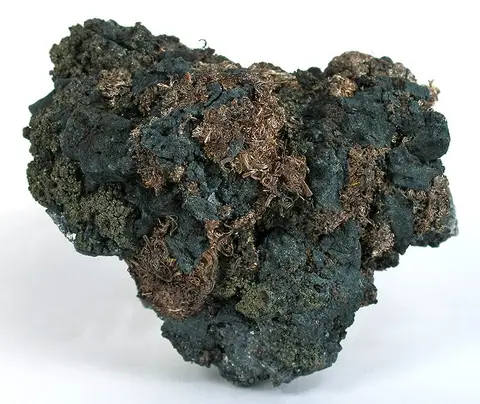
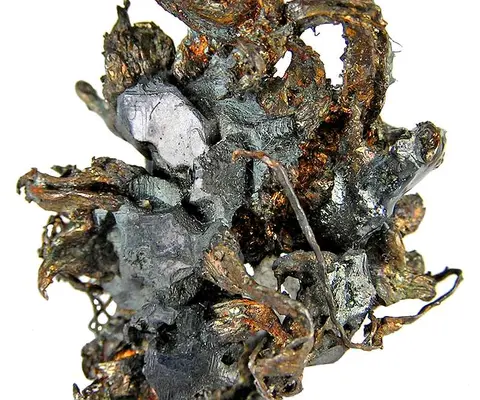
- Silver-white metal when fresh; tarnishes gray, brown or black, often with a dark coating on old specimens.
- Very heavy for its size (SG about 10.5).
- Soft and malleable: bends rather than breaks, and a steel pin dents or scratches it.
- Not magnetic.
- Shiny silver-white streak, and scratches show bright metal under tarnish.
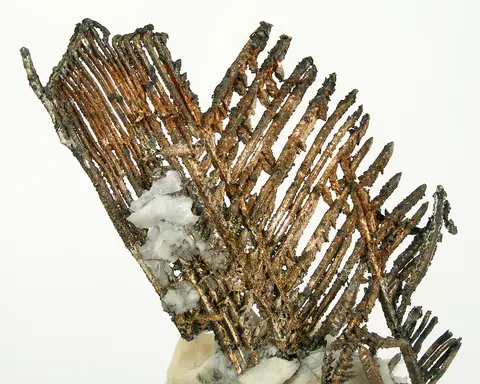
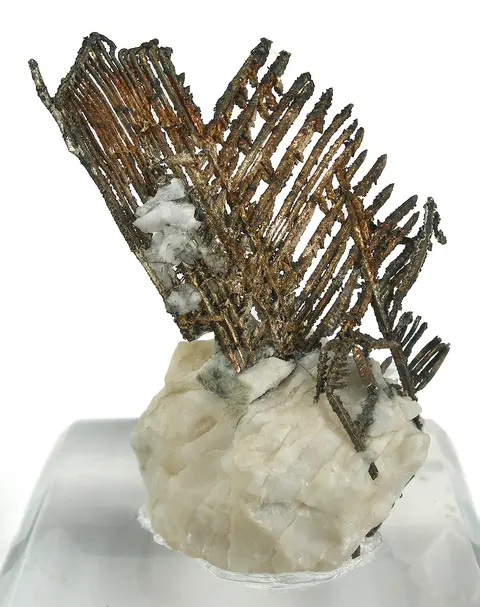
- Common forms: curled wires, dendritic branches, thin sheets in veins, and grains or plates in calcite.
Native silver varieties
Silver in calcite
Silver in calcite is native silver as sheets, dendrites or grains embedded in white calcite veins, often partly etched out with acid. The same metal, sold with its calcite host; value depends on how much silver shows and its form.
Where native silver comes from
- Kongsberg, Norway
- The classic locality for large curled wire silver and crystals; specimens are prized and museum-grade.
- Freiberg, Saxony, Germany
- Historic mining district with wire silver and silver minerals.
- Batopilas, Chihuahua, Mexico
- Famous for wire and sheet silver.
- Imiter, Morocco
- Modern source of bright wire silver and silver on matrix.
- Cobalt, Ontario, Canada
- Rich silver veins in calcite with cobalt and nickel arsenides.
- Keweenaw Peninsula, Michigan, USA
- Silver occurs with native copper, including mixed copper and silver pieces called halfbreeds.
Native silver lookalikes
Bismuth is brittle and breaks with flat cleavage instead of bending.
- Bismuth SG about 9.8
- Pinkish silver tint
- Lab-grown bismuth crystals have rainbow oxide colors and stair-step hopper shapes
Galena breaks into cubes and has a gray streak.
- Galena SG about 7.5
- Brittle with perfect cubic cleavage
Platinum does not tarnish and is heavier.
- SG 14 to 19 for natural platinum
- Steel gray color
Marcasite is brassy pale yellow, brittle and hard.
- Hardness 6 to 6.5
- Greenish black streak
Mica peels into thin, light flakes and is not metallic when you bend it.
- SG about 2.8
- Pearly, not metallic
Also mistaken for native silver: skutterudite.
Fake, dyed and treated native silver
Artificial wire silver grown by heating silver sulfide (acanthite)
Occasional
- Wires growing densely from a black acanthite base
- Very uniform, bright, fresh-looking wires on old-looking matrix
- Hard to prove at home; buy from dealers who know the source
Cast or soldered silver attached to matrix
Occasional
- Glue or solder at contact points
- Silver sits on top of the rock rather than growing from it
Melted or cast silver sold as natural nuggets
Occasional
- Smooth, rounded, poured look with no crystal texture
- No embedded rock or gangue
Silver-plated metal or painted rock
Occasional
- Too light for size
- Base metal shows through scratches
- Steel cores are magnetic
Is my native silver real? Tests you can do at home
-
Magnet test
Hold a strong neodymium magnet near the piece.
- Real
- No attraction; silver is not magnetic.
- Fake or lookalike
- Steel or nickel cores under plating are attracted.
-
Specific gravity with a kitchen scale
Weigh in air, then suspended in water; divide the air weight by the weight loss. Remove as much rock matrix as the reading allows or test a matrix-free piece.
- Real
- About 10 to 10.5 for clean silver.
- Fake or lookalike
- Plated base metals, pewter and bismuth give lower values.
-
Ice test
Place a small ice cube on the metal and another on a piece of steel of similar thickness.
- Real
- Silver melts the ice very quickly because it conducts heat so well.
- Fake or lookalike
- Steel and plated base metals melt ice more slowly.
-
Bend and scratch check
Gently press a thin wire or edge with a fingernail or a steel pin in a hidden spot.
- Real
- Silver is soft and bends or takes a bright scratch.
- Fake or lookalike
- Brittle minerals like galena and bismuth break; hard materials resist.
Can leave a small mark.
-
Loupe on contact points
Examine where silver meets the matrix at 10x.
- Real
- Silver grows out of the rock or calcite with no seam.
- Fake or lookalike
- Glue lines, solder or a perched look suggest a composite.
A stone that passes these tests is consistent with natural native silver, not proven. For valuable pieces, a gem lab report settles treatment and origin.
Treatments
- Tarnish removal (common)
- Specimens are often cleaned to bright metal; a natural patina is preferred by some collectors, and harsh cleaning can damage fine wires. Uniform bright surface with polishing marks.
- Acid etching out of calcite (common)
- Silver is freed from calcite veins with dilute acid; accepted practice and part of preparation. Exposed silver with etched calcite remnants.
What moves the price of native silver
- Form. Curled wires, sharp crystals and delicate dendrites sell far above plain sheets or grains.
- Locality. Kongsberg, Batopilas and Freiberg specimens bring premiums.
- Size and weight. Larger, heavier pieces matter, and melt value sets a floor for massive silver.
- Aesthetics and matrix. Silver on contrasting matrix with good balance raises value.
- Condition. Crushed wires and broken crystals lower value sharply.
- Authenticity. Provenance from a known collection or mine protects against artificial wire silver.
- Spot silver price. Bullion price affects massive silver and nuggets more than fine specimens.
Care and safety
Store in a closed box or bag with anti-tarnish strips to slow tarnish. Handle wires by the matrix; they crush easily.
Questions collectors ask about native silver
- Gold vs silver: how do you tell native gold from native silver?
- Native gold stays bright buttery yellow and never tarnishes, while native silver is silver-white and darkens with tarnish. Gold is also much heavier, SG 15 to 19 against about 10.5 for silver.
- Is the silver real?
- For a native silver specimen, check that it is not magnetic, feels very heavy, bends rather than breaks, and grows from its matrix without glue or solder lines. A specific gravity near 10.5 on a clean piece is strong evidence.
- How much is silver worth per ounce?
- Massive native silver tracks the spot silver price, but specimens sell on form, locality, size and condition, often well above metal value. See the price table above for real specimen sales.