RockValues

Blue moonstone value and identification

Blue moonstone is orthoclase moonstone with a blue adularescence, the most sought grade of moonstone, classically from Sri Lanka. The name is also loosely used for rainbow moonstone and for glass.

A variety of feldspar. Prices checked .
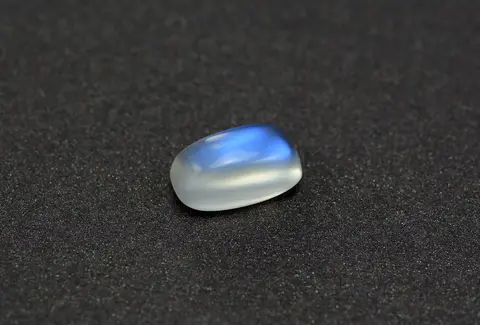
Blue moonstone: Natural Blue Moonstone loose gemstone
Natural Blue Moonstone loose gemstone. Photo: Gemsphoto, CC BY-SA 4.0, via Wikimedia Commons.

What blue moonstone is worth

Not enough data. We have not yet seen 5 or more current dealer listings for blue moonstone in any one form, so we show no range rather than guess.

These are dealer asking prices: what shops list blue moonstone for, not what it sells for and not an appraisal. Selling to a dealer usually brings well below retail, because the dealer has to resell it at a margin.

How to identify blue moonstone

Its sheen is blue rather than white, which comes from extremely thin internal layers and is the top grade for moonstone. See feldspar value for the species as a whole.

  • Colorless to near colorless body
  • Electric blue glow floating across the dome
  • Blue sheen visible only at certain angles
  • Small centipede-like cleavage cracks common

Other feldspar varieties

Where blue moonstone comes from

Sri Lanka
Classic blue moonstone, especially from the Meetiyagoda area; fine material is now scarce.
India and Myanmar
Occasional blue sheen moonstone.

Blue moonstone lookalikes

Rainbow moonstone

Rainbow moonstone often shows strong blue flash too, but it is labradorite and often shows other colors and black needles.

  • RI about 1.56 versus 1.52 for orthoclase moonstone

Blue chalcedony

Blue chalcedony is evenly blue throughout with no moving sheen.

  • Hardness 6.5 to 7
  • Waxy luster

Fake, dyed and treated blue moonstone

  • Opalite or blue glass

    Very common

    • Blue glow from every angle
    • Orange cast over white
    • Bubbles
  • Rainbow moonstone sold as blue moonstone

    Common

    • Other colors besides blue
    • Black needle inclusions

Is my blue moonstone real? Tests you can do at home

  1. Sheen angle

    Tilt under one light source.

    Real
    Blue glow slides across and disappears at other angles.
    Fake or lookalike
    Glass glows evenly.
  2. White background

    Place the stone on white paper.

    Real
    Body stays colorless.
    Fake or lookalike
    Opalite turns orange-yellow.

A stone that passes these tests is consistent with natural blue moonstone, not proven. For valuable pieces, a gem lab report settles treatment and origin.

Treatments

Coating (rare)
Blue coatings fake the sheen; worth little. Sheen does not move; coating may wear at edges.

What moves the price of blue moonstone

  1. Sheen intensity. Vivid blue over the whole dome ranks highest.
  2. Transparency. Clear bodies rank above milky.
  3. Size. Fine blue stones above a few carats are rare.
  4. Origin. Documented Sri Lankan material is preferred.

Sources

Prices: no current dealer listings yet. How we collect prices.