RockValues

Diopside value and identification

Diopside is a calcium magnesium silicate in the pyroxene group (CaMgSi2O6), common in metamorphosed limestones and some igneous rocks. Gem material is mostly green, with chrome diopside the best known, plus black star stones and rare cat's eyes.

Prices checked . Page updated .
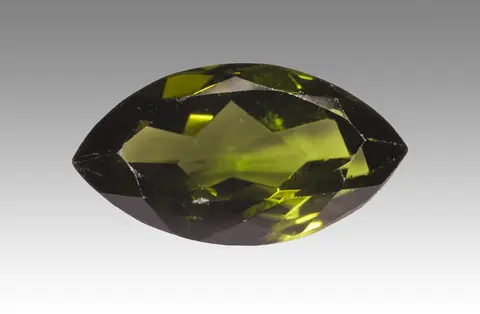
Diopside: Diopside faceted
Diopside faceted. Photo: Didier Descouens, CC BY-SA 4.0, via Wikimedia Commons.
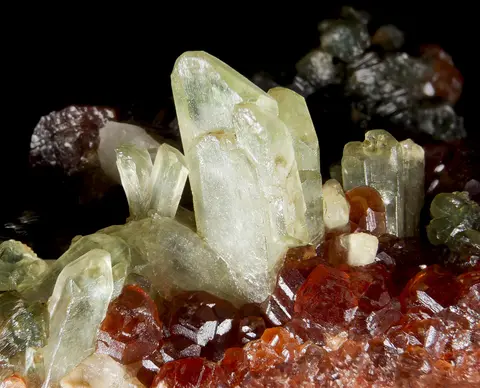
Diopside: Diopside Aoste
Diopside Aoste. Photo: Didier Descouens, CC BY-SA 3.0, via Wikimedia Commons.
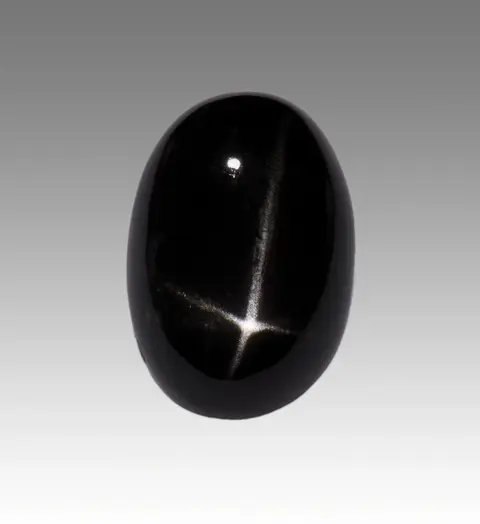
Diopside: Diopside cabochon Inde
Diopside cabochon Inde. Photo: Didier Descouens, CC BY-SA 3.0, via Wikimedia Commons.
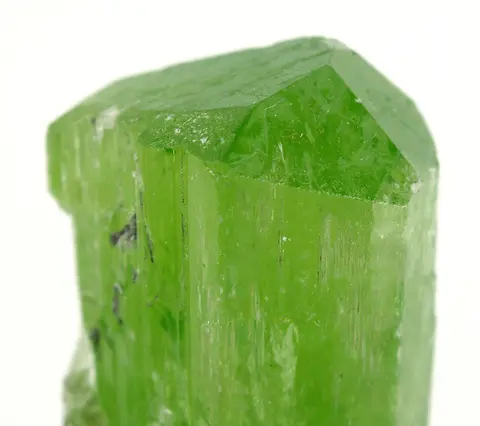
Diopside: Diopside-tmu17c
Diopside-tmu17c. Photo: Robert M. Lavinsky, CC BY-SA 3.0, via Wikimedia Commons.

What diopside is worth

Not enough data. We have not yet seen 5 or more current dealer listings for diopside in any one form, so we show no range rather than guess.

By variety

Median dealer asking price by variety.
VarietyMedianListings
Chrome diopsideNot enough data10
Black star diopsideNot enough data3
Show 12 of the listings behind these numbers
Sample dealer listings for Diopside
ListingSizeLocalityAskingSeen
Black Star DIOPSIDE Tumbled Stones - Tumbled Crystals, Self Care, Healing Crystals and Stones, E1447 (Small (2 stone))
Throwin Stones
3 cmIndia$6.30
Black Star DIOPSIDE Tumbled Stones - Tumbled Crystals, Self Care, Healing Crystals and Stones, E1447 (Medium)
Throwin Stones
3 cmIndia$6.30
Black Star DIOPSIDE Tumbled Stones - Tumbled Crystals, Self Care, Healing Crystals and Stones, E1447 (Large)
Throwin Stones
3 cmIndia$7.65
1.2" Lustrous Green Chrome Diopside - Minas Gerais, Brazil
FossilEra
3.1 cmMinas Gerais, Brazil$19
1.15" Lustrous Green Chrome Diopside - Minas Gerais, Brazil
FossilEra
2.9 cmMinas Gerais, Brazil$19
1.1" Lustrous Green Chrome Diopside - Minas Gerais, Brazil
FossilEra
2.8 cmMinas Gerais, Brazil$19
1.1" Lustrous Green Chrome Diopside - Minas Gerais, Brazil
FossilEra
2.8 cmMinas Gerais, Brazil$25
1.3" Lustrous Green Chrome Diopside - Minas Gerais, Brazil
FossilEra
3.3 cmMinas Gerais, Brazil$25
1.3" Lustrous Green Chrome Diopside - Minas Gerais, Brazil
FossilEra
3.3 cmMinas Gerais, Brazil$25
1.45" Lustrous Green Chrome Diopside - Minas Gerais, Brazil
FossilEra
3.7 cmMinas Gerais, Brazil$25
1.4" Lustrous Green Chrome Diopside - Minas Gerais, Brazil
FossilEra
3.6 cmMinas Gerais, Brazil$29
1.45" Lustrous Green Chrome Diopside - Minas Gerais, Brazil
FossilEra
3.7 cmMinas Gerais, Brazil$29

These are dealer asking prices: what shops list diopside for, not what it sells for and not an appraisal. Selling to a dealer usually brings well below retail, because the dealer has to resell it at a margin.

How to identify diopside

  • Bottle green to bright green, also colorless, brown, gray or black; green is the color most often sold.
  • Stubby prismatic crystals with a nearly square cross section and two cleavages meeting close to 90 degrees.
  • Softer than quartz (5.5 to 6): a quartz point or hardened steel file can scratch it, and facet edges wear in rings.
  • Glassy luster, often with visible doubling of back facets in faceted stones under a loupe.
  • Pleochroism is weak to moderate in green stones, unlike the strong two-tone effect of tourmaline.
  • SG about 3.3, noticeably heavier than quartz or emerald.

Diopside varieties

Black star diopside

Black star diopside is opaque black diopside from southern India that shows a four-rayed star in cabochons, caused by aligned magnetite needles. It is opaque and black rather than green, and the magnetite inclusions make it attracted to a magnet and give a star with two rays crossing at an angle that is not 90 degrees.

Star diopside

Star diopside is diopside cut as a cabochon to show a four-rayed star from aligned needle-like inclusions, usually black to dark green. The star is an optical effect from inclusions; most star diopside on the market is the black Indian material.

Where diopside comes from

Yakutia, Siberia, Russia
Main source of gem chrome diopside since the late 1980s.
Southern India
Black star diopside and cat's eye diopside cabochons.
Merelani, Tanzania
Bright green diopside crystals found with tanzanite.
Val d'Ala, Piedmont, Italy
Classic transparent green crystals on matrix.
St. Lawrence County, New York, USA
Colorless to green crystals from marble, notably around De Kalb.
Pakistan and Afghanistan
Transparent green crystals for collectors and cutters.
Sri Lanka and Myanmar
Gem diopside, including cat's eye stones.

Diopside lookalikes

Peridot

Peridot is a yellower green and has very strong doubling; diopside is a purer or bluish green with moderate doubling.

  • Peridot hardness 6.5 to 7
  • Peridot SG 3.3, similar
  • Peridot has no good cleavage

Tsavorite garnet

Tsavorite is singly refractive, so back facets never look doubled, and it is brighter.

  • Hardness 7 to 7.5
  • SG 3.6
  • RI about 1.74

Emerald

Emerald is lighter for its size and harder; it rarely shows doubled facet edges.

  • SG 2.7
  • Hardness 7.5 to 8
  • RI 1.57 to 1.59

Green tourmaline

Tourmaline scratches glass easily and shows a strong dark direction along the crystal length.

  • Hardness 7 to 7.5
  • SG 3.05
  • RI 1.62 to 1.65

Also mistaken for diopside: star garnet, star sapphire, black star sapphire, epidote, tremolite.

Fake, dyed and treated diopside

  • Green glass sold as chrome diopside

    Occasional

    • Gas bubbles or swirls
    • No doubling of back facets
    • Lighter in the hand
  • Other green gems sold as diopside

    Rare

    • Gem testing of RI and SG is needed; diopside is inexpensive enough that substitution is uncommon

Is my diopside real? Tests you can do at home

  1. Scratch test against glass

    Try to scratch a hidden spot of window glass with a crystal edge.

    Real
    Scratches glass only with effort, and a quartz point can scratch the diopside back.
    Fake or lookalike
    Glass will not scratch glass reliably; tourmaline and garnet scratch it easily.

    Can leave a small mark.

  2. Loupe check for doubling

    Look through the table of a faceted stone at the back facet edges with a 10x loupe.

    Real
    Back facet edges look doubled in medium and larger stones.
    Fake or lookalike
    Glass, garnet and spinel show single edges.
  3. Specific gravity with a kitchen scale

    Weigh the stone dry, then suspend it on a thread fully submerged in a cup of water on the scale and divide dry weight by the added weight.

    Real
    About 3.2 to 3.4.
    Fake or lookalike
    Glass usually 2.4 to 2.6, emerald 2.7.
  4. Magnet test for black star diopside

    Hang the stone on a thread and bring a neodymium magnet close.

    Real
    Black star diopside is attracted because of its magnetite needles.
    Fake or lookalike
    Black star sapphire is not attracted.

A stone that passes these tests is consistent with natural diopside, not proven. For valuable pieces, a gem lab report settles treatment and origin.

Treatments

None routine (rare)
Diopside is generally sold untreated. Not applicable.

What moves the price of diopside

  1. Color. Vivid, pure chrome green ranks highest; olive, brownish and pale stones less.
  2. Size versus tone. Chrome diopside darkens quickly with size, so larger stones with bright color are scarce.
  3. Clarity. Faceted stones are expected to be eye clean.
  4. Phenomena. Sharp, centered stars or cat's eyes in cabochons.
  5. Cut and durability. Good polish without abraded edges, which are common because of the moderate hardness.
  6. Specimen quality. Sharp, transparent crystals on matrix from classic localities.

Care and safety

Diopside is softer than most ring stones and has cleavage; protect it from knocks and avoid ultrasonic cleaners.

Sources

Prices: 14 current listings from FossilEra, Throwin Stones, seen 2026-11-20 to 2026-11-20. How we collect prices.