RockValues

Bornite value and identification

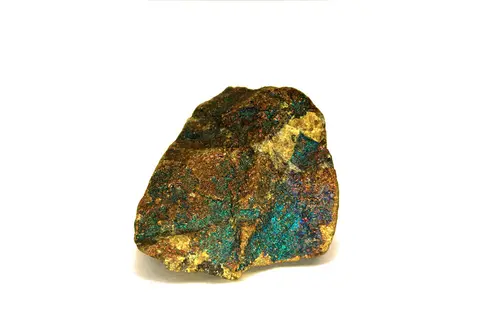
Bornite is a separate copper iron sulfide mineral, Cu5FeS4, often found with chalcopyrite. Fresh surfaces are coppery red to bronze brown and quickly tarnish to iridescent purple and blue.

A variety of chalcopyrite. Prices checked .
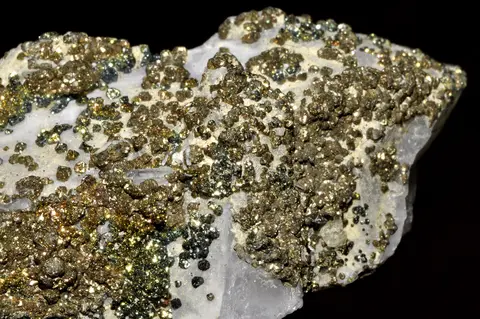
Bornite: Bornite sur quartz 1
Bornite sur quartz 1. Photo: Parent Géry, Public domain, via Wikimedia Commons.
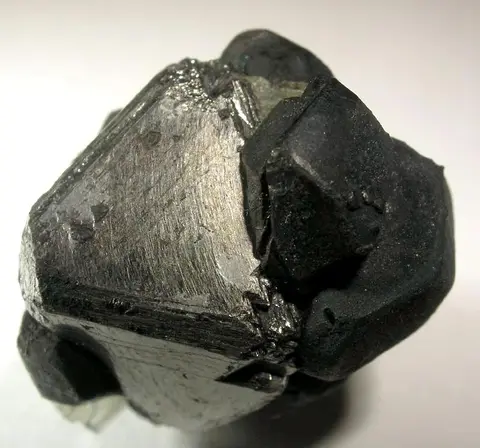
Bornite: Bornite Mineral Macro Digon3
Bornite Mineral Macro Digon3. Photo: “Jonathan Zander ( Digon3 )", CC BY-SA 3.0, via Wikimedia Commons.
Bornite: Bornite-Carrollite-md10a
Bornite-Carrollite-md10a. Photo: Robert M. Lavinsky, CC BY-SA 3.0, via Wikimedia Commons.
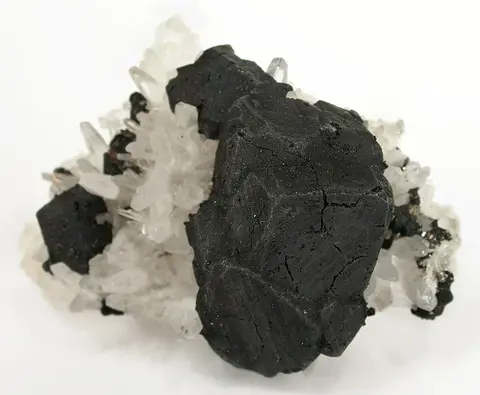
Bornite: Bornite-Quartz-denv08-33b
Bornite-Quartz-denv08-33b. Photo: Robert M. Lavinsky, CC BY-SA 3.0, via Wikimedia Commons.

What bornite is worth

Not enough data. We have not yet seen 5 or more current dealer listings for bornite in any one form, so we show no range rather than guess.

These are dealer asking prices: what shops list bornite for, not what it sells for and not an appraisal. Selling to a dealer usually brings well below retail, because the dealer has to resell it at a margin.

How to identify bornite

Bornite is a distinct species with more copper than chalcopyrite; it is bronze rather than brass yellow inside and is heavier. See chalcopyrite value for the species as a whole.

  • Coppery red to bronze brown on fresh breaks.
  • Purple and blue iridescent tarnish on older surfaces.
  • Grayish black streak.
  • Hardness about 3; a steel knife scratches it easily.
  • Usually massive; crystals (rough cubes and dodecahedrons) are rare.

Other chalcopyrite varieties

Where bornite comes from

Butte, Montana, USA
Major copper district with abundant massive bornite.
Bristol, Connecticut, USA
Historic source of the best known bornite crystals.
Dzhezkazgan, Kazakhstan
Large copper deposit that has produced crystallized bornite.
Cornwall, England
Historic copper mines with bornite in old collections.

Bornite lookalikes

Chalcopyrite

Chalcopyrite is brass yellow on a fresh scratch; bornite is coppery bronze.

  • Chalcopyrite SG about 4.2
  • Chalcopyrite streak greenish black

Native copper

Copper is malleable and leaves a shiny copper streak; bornite is brittle with a gray black streak.

  • Copper SG about 8.9
  • Copper tarnishes brown and green, not purple

Covellite

Covellite is indigo blue throughout, splits into flexible plates, and is softer (1.5 to 2).

  • Covellite SG about 4.6
  • Covellite has a perfect platy cleavage

Also mistaken for bornite: peacock ore.

Fake, dyed and treated bornite

  • Acid-treated chalcopyrite sold as bornite

    Very common

    • Brass yellow under a scratch
    • Lighter in the hand

Is my bornite real? Tests you can do at home

  1. Scratch for the base color

    Make a tiny scratch with a steel point on the underside and look with a loupe.

    Real
    Coppery red to bronze metal under the tarnish.
    Fake or lookalike
    Brass yellow means chalcopyrite.

    Can leave a small mark.

  2. Streak test

    Rub on the back of an unglazed porcelain tile.

    Real
    Grayish black streak.
    Fake or lookalike
    Chalcopyrite gives greenish black; native copper gives a shiny copper streak.

    Can leave a small mark.

A stone that passes these tests is consistent with natural bornite, not proven. For valuable pieces, a gem lab report settles treatment and origin.

Treatments

Acid treatment to brighten tarnish (occasional)
Some bornite is also treated for more color; treated pieces are decorative rather than specimen grade. Uniform intense color on all surfaces.

What moves the price of bornite

  1. Crystals. Crystallized bornite is rare and worth far more than massive material.
  2. Locality. Bristol, Connecticut and other classic localities carry a premium.
  3. Natural tarnish. Even, natural iridescence is preferred over treated color.
  4. Size. Larger solid pieces sell higher, but massive bornite is common.

Sources

Prices: no current dealer listings yet. How we collect prices.